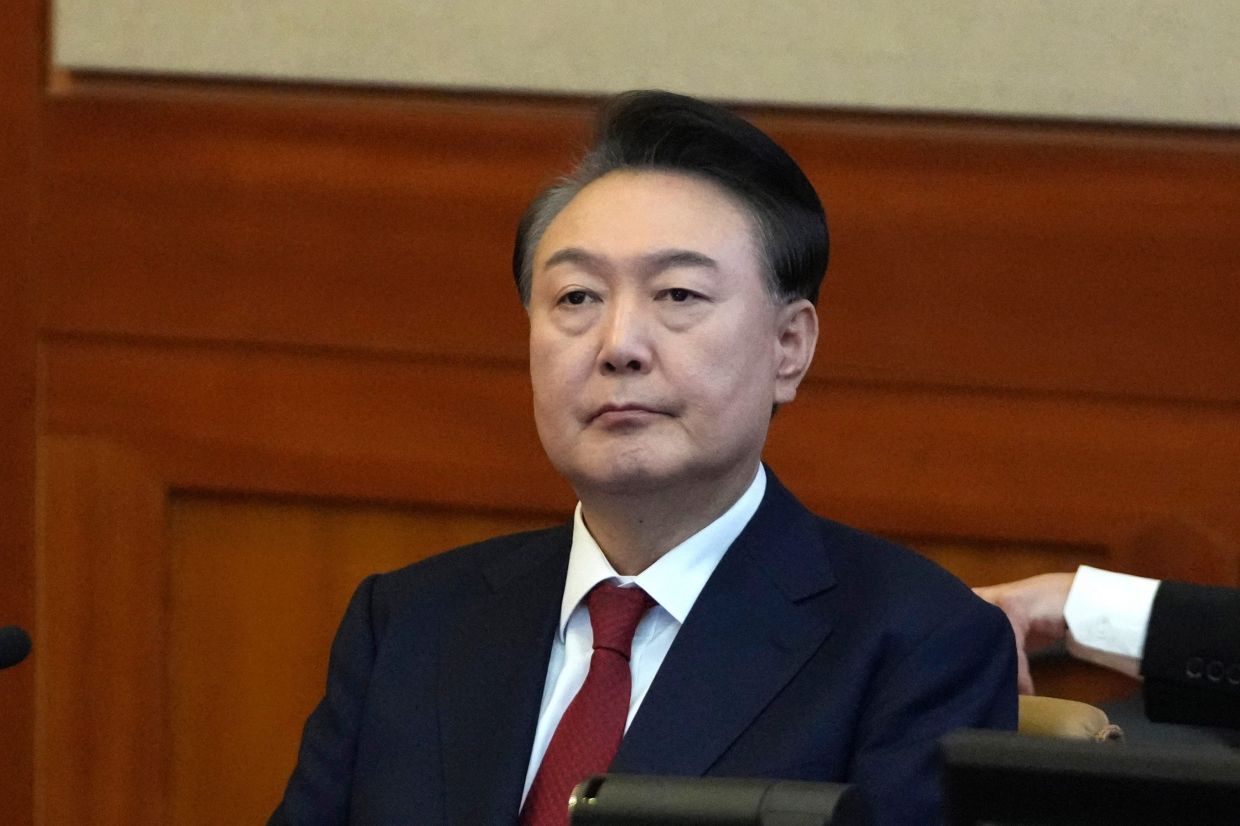
South Korea's Supreme Court has delivered a definitive judgment in a major constitutional crisis, confirming a seven-year prison sentence for former president Yoon Suk Yeol on Thursday after rejecting all appeals related to his ill-fated declaration of martial law in December 2024. The top court's decision closes a chapter on one of the most extraordinary political episodes in recent South Korean history, though Yoon continues to contest the underlying charges on constitutional grounds while serving time for multiple convictions.
The charges culminating in this seven-year sentence stemmed from a series of alleged abuses of power surrounding the martial law proclamation. Yoon stood accused of deliberately circumventing proper governmental processes by convening only a select cabinet ministers for critical deliberations ahead of the declaration, bypassing the full cabinet structure that should have been involved in such momentous decisions. Additionally, prosecutors proved that he had orchestrated the creation and subsequent destruction of a fraudulent martial law decree that bore forged signatures purportedly from the prime minister, documents intended to provide a veneer of legitimacy to his unprecedented power grab.
Beyond the document forgery, the former president faced charges related to his handling of the declaration's immediate aftermath and the resistance that followed. Yoon directed officials to circulate a misleading statement to international media outlets, attempting to shape the global narrative around his actions. Critically, he also ordered a senior army commander to delete records from secure military communications systems, an act prosecutors characterised as destruction of evidence. These charges painted a picture of systematic efforts to conceal the extent and nature of his actions from both domestic and international scrutiny.
The judicial journey toward this final verdict saw the sentence escalate significantly through successive court stages. A lower court initially imposed a five-year term in January after finding him guilty on most counts. An appellate court then reconsidered the case in April, sustaining the conviction while adding an additional guilty verdict related to the misleading foreign press release, ultimately raising the penalty to seven years. This progressive increase reflected the courts' growing assessment of the gravity of his conduct, though it fell short of the ten-year sentence that prosecutors had originally demanded.
Yoon's legal representation expressed profound dissatisfaction with the Supreme Court's determination, issuing a statement that the court had reached its conclusion "without sufficient deliberation." Rather than accepting the judgment, the defence team has signalled its intention to mount a new constitutional challenge to the ruling and lodge a formal complaint against the decision. This legal maneuvering reflects the deeply contentious nature of the case and suggests that efforts to overturn the conviction may persist despite the finality of the Supreme Court's judgment.
The original martial law declaration that sparked this cascading legal crisis occurred on the evening of December 2024, when Yoon delivered a shocking late-night televised address to the nation announcing the suspension of civilian governance. The shock and suddenness of the move plunged South Korea into an unprecedented constitutional emergency, destabilising the country's political institutions. The declaration's duration, however, proved extraordinarily brief. Within approximately six hours, legislators convened in emergency session and voted overwhelmingly to nullify the martial law, demonstrating the resilience of parliamentary checks against executive overreach. Yoon then allegedly used presidential security personnel to obstruct his own lawful arrest following this legislative reversal.
The repercussions of the martial law episode extended far beyond political circles. The domestic stock market experienced sharp declines as investors fled South Korean equities amid uncertainty about political stability. International allies, notably the United States, were reportedly caught off-guard by the move, complicating Seoul's diplomatic relationships at a sensitive moment in regional geopolitics. The declaration triggered sustained public protests that underscored popular opposition to the attempted power consolidation. This broader context demonstrates how Yoon's actions inflicted tangible economic and diplomatic damage upon the nation.
Yoon has consistently maintained that his martial law declaration was undertaken "solely for the sake of the nation," framing the controversial action as motivated by the national interest rather than personal political gain. In subsequent statements, he justified the move as necessary to combat what he characterised as "anti-state forces" operating within South Korea and to address purported security threats emanating from North Korea. However, critics and judicial authorities have rejected these explanations, viewing the declaration as an authoritarian power grab lacking legitimate constitutional foundation.
The legal consequences for Yoon extend beyond this seven-year sentence. In a separate but related proceeding, a court previously handed him a thirty-year prison term for sending unmanned drones across the border into North Korea in a controversial operation he framed as manufacturing a security crisis that would justify his martial law assertion. This sentence, when combined with the current conviction, creates cumulative prison time that reflects the severity with which South Korean courts have assessed his misconduct. The stacking of multiple lengthy sentences underscores the systemic nature of his alleged abuses rather than isolated misjudgments.
The political consequences have already manifested. Yoon's martial law gambit led directly to his removal from office in April 2025, triggering a presidential election that delivered power to Lee Jae Myung of the centre-left Democratic Party. This outcome represented a significant shift in South Korea's political direction, with voters decisively rejecting the path Yoon had charted. The transition illustrates how constitutional crises can fundamentally reshape electoral outcomes and political mandates.
For observers in Southeast Asia and beyond, Yoon's conviction and imprisonment represent a cautionary lesson about the fragility of constitutional structures when unchecked by effective institutional safeguards. South Korea's recovery from the martial law crisis, while painful, demonstrates the capacity of democratic systems to contain authoritarian impulses through legislative intervention and robust judicial review. The Supreme Court's final confirmation of Yoon's sentence affirms that even powerful national leaders remain subject to the rule of law, a principle that carries resonance across democracies wrestling with questions of executive accountability and institutional integrity in an increasingly volatile global environment.

