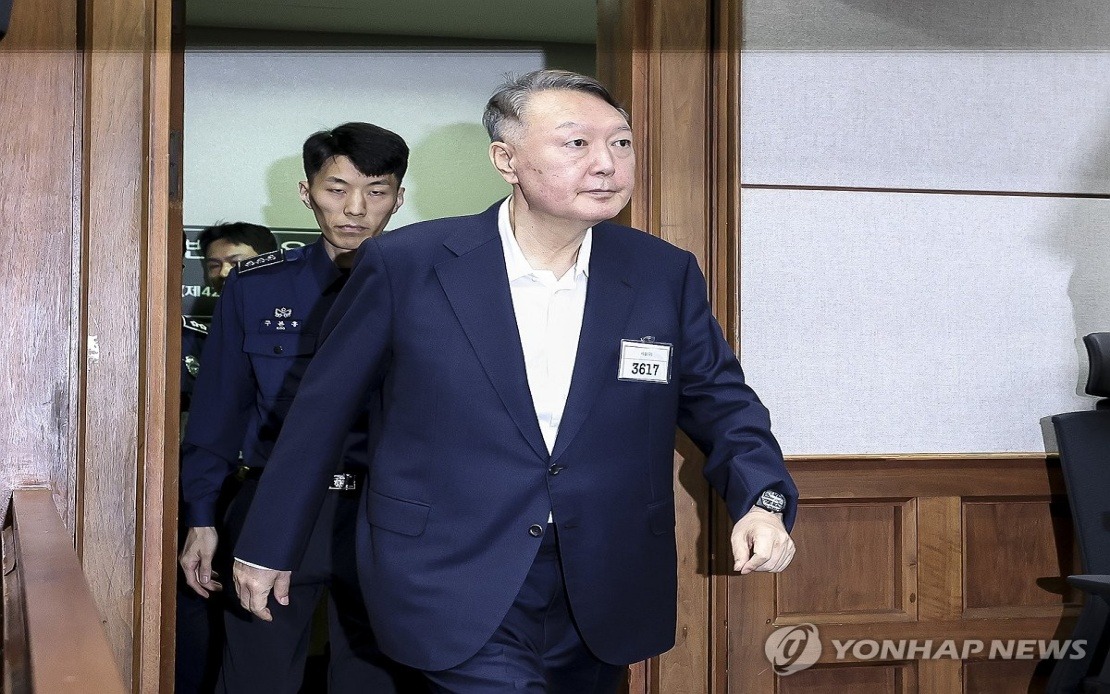
South Korea's highest court has cleared the way for a televised verdict in the obstruction of justice case against former President Yoon Suk Yeol, marking a significant moment of judicial transparency in the politically turbulent nation. The Supreme Court's decision to permit live broadcast coverage of Thursday's 2 pm ruling represents the first major judicial pronouncement from the top bench regarding charges stemming from Yoon's audacious and ultimately failed martial law declaration on December 3, 2024. The decision underscores the court's commitment to public scrutiny of high-profile political cases, even as it generated intense debate about the appropriate balance between open justice and individual rights.
The request for live transmission originated from special counsel Cho Eun-suk's investigative team, who filed their petition last Friday seeking to allow broadcasters direct access to courtroom proceedings. The special counsel's office has pursued an aggressive prosecution of Yoon across multiple legal fronts, treating the former leader's actions as a constitutional emergency that demanded maximum accountability. By seeking live broadcast approval, prosecutors appeared intent on ensuring the widest possible public awareness of the court's reasoning and the charges against a man who until recently wielded the nation's highest executive authority. The transparency campaign reflects broader efforts within South Korea's justice system to prevent the perception that powerful former officials receive preferential treatment or closed-door proceedings.
Yoon's defence counsel mounted vigorous opposition to the broadcast proposal, contending that permitting cameras and live transmission would inflict "irreparable harm" to their client's fundamental entitlement to fair judicial proceedings. The legal team argued that televised courtroom drama could prejudice public opinion, compromise the sanctity of legal reasoning, and expose their client to personal reputation damage beyond the formal criminal consequences he faces. These concerns echo longstanding debates within democratic societies about the intersection of media rights and defendant protections, particularly when former high officials become subjects of intense public and political interest. Nevertheless, the Supreme Court found these objections insufficient grounds for restricting broadcast access, effectively prioritising institutional transparency over the defence team's privacy preferences.
The court has specified that broadcasters will utilise exclusively the tribunal's own recording equipment rather than allowing independent news crews to film courtroom scenes, a compromise approach designed to maintain professional standards and prevent the circus atmosphere sometimes associated with media-saturated trials. This controlled methodology permits public access to visual coverage while preserving judicial decorum and protecting against the sensationalism that can accompany unregulated press freedom in high-stakes proceedings. The arrangement reflects international best practice in balancing competing interests between public accountability and courtroom dignity.
The charges facing Yoon in this particular case centre on his alleged efforts to obstruct official investigations into his martial law actions. Specifically, prosecutors allege that Yoon ordered his protective detail to physically prevent law enforcement officers from executing an arrest warrant in January 2025, effectively using presidential security personnel to frustrate lawful detention procedures. Such allegations strike at fundamental rule-of-law principles, suggesting that even a sitting or former president attempted to place himself beyond the reach of investigative authority. This obstruction charge, while distinct from broader insurrection allegations, touches on foundational questions about whether democratic leaders must submit to the same legal processes as ordinary citizens.
Beyond the obstruction charge, Yoon faces a battery of additional allegations that collectively paint a picture of systematic constitutional overreach. Prosecutors contend that he violated the constitutional rights of nine Cabinet members by failing to convene a preparatory meeting before implementing martial law, thereby denying them opportunity to voice dissent or provide counsel on extraordinary measures about to be imposed. Additionally, investigators have charged that Yoon falsified government documents by altering the martial law proclamation text after the decree's revocation, ostensibly to obscure procedural irregularities and cover tracks of what prosecutors characterise as constitutional transgression. The accusation of document destruction compounds these allegations, suggesting a pattern of evidence suppression extending beyond the moment of initial crisis into subsequent cover-up efforts.
An appellate court previously handed down a seven-year prison sentence in April following conviction on these obstruction charges, demonstrating that lower judicial levels have already found sufficient evidence to warrant substantial incarceration. That April ruling represented a two-year increase from the trial court's initial sentence of five years, indicating that appellate judges viewed Yoon's conduct as more egregious than initially assessed. Yet this seven-year term fell significantly short of the ten-year prison recommendation advanced by prosecutors, suggesting that even the appellate tribunal may have harboured reservations about the outer boundaries of culpability that special counsel advocated. The Supreme Court's forthcoming judgment will ultimately determine whether to affirm the appellate verdict, increase the sentence toward prosecution recommendations, or reduce it further.
Simultaneously, Yoon remains entangled in separate and more severe proceedings addressing the core constitutional question of whether his martial law declaration amounted to insurrection—a charge carrying potential life imprisonment. That trial, which targets the foundational act rather than subsequent cover-up efforts, continues in appellate court following a trial court verdict imposing life imprisonment. The multiple-track prosecution reflects South Korea's complex legal response to what many government officials characterise as an unprecedented threat to constitutional government, while Yoon's supporters view the proceedings as political persecution of a conservative leader by progressive judicial authorities. The distinction between these parallel cases—obstruction of justice versus insurrection—mirrors the difference between punishing abuse of authority and punishing the underlying unconstitutional act itself.
For Malaysia and other Southeast Asian democracies, the Yoon case presents instructive lessons about institutional resilience when faced with extraordinary executive action. South Korea's constitutional court, prosecutors, and judicial system have maintained operational independence despite intense political pressure, demonstrating that democratic checks can function even against a nation's most powerful recent leader. The willingness of South Korean courts to permit transparent proceedings and public broadcast access contrasts with opacity that sometimes characterises legal proceedings against former leaders elsewhere in Asia. Whether one views Yoon's prosecution as justice or persecution, the procedural transparency and multiple-level judicial review have prevented the appearance of kangaroo courts or predetermined outcomes, thereby preserving institutional legitimacy even among those sympathetic to the defendant.
The Supreme Court's approval of live broadcast coverage also raises questions about how such transparency influences judicial decision-making itself. Research suggests that awareness of public observation can affect how judges reason through complex cases, potentially elevating rigor while simultaneously introducing subtle pressures to accommodate prevailing public sentiment. In Yoon's case, the live verdict broadcast will expose judicial deliberation to immediate mass consumption and real-time commentary, embedding the court's reasoning within broader political discourse as soon as judgment is announced. This simultaneity of legal pronouncement and public reaction represents a modern evolution in how judicial verdicts circulate and acquire political meaning in networked societies.
Thursday's verdict will carry implications extending beyond Yoon's individual fate to encompass broader questions about executive power, constitutional governance, and the boundaries of acceptable presidential action. Should the Supreme Court affirm or increase the seven-year sentence, it would reinforce that obstruction of justice carries serious consequences regardless of official status. Conversely, any reduction might signal that appellate judges view Yoon's conduct as less culpable than lower courts determined, potentially emboldening future leaders to resist investigative authority. The live broadcast will ensure that observers throughout Asia witness the precise moment when South Korea's apex court addresses these fundamental questions, making the verdict simultaneously a legal judgment and a public statement about democratic accountability.

