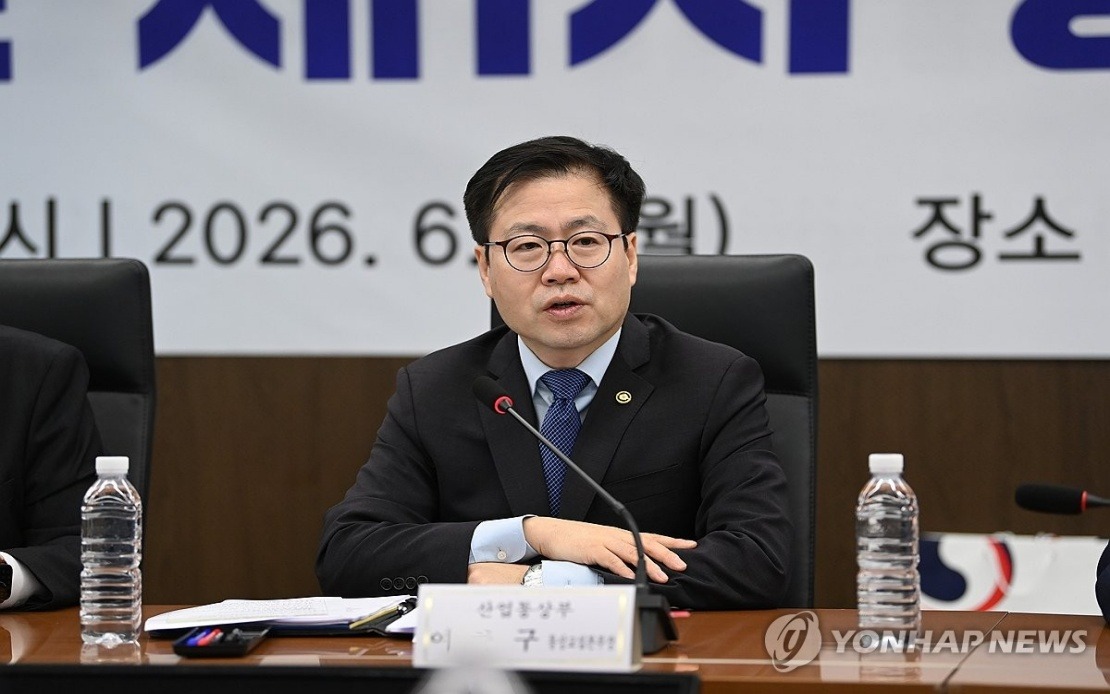
South Korea's government has removed its chief trade negotiator from office, marking a significant development at a critical juncture in Seoul's economic relations with the United States. The Ministry of Personnel Management notified Yeo Han-koo of his dismissal on Friday, according to statements released over the weekend. While the government declined to specify reasons for the decision, the timing raises questions about the administration's strategic approach to increasingly fraught bilateral trade negotiations with Washington.
Government officials were quick to distance the removal from Seoul's ongoing tariff disputes with the United States, issuing a statement asserting that the dismissal carried no connection to current negotiations. However, the assertion itself suggests how sensitive the timing has become for Seoul's trade establishment. Yeo responded to speculation by issuing a statement dismissing claims of personal misconduct as groundless, and indicated he would consider pursuing legal remedies against what he characterized as false reporting. His defensive posture underscores the contentious nature of his departure and hints at internal government pressures surrounding his position.
The dismissal unfolds against a backdrop of mounting economic headwinds for South Korea emanating from Washington. Most prominently, President Donald Trump signed a proclamation on Thursday establishing new tariffs specifically targeting drone technology and related components, with South Korean imports facing a 15 percent levy. This action represents the latest in a series of protectionist measures affecting South Korean exporters and signals Trump's administration intends to use tariffs as a tool to reshape bilateral economic relationships. For South Korea, a nation heavily dependent on export-driven manufacturing, such measures carry immediate consequences for key industrial sectors.
Beyond the drone tariff, South Korea confronts a more complex set of trade challenges requiring high-level negotiation. Seoul faces American pressure to accelerate its investment commitments made under an existing bilateral trade agreement, suggesting that current Korean investment flows fall short of American expectations. This tension reflects the Trump administration's focus on narrowing trade deficits through reciprocal agreements that extract concrete commitments from trading partners. For Seoul, fulfilling such demands while managing domestic economic priorities presents a delicate balancing act that demands skilled diplomatic and negotiating expertise.
A separate dispute over Coupang, the American-listed e-commerce company, further complicates the relationship. South Korea's regulatory authorities have imposed fines on Coupang following a significant personal data breach, triggering American objections about what Washington views as unfair treatment of a US-listed enterprise. This issue exemplifies the friction that can arise when national security and consumer protection standards intersect with foreign economic interests. The fact that it remains unresolved suggests that neither Seoul nor Washington has found an acceptable framework for addressing such regulatory conflicts.
Yeo Han-koo brought considerable experience to the negotiating table, having previously served as trade minister during the Moon Jae-in administration. Following the launch of the Lee Jae Myung administration in May 2025, he was reappointed to the chief negotiator post, a position that typically signals continuity and expertise in managing complex international economic relationships. Since his reappointment, Yeo had been instrumental in steering negotiations with Washington on multiple fronts, including the tariff disputes and Seoul's investment commitment obligations. His sudden removal raises questions about the government's confidence in the approach he had been pursuing or whether internal disagreements about strategy had become untenable.
For regional observers, particularly those in Southeast Asia and Malaysia, the South Korean situation carries relevance beyond Seoul's immediate circumstances. South Korea's struggles with American tariffs and trade pressure may foreshadow similar challenges for other export-dependent economies in the region. The Trump administration's demonstrated willingness to deploy tariffs against specific sectors and countries suggests that Malaysian manufacturers, particularly in electronics, semiconductors, and advanced manufacturing, should anticipate potential scrutiny of their export profiles and may face similar pressure to expand direct investment in the United States. The precedent of rapid policy adjustments and personnel changes in response to trade tensions may also reflect how quickly regional governments might need to adapt their trade negotiating structures.
The broader pattern emerging from Seoul's experience points to the unpredictability of current international trade relations. The combination of tariff escalation, demands for increased investment commitments, and regulatory disputes suggests an environment where traditional frameworks for managing bilateral economic relationships may prove inadequate. South Korea's removal of its chief trade negotiator, whatever the stated reason, signals that conventional negotiating strategies may no longer suffice for managing American demands. This instability in Seoul's approach could complicate efforts to achieve mutually acceptable agreements on outstanding issues.
For Malaysian policymakers and business leaders, South Korea's trajectory offers instructive lessons about the importance of maintaining capable and authoritative trade negotiating leadership during periods of heightened international economic tension. The disruption caused by personnel changes in critical negotiating positions can undermine continuity in talks and potentially weaken a country's bargaining position. Additionally, South Korea's experience demonstrates that export-dependent economies can expect heightened scrutiny of their trade practices, tariff exposure, and investment patterns. Malaysian companies with significant American market exposure should monitor developments in Seoul's negotiations closely, as resolutions or further escalations could influence the trajectory of American trade policy toward other regional exporters.

