The inaugural International Conference on Microplastics 2026 (ICM2026) has brought together 126 researchers, scientists, environmental advocates, industry representatives, and government officials from across Southeast Asia and beyond to confront one of the region's most pressing ecological crises. Hosted by Universiti Malaysia Terengganu (UMT) in Putrajaya, the two-day gathering represents a pivotal moment for coordinating regional responses to microplastic contamination that now permeates marine ecosystems, freshwater bodies, and terrestrial environments from Malaysia to Thailand.
The conference draws participation from Malaysia, Australia, Indonesia, China, Japan, Canada, India, South Korea, the Philippines, and Thailand, reflecting the transnational nature of plastic pollution itself. Particles generated in one nation's waterways inevitably migrate across borders, accumulating in shared regional seas and food systems. By assembling experts across these ten nations, UMT has created a forum where research findings and policy innovations can flow directly between countries grappling with identical environmental challenges.
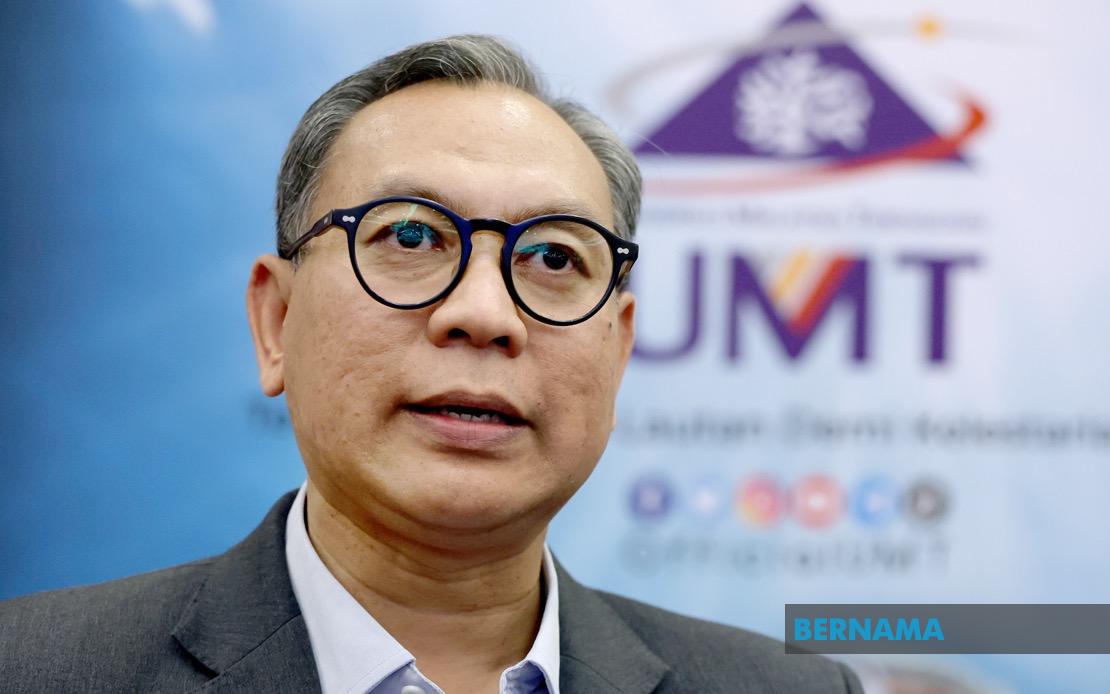
UMT Vice-Chancellor Prof Dr Mohd Zamri Ibrahim underscored the institution's expanding profile as a centre of excellence in marine and aquatic sciences. The university's commitment to hosting this inaugural conference signals its ambitions to shape the global conversation on microplastics—a field that has exploded in scientific importance only within the past decade. By launching this platform, UMT positions itself alongside established research universities while simultaneously anchoring serious environmental governance discussion in Southeast Asia rather than relegating it to distant Western institutions.
Microplastic contamination has emerged as a deceptively complex problem precisely because the particles are virtually invisible yet ubiquitous. These minuscule fragments originate from breakdown of larger plastic waste, synthetic textiles, automotive tyre wear, and degradation of consumer products. Once released into waterways, microplastics do not disappear—they persist indefinitely, travelling vast distances and accumulating in sediments, fish gills, and human digestive systems. For a region like Southeast Asia, where rapid industrialisation and inadequate waste management infrastructure often proceed simultaneously, the threat escalates daily.
The ecological ramifications extend across entire food webs. Small organisms ingesting microplastics pass them upward through the food chain, eventually reaching the fish and shellfish that feed regional populations. Scientific research increasingly documents that microplastics can impede growth in aquatic creatures, disrupt reproductive systems, and trigger inflammatory responses in exposed tissues. Beyond ecological damage, evidence now suggests that humans consuming seafood and drinking water contaminated with microplastics may accumulate these foreign materials in organs, with long-term health consequences still being determined.
What distinguishes ICM2026 from purely academic gatherings is its deliberate inclusion of policymakers and industry representatives alongside researchers. Environmental challenges of this magnitude cannot be resolved through laboratory research alone; they demand coordinated action across regulatory agencies that set standards, industries that must modify production processes, and communities whose waste streams feed the problem. By assembling these stakeholders in dialogue, the conference acknowledges that solutions require not just better science but also political will and commercial innovation.
The conference programme encompasses several interlocking themes that reflect the multidisciplinary character of microplastics research. Presentations on advanced analytical techniques will showcase how scientists detect and quantify these particles across different environmental matrices. Discussions of ecological impacts will synthesise findings from studies tracking microplastic effects on marine biodiversity, freshwater ecosystems, and soil health. Parallel sessions on regulatory frameworks will enable governments to learn from peers attempting to restrict single-use plastics, mandate recycling standards, or enforce manufacturing controls that reduce microplastic leakage at the source.
For Malaysia specifically, the conference carries particular significance. As a major plastic producer and consumer society, Malaysia generates substantial volumes of plastic waste. The country's position on major shipping routes means that ocean currents deposit considerable quantities of microplastics along its coastlines. Simultaneously, Malaysia's pharmaceutical, personal care, and industrial sectors incorporate microbeads and microfibre-shedding materials into products. Hosting an international forum on this challenge positions the nation as willing to confront uncomfortable truths about its own contribution to the problem while simultaneously developing solutions.
UMT's Microplastics Research Interest Group (MRIG) and its commercial arm UMTCS have invested substantial intellectual resources in establishing this conference as a biennial or recurring event. Such institutional commitment signals confidence that microplastics will remain a defining environmental issue for decades. By building networks now among researchers from ten nations, UMT aims to facilitate collaborative research projects that generate more comprehensive regional data than any single country could produce alone.
The university's stated objectives for the conference extend beyond immediate knowledge exchange. By fostering joint publications, strengthening researcher mobility between institutions, and enhancing analytical capabilities across the region, UMT seeks to create structural advantages for Southeast Asian scientists competing in the global microplastics research landscape. Enhanced collaborative networks also position the region's universities to secure international research funding and attract doctoral students seeking to work on environmental problems directly affecting their homelands.
International collaboration on microplastics also opens pathways for addressing upstream causes. Many microplastics originating in Southeast Asia result from inadequate waste collection and recycling infrastructure. Countries like Indonesia and the Philippines have become unintended repositories for plastic waste shipped from developed nations. Through ICM2026, researchers and policymakers can discuss how improved waste management technologies, circular economy principles, and extended producer responsibility can reduce microplastic generation at the source rather than merely managing the consequences downstream.
The challenge ahead remains formidable. Microplastics are now so pervasive that eliminating them entirely from the environment is virtually impossible. Instead, efforts must focus on preventing further accumulation while developing remediation technologies for already-contaminated sites. This transition from problem awareness to solution implementation requires precisely the kind of multisector, multinational dialogue that ICM2026 facilitates. Whether the conference catalyses concrete policy changes across the ten participating nations will ultimately determine whether it represents merely a significant academic gathering or a genuine turning point in environmental governance for Southeast Asia.

