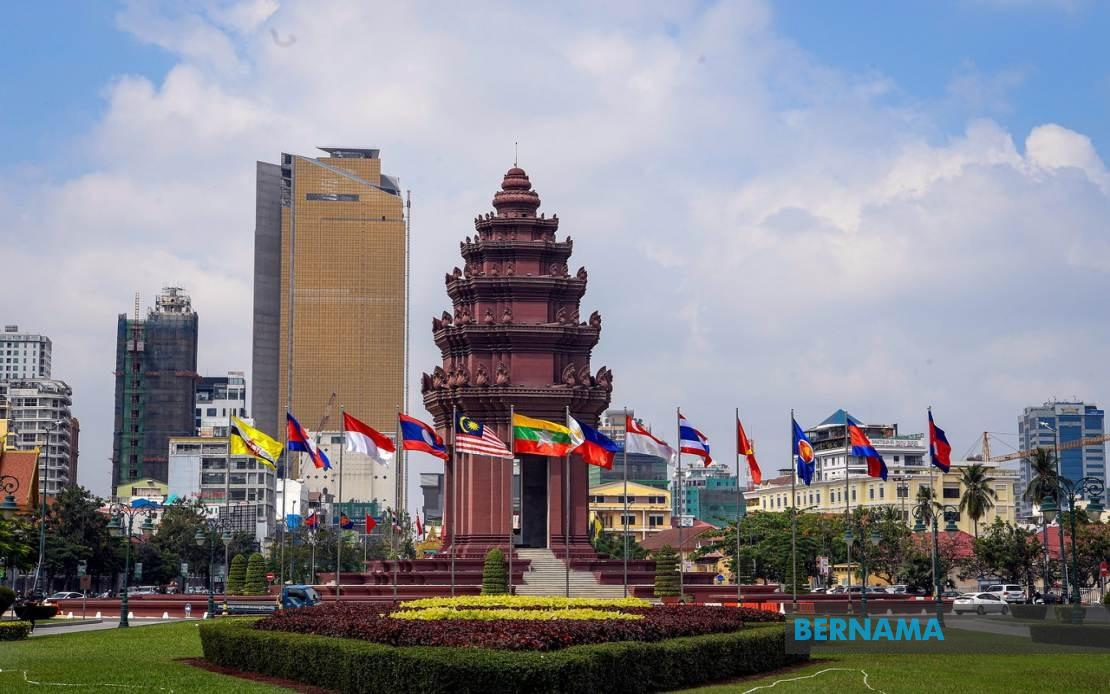
Southeast Asian nations continue to chart ambitious development pathways this week, with governments rolling out infrastructure projects, modernisation programmes, and enforcement actions that signal their commitment to regional integration and economic growth. From expanded air hubs to expanded solar capacity, from civil service reforms to transnational crime operations, the region's policymakers are grappling with the complexities of balancing development ambitions with institutional effectiveness and security concerns.
Cambodia is strengthening ties with India through concrete development partnerships. The two countries have formalised memoranda of understanding to execute rural projects in Kratie Province under the broader Mekong-Ganga Cooperation framework, an initiative that brings together six nations to foster economic and cultural collaboration across the Mekong and Ganges river basins. This partnership reflects Cambodia's strategy to leverage Indian expertise and investment for grassroots development, addressing economic disparities in rural areas that remain vulnerable to marginalisation. The arrangement underscores how smaller Southeast Asian nations are increasingly diversifying their development partners beyond traditional alliances, tapping into India's interest in regional connectivity and market access.
On institutional reform, Cambodia's Civil Service Ministry is embarking on a significant overhaul aimed at professionalism and technological modernisation. The ministry intends to build technical capacity among public servants while simultaneously implementing digitalisation across administrative functions. This dual approach targets a fundamental weakness in many Southeast Asian bureaucracies: outdated processes and insufficient professional development standards that hamper service delivery. As the region experiences rapid economic transformation, governments recognise that outdated administrative systems become bottlenecks to investment, citizen services, and policy implementation. Cambodia's explicit commitment to this challenge suggests recognition that attracting foreign investment and retaining domestic talent require efficient, transparent governance.
Indonesia is pursuing aviation infrastructure expansion to relieve pressure on congested metropolitan hubs. Transportation Minister Dudy Purwagandhi has endorsed plans to transform Lt. Col. Wisnu Airfield in Buleleng District into a functional air transport hub serving northern Bali. The Ngurah Rai International Airport, Indonesia's primary gateway, has become increasingly saturated as tourism recovery and domestic connectivity demand surge across the archipelago. Developing secondary hubs in high-demand regions distributes traffic flows, reduces bottlenecks, and stimulates economic activity beyond Java. This approach mirrors strategies deployed across the region to decentralise economic opportunity and improve regional connectivity.
Simultaneously, Indonesia's anti-corruption apparatus has moved against a prominent judicial official. The National Police formally named Febrie Adriansyah, the former Junior Attorney General for Special Crimes, as a suspect in a corruption and money laundering investigation. This action carries significant symbolic weight: prosecuting high-ranking judicial officials demonstrates commitment to accountability regardless of rank, though it also highlights the endemic nature of corruption networks that implicate senior government figures. For Indonesian investors and foreign partners, such cases underscore both the risks of institutional capture and the ongoing efforts by dedicated investigative agencies to combat it.
Myanmar is investing in transport and energy infrastructure despite significant governance challenges. The newly inaugurated Anisakan Airport in Mandalay Region promises to decongest domestic aviation and enhance market access for regional agricultural products, while simultaneously attracting investment to the region. Concurrently, the 15-megawatt Shwemyoh solar power plant became operational in Naypyidaw, addressing chronic electricity supply challenges that constrain manufacturing and development. The government's announced intentions to expand solar capacity through successive phases suggests a strategic pivot toward renewable energy, mirroring commitments undertaken across the region to meet climate targets and reduce fossil fuel dependence. These projects, however, occur against a backdrop of political instability that complicates long-term planning and investor confidence.
The Philippines faces dual challenges spanning natural disasters and constitutional governance. The Philippine Atmospheric, Geophysical and Astronomical Services Administration reported that the southwest monsoon will persist over Luzon and the Visayas following the exit of Tropical Storm Inday, exposing millions to flooding risks in a season of heightened climate volatility. Separately, the House prosecution panel has established foundational arguments in Vice President Sara Duterte's impeachment trial, moving the proceeding toward substantive testimony and factual determination. The impeachment case represents an extraordinary constitutional moment for the Philippines, raising questions about checks and balances, executive accountability, and institutional integrity that resonate across Southeast Asia's democracies.
Singapore is experiencing two distinct governance issues reflecting broader regional trends. WhatsApp's reservation of high-profile usernames—including those of Singaporean public officials and government bodies—ahead of its username privacy feature rollout demonstrates how technology platforms are reshaping digital governance. The privacy feature allows connection without phone number sharing, a security benefit that governments and prominent individuals value. The simultaneous data point concerning executive condominium income ceiling waivers reveals housing market dynamics: 845 approvals over five years among over 2,500 appeals suggests that income policy tools require periodic adjustment as housing costs and wage distributions evolve. Both developments illustrate how Singapore remains engaged with property markets, digital governance, and financial inclusion.
Thailand is confronting sophisticated transnational crime networks that exploit institutional vulnerabilities. Thai police have issued an arrest warrant for a woman allegedly orchestrating a heroin-smuggling operation that concealed narcotics in creative packaging and recruited aviation workers as couriers. The operation's sophistication—spanning multiple countries, recruiting professionals, and employing deceptive tactics—illustrates how organised crime networks adapt to enforcement pressures and exploit legal gaps. Simultaneously, investigators conducting raids across Koh Samui and Koh Phangan discovered nominee property arrangements concealing foreign ownership in tourism and hospitality sectors. The discovery of over 100 companies registered at single addresses suggests systematised legal circumvention, highlighting tensions between Thailand's foreign investment restrictions and economic interests. These enforcement actions reflect intensifying pressure on institutional capacity to manage cross-border crime, money laundering, and property law violations in regions dependent on tourism revenue.

