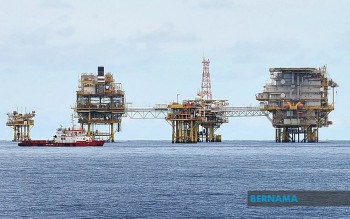
The Asia Pacific offshore energy sector has demonstrated remarkable stability amid international tensions, with Southeast Asia emerging as a particular bright spot for investment. According to Hong Leong Investment Bank, the region is on track to channel more than US$100 billion into greenfield capital expenditure projects—representing a substantial 12 percent increase from previous levels. This expansion signals a strategic shift towards developing new offshore infrastructure rather than merely maintaining existing operations, underscoring investor confidence in the region's medium-term energy prospects.
The broader investment landscape across Asia Pacific reflects a dual-track recovery strategy. While Southeast Asia commits significant resources to launching entirely new developments, both South Asia and the region itself are simultaneously investing in enhancing and upgrading existing facilities. Brownfield capital spending—improvements to established assets—is expected to rise by 23 percent across South Asia and grow 3 percent within Southeast Asia itself. This balanced approach demonstrates that energy companies are not abandoning current production bases but rather strengthening supply chains to ensure immediate operational continuity while building tomorrow's capabilities.
Geopolitical developments in the Middle East have created a more permissive environment for these investments. Following the signing of a United States-Iran 14-point memorandum of understanding, regional tensions have begun moderating despite lingering uncertainties surrounding the durability of any ceasefire agreement. Hong Leong Investment Bank analysts believe this represents a meaningful inflection point, reducing the geopolitical premium that had weighed on energy markets and corporate decision-making. The symbolic importance of renewed diplomatic engagement cannot be overstated for regional economies dependent on stable energy flows and predictable international relations.
Shipping data emerging from the Strait of Hormuz—one of the world's most critical energy chokepoints—corroborates these optimistic signals. Traffic patterns show gradual recovery following the MOU signing, though satellite imagery reveals a curious development: many vessels are transiting with their automatic identification system transponders deactivated, suggesting actual shipping volumes may exceed officially recorded figures. This shadow shipping activity likely reflects residual caution among operators who remain uncertain about long-term stability in the region.
Investment strategists at Hong Leong Investment Bank have anchored their outlook on two primary themes that will shape energy sector evolution. The first concerns energy security policy responses to recent disruptions. Governments and corporations worldwide have reassessed stockpiling priorities, with many now targeting elevated inventory reserves. This strategic shift directly benefits infrastructure providers including pipeline operators and terminal storage facilities, as supply chains rebuild protective buffers. The second investment pillar focuses on Malaysia's national oil champion, where analysts anticipate a significant capital expenditure upcycle beginning in 2027. For Malaysian readers, this holds particular importance: a Petronas-led investment surge would benefit domestic companies specialising in upstream development, hook-up and commissioning work, marine support services, and fabrication—sectors deeply embedded in Malaysia's industrial ecosystem.
Oil price forecasts have undergone meaningful revision as analysts digest changing supply-demand dynamics. Hong Leong Investment Bank reduced its 2026 Brent crude projection to US$80 per barrel from the previously anticipated US$90, while maintaining a US$75 floor for the following year. This recalibration reflects genuine expectations of moderated global demand rather than unfounded pessimism. The underlying reasoning stems from inventory analytics compiled by the US Energy Information Administration, which tracks commercial crude stockpiles across developed economies. Current projections suggest these reserves will decline to just 50 days of supply by late 2026—substantially below pre-conflict baselines exceeding 60 days—indicating global markets remain undersupplied relative to normal peacetime conditions.
The implications of undersized global inventories extend well beyond oil price movements. With energy buffers depleted, prices should remain firmly supported above the US$75 per barrel threshold into early 2027, contingent on continued inventory depletion. Should reserve rebuilding extend beyond achieving 60 days of supply—a realistic scenario given elevated geopolitical consciousness about energy security—Brent could stabilise around the US$80 level. This price architecture reflects genuine structural tightness rather than speculative excess, making current valuations defensible on fundamental grounds.
Upward price pressures could intensify if production recovery proves slower than anticipated. Production shut-ins concentrated in the Strait of Hormuz region peaked at 45 percent of regional capacity in May 2026, compared to 35 percent just two months earlier in March. This escalation during the period of maximum geopolitical tension created cascading supply disruptions with lasting consequences. Even as political temperatures cool, bringing all idled capacity back online typically requires months of preparation and testing, meaning production deficits will persist well into the second half of 2026 at minimum.
Economists monitoring broader macroeconomic implications offer a more expansive perspective on what moderated oil prices could achieve. Mohd Sedek Jantan, investing strategy director at IPPFA, emphasizes that Brent and West Texas Intermediate crude have retreated substantially from peak levels, currently gravitating toward the US$70-75 per barrel range. Should this level prove sustainable over coming quarters, the consequences ripple throughout entire economies. Energy-intensive industries—from petrochemicals to manufacturing to transportation—would face reduced input costs and enhanced price predictability, facilitating more confident capital planning and investment decisions.
The macroeconomic transmission mechanisms operate through multiple channels. Lower energy costs directly reduce cost-push inflation, the pernicious variety driven by rising input expenses rather than excess demand. Central banks worldwide have struggled against stagflation scenarios where elevated inflation constrains monetary policy flexibility. Moderated oil prices would ease this constraint, permitting central authorities to maintain accommodative policy stances that support business investment and consumer purchasing power simultaneously. For Southeast Asian economies with substantial energy imports and developing central banks, this policy space proves invaluable for supporting sustained recovery without sparking destabilising inflation.
At present, crude markets remain in flux. Brent advanced 0.90 percent to US$69.17 per barrel while West Texas Intermediate rose 0.94 percent to US$72.67 per barrel, both reflecting the delicate balance between residual geopolitical risk premium and growing recognition that supply constraints may be easing. For Malaysian policymakers and businesses, these dynamics create both opportunities and challenges. The projected Southeast Asian investment surge offers genuine wealth creation potential, particularly for companies positioned in energy services and infrastructure. Simultaneously, moderating energy costs could improve competitiveness across export-oriented sectors, supporting Malaysia's broader economic recovery trajectory throughout 2026 and beyond.

