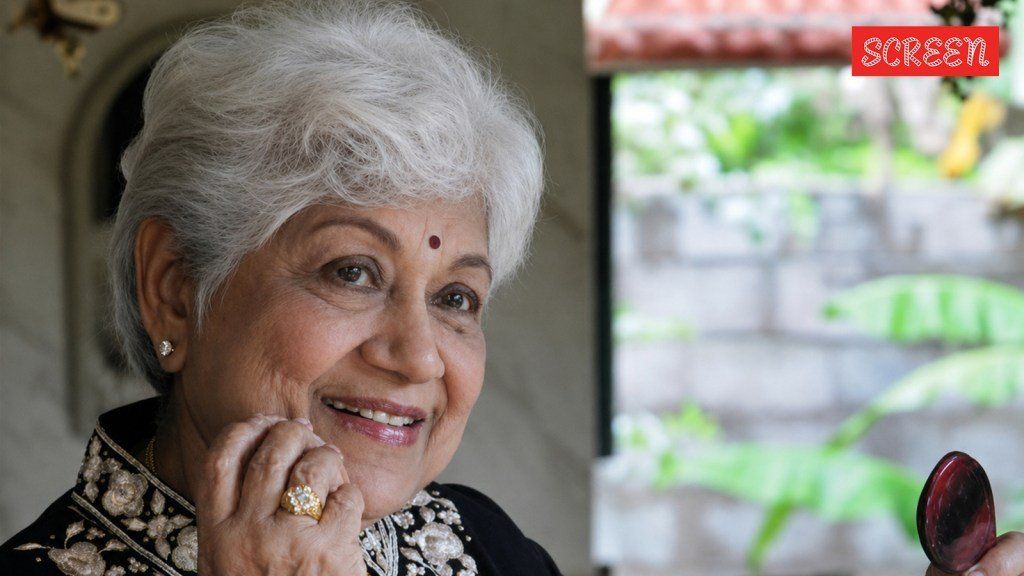
The South Indian film industry mourned the loss of Sowcar Janaki on Friday, August 21, as the 94-year-old legendary actress succumbed to age-related illness at a private hospital in Chennai. Her passing marks the end of an extraordinary career that redefined the role of women in Tamil, Telugu, Kannada, and Malayalam cinema during an era when opportunities for female performers were considerably more limited than today. The South Indian Artistes' Association president and actor Nassar announced her death, noting that her mortal remains would be placed at Cenotaph Road in Teynampet from 5 pm onwards, allowing admirers and industry colleagues to pay their final respects.
Born Sankaramanchi Janaki, the actress became known professionally as Sowcar Janaki and built an astonishing filmography encompassing nearly 400 productions across multiple Indian film industries. Her prolific output was complemented by consistent critical recognition throughout her lifetime. The veteran performer received the prestigious Padma Shri award, India's fourth-highest civilian honour, alongside a Filmfare Lifetime Achievement Award, two Nandi Awards, and a Kalaimamani Award—each testament to her enduring influence on South Indian culture and cinema. Her journey in the film industry began in 1950, a period when regional Indian cinema was still establishing itself as a serious artistic medium capable of producing internationally significant work.
Tamil Nadu Chief Minister C. Joseph Vijay responded to news of Janaki's death with an official statement expressing profound shock and sorrow. In comments posted to X, the CM-actor acknowledged that the actress had secured "an indelible place in the hearts of fans across generations through her distinctive acting," while emphasizing how her artistic contributions spanned more than seven decades of continuous work. Vijay further noted the remarkable breadth of her career, pointing out that she achieved success working across five different language film industries—Tamil, Telugu, Malayalam, Kannada, and Hindi—a remarkable feat given the technical and cultural challenges of navigating multiple regional cinema industries simultaneously during the mid-twentieth century. The Chief Minister's tribute underscored not merely her commercial success but her cultural significance as an artist who transcended regional and linguistic boundaries.
Several of Sowcar Janaki's most illustrious co-stars issued personal tributes that revealed the depth of working relationships formed over decades in the industry. Kamal Haasan, one of Tamil cinema's greatest actors, recalled collaborating with her across numerous projects spanning four decades, beginning with the film Paarthaal Pasi Theerum. Haasan noted that Janaki frequently portrayed maternal roles opposite his youthful characters, a dynamic that proved particularly effective given her natural screen presence and the emotional authenticity she brought to such roles. The actor emphasized that she had been a favored performer of his mentor K. Balachander, the legendary director whose influence shaped South Indian cinema fundamentally, and that she enjoyed the respect and affection of nearly all leading male actors of her generation.
Actress Radhika Sarathkumar, representing a younger generation of performers, described Sowcar Janaki as "a strong and independent, strong willed path breaker," emphasizing the pioneering aspects of her career. Sarathkumar mentioned that she had been close to Janaki personally, given their respective families' connections within the film industry, and that Janaki had been a close friend of Sarathkumar's father, the late Mr. Radha. The younger actress's comments highlight how Sowcar Janaki's influence extended beyond her on-screen performances to shape the expectations and possibilities available to subsequent generations of female performers seeking meaningful, substantial roles in South Indian cinema.
Telugu cinema personalities offered additional perspectives on the actress's contributions to their industry specifically. Jr. NTR posted a tribute in Telugu acknowledging that Janaki's "cinematic journey and the roles she portrayed will forever remain in our memories," while noting her indelible impact on both Telugu and broader Indian cinema. Chiranjeevi, one of Telugu cinema's biggest stars, composed a lengthy tribute noting how she had pursued a "magnificent" career portraying "diverse roles through her natural acting," a quality that distinguished her from many contemporaries who relied on more stylized or theatrical performance techniques. Chiranjeevi's reference to her beginning with a film titled 'Shavukaru' and spanning nearly seven decades across multiple languages reinforced the sheer scope of her professional accomplishment.
Vishnu Manchu, representing contemporary Telugu cinema, joined the tributes by encouraging younger performers to study Janaki's career as a benchmark for artistic excellence. He emphasized that her "grace, dignity and remarkable body of work will live on for generations," suggesting that her influence would continue shaping the industry through inspiration drawn from her example rather than through active participation. This perspective indicates how veteran performers often exert influence posthumously through the standards they establish and the precedent they create for artistic integrity and sustained excellence across decades.
Sowcar Janaki's later career demonstrated her continued relevance and capacity to adapt to evolving entertainment formats. Her final Tamil film appearance came in 2020 with Biskoth, while her most recent Telugu film was Anni Manchi Sakunamule in 2023, indicating she maintained active involvement in cinema well into her ninth decade. Beyond theatrical films, she also ventured into television, further expanding her reach and demonstrating the versatility required to sustain a meaningful career across different media and narrative forms. This willingness to adapt to changing technologies and audience preferences distinguished her from many contemporaries who remained tied exclusively to theatrical cinema.
For Malaysian readers and Southeast Asian audiences more broadly, Sowcar Janaki's career represents a crucial chapter in South Asian cinema's development during the twentieth century. South Indian cinema, particularly Tamil and Telugu productions, has increasingly achieved regional and international recognition, with contemporary films and streaming content reaching audiences throughout Southeast Asia. Understanding figures like Sowcar Janaki—who established templates for female performance and demonstrated that actresses could sustain multi-decade careers playing substantive roles—provides essential context for appreciating how South Indian cinema evolved. Her example shows how regional cinema industries can produce artists of international caliber while maintaining strong cultural and linguistic specificity, a model increasingly relevant as global entertainment becomes more decentralized and diverse.

