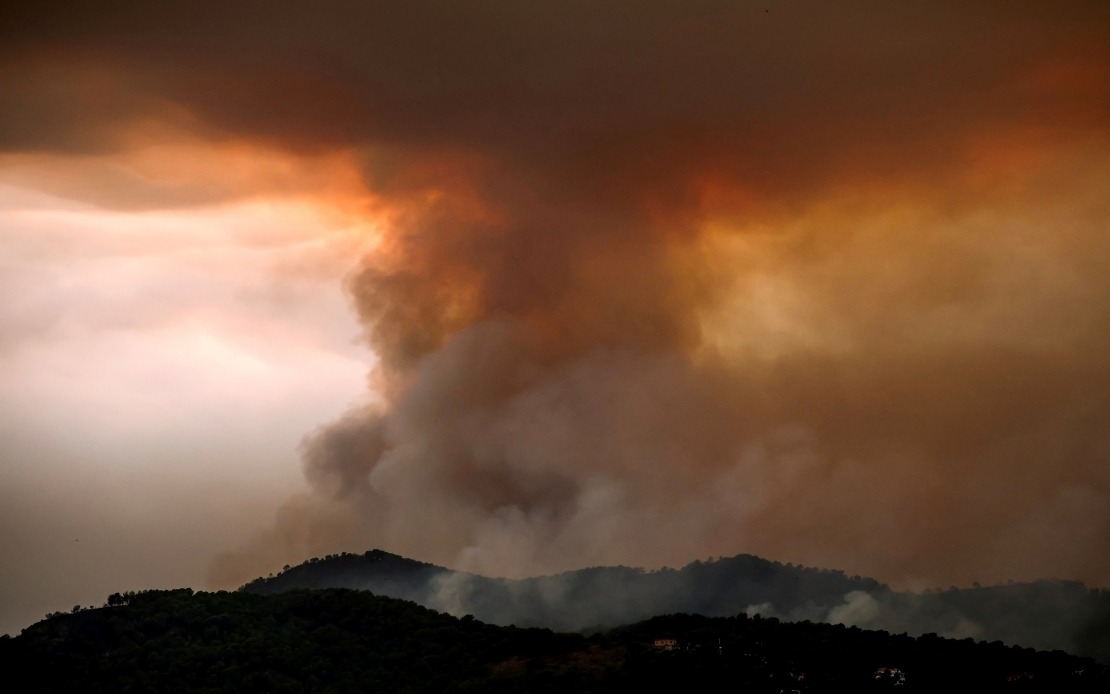
Spain is struggling to contain multiple catastrophic wildfires that have swept across its central regions, with the blaze in Avila province now officially recognized as the largest wildfire ever recorded in the nation's history. Authorities reported that the Avila fire alone had consumed approximately 50,000 hectares of land by Sunday, July 27, marking a grim milestone that underscores the severity of the country's fire emergency. The scale of destruction has prompted an unprecedented response from the Spanish government, which has mobilized its entire arsenal of firefighting resources to combat the advancing flames.
The wildfire emergency extends far beyond Avila's borders, with fires also devastating the Madrid region and Toledo province. According to Spain's Third Deputy Prime Minister and Ecological Transition Minister Sara Aagesen, the combined toll across these three provinces reached more than 77,000 hectares—a staggering area roughly equivalent to the size of New York City. This broader assessment reveals that multiple fire fronts are simultaneously threatening populated centers across central Spain, stretching emergency services to their limits. The geographical spread of the fires has created a complex operational challenge that requires coordinated action across different regional boundaries and jurisdictions.
The human cost of these disasters has been equally disturbing, with nearly 100,000 residents evacuated or ordered to shelter indoors as a precautionary measure. These individuals are scattered across 46 municipalities in the hardest-hit areas of Madrid, Avila, and Toledo, representing a massive displacement that will have significant social and economic implications for affected communities. Beyond the primary fire zones, an additional wildfire broke out over the weekend in Castellon province to the east, impacting more than 16,000 people across 18 municipalities and adding another layer of complexity to Spain's emergency response efforts.
The battle against these fires involves a massive deployment of resources that reflects the gravity of the situation. Thousands of firefighters have been mobilized, working in rotation to contain the advancing flames across multiple fronts. Supporting these ground crews are Spain's Military Emergency Unit (UME), a specialized force trained to respond to catastrophic disasters, alongside a fleet of firefighting aircraft and helicopters providing aerial support. This multi-layered response demonstrates the Spanish government's recognition that conventional firefighting methods alone cannot contain blazes of this magnitude, particularly when dealing with multiple simultaneous fire zones.
A critical development emerged when military officials provided an assessment of the fire situation in Avila and Madrid. Lieutenant General Francisco Javier Marcos Izquierdo, the commander of the UME, clarified that while the two major fire zones had technically made contact near San Martin de Valdeiglesias, they had only connected along what he described as a "very small, discontinuous front." This technical distinction carries operational significance, as it suggests that while the fires remain separate and distinct entities, they pose a secondary risk should they merge and create a unified megafire capable of overwhelming firefighting efforts. Firefighters reported progress in preventing the flames from spreading between the two zones, though authorities acknowledged that the full perimeter remained unsecured, meaning the danger was far from contained.
Meanwhile, from an advanced command center in Navalcarnero, west of Madrid, Minister Aagesen painted a sobering picture of conditions on the ground. She characterized the wildfire situation as "complex," a measured assessment that belied the intensity of the crisis unfolding across multiple provinces. Emergency crews were simultaneously battling blazes on several distinct fronts, each demanding specialized tactics and substantial resources. Aagesen cautioned that the initial evacuation of nearly 100,000 people might prove insufficient, and she reserved the right to order further evacuations if fire behavior deteriorated or spread to new population centers. Crucially, she emphasized that evacuated residents would remain displaced until authorities determined that conditions had stabilized sufficiently to permit safe returns.
Political leaders, recognizing both the public relations imperative and the genuine humanitarian emergency, made highly visible visits to affected areas. Prime Minister Pedro Sanchez traveled to the disaster zone on Sunday to assess conditions firsthand and offer reassurance to both emergency workers and affected residents. While acknowledging the "extremely complex" nature of the firefighting challenge, Sanchez suggested an optimistic trajectory, indicating that portions of the fires had already come under control and that the overall situation appeared to be evolving favorably. This messaging sought to balance transparency about the genuine difficulties facing emergency responders with hope that containment efforts were beginning to show results.
In a gesture heavy with symbolic importance, Spain's reigning monarch King Felipe VI and Queen Letizia also visited the disaster zone during the height of the emergency. The royal couple's presence served multiple functions: they received detailed briefings on emergency response operations, expressed solidarity with affected residents, and acknowledged the extraordinary efforts being made by frontline firefighters and rescue workers. Such royal involvement underscores the political significance of the crisis within Spanish national consciousness and demonstrates the gravity with which the monarchy views the emergency.
Placing this crisis within a broader context, Spain's Ecological Transition Ministry reported that wildfires nationwide had consumed 172,453 hectares of land as of July 24—before the Avila fire reached its record-breaking proportions. This figure suggests that the ongoing fire season has been exceptionally severe across the entire Spanish territory, not merely concentrated in the central provinces. The scale of destruction raises urgent questions about climate change, land management practices, and Spain's long-term vulnerability to increasingly intense wildfire seasons that may become more frequent and severe in coming decades.

