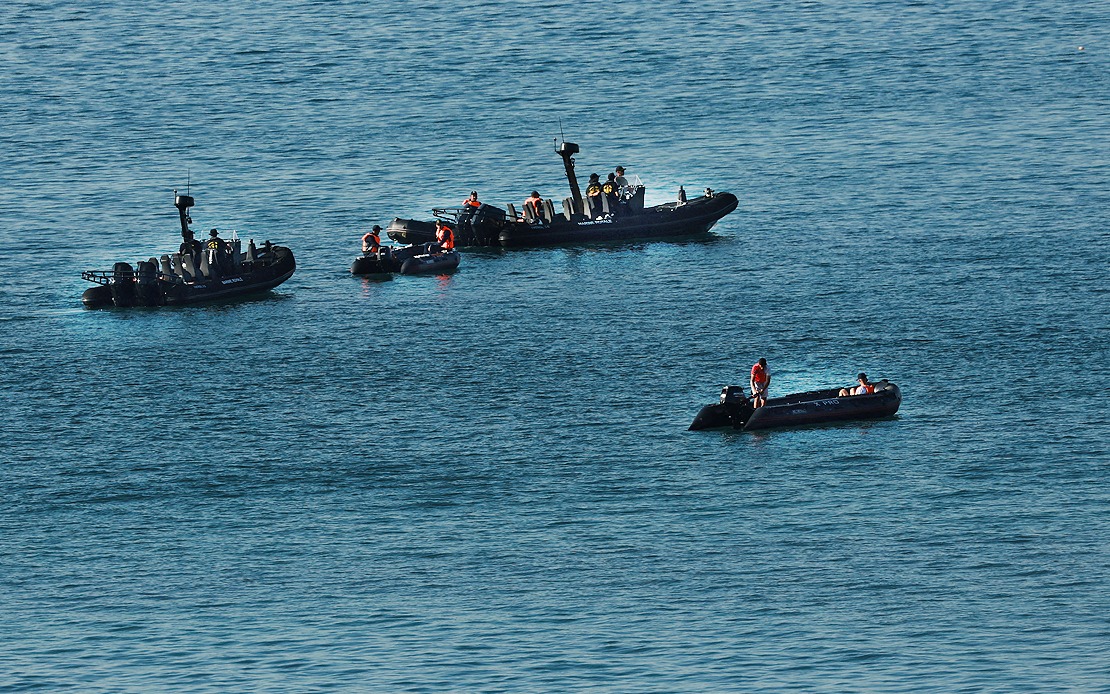
Spanish rescue operations continue in the waters surrounding Ceuta, the Spanish enclave in North Africa, as authorities work to recover the bodies of migrants who lost their lives during an unprecedented influx that saw tens of thousands of people attempt to cross into European Union territory in recent days. The tragic maritime situation underscores the desperate circumstances driving migration across the Mediterranean and Morocco's northern coast, with search efforts intensifying as the full scale of the casualties becomes apparent.
So far, rescue personnel have pulled 67 bodies from the sea, all of them individuals who perished while attempting to swim from Morocco into Ceuta in search of a better life in Europe. The fatalities highlight the extreme dangers of irregular maritime crossings, where migrants often rely on treacherous routes through crowded waters with minimal safety provisions. These deaths represent only a portion of those who may have drowned during the chaotic period when large numbers of people surged into the territory.
Local and national authorities are preparing for the possibility of discovering many more victims. Officials have established a facility capable of holding up to 200 bodies, demonstrating the scale of concern among emergency management teams about the true toll of the crossing attempt. This preparation reflects both the grim reality of the situation and the institutional response required to handle a mass casualty event of this magnitude.
The migrant surge itself was staggering in scope and speed. Approximately 50,000 people entered Ceuta from Morocco over the course of just a few days, overwhelming a territory with a resident population of only 85,000 people. The sudden influx created an acute humanitarian and administrative crisis, straining local services and triggering international diplomatic tensions. Such rapid population movement underscores how quickly migration pressures can escalate when opportunity appears or when border controls are perceived as compromised.
While a significant portion of the migrants have since voluntarily returned across the border to Morocco, the incident has exposed vulnerability in Spain's border management and triggered considerable political fallout. Several European Union leaders have levelled sharp criticism at Spain's left-wing government, questioning both the circumstances that allowed the crossing to occur and the official response to managing the resulting humanitarian emergency. These criticisms reflect broader EU concerns about coordinated migration policy and border security.
The underlying factor in this crisis traces back to a Spanish Supreme Court decision that fundamentally altered the legal calculus for irregular migrants. The court ruled that individuals who enter Spanish territory irregularly by crossing through unfortified sections—specifically maritime areas—retain the right to individual asylum assessment procedures. This ruling created what officials view as a legal loophole, essentially making sea crossings an attractive alternative to other entry methods because they offered a pathway to formal asylum processing.
In response to this legal vulnerability, Spanish authorities have moved to physically close the maritime route into Ceuta. Workers have been deploying buoys along the coast to establish a barrier in the sea, a concrete measure designed to prevent future crossing attempts and eliminate the gap that the court's ruling inadvertently created. Television footage from Sunday showed relatively calm conditions along the shoreline, with minimal migrant activity visible, though the barrier installation work continues.
The buoy barrier represents an attempt to achieve through physical infrastructure what the government could not achieve through immigration policy or court decisions alone. By closing the actual maritime pathway, Spanish officials aim to eliminate the incentive for migrants to attempt dangerous sea crossings while also restoring practical control over entry points that had become overwhelmed. However, such physical barriers often redirect migration flows rather than eliminate them entirely, potentially creating challenges elsewhere along Mediterranean or Atlantic routes.
For Southeast Asian observers, the Ceuta crisis offers important lessons about migration pressure, unintended legal consequences, and the limitations of physical barriers in managing complex border challenges. Many countries in the region face their own irregular migration pressures from Myanmar, Afghanistan, and elsewhere, and the experience of Ceuta demonstrates how quickly emergency situations can escalate when institutional frameworks fail or contain unintended gaps. Malaysia, in particular, maintains significant populations of Rohingya and other displaced communities, making the European experience directly relevant to regional policymaking.
The incident also illustrates how geopolitical positioning—Morocco's willingness to allow migrants to cross, Spain's vulnerability as an EU gateway, and broader European migration debates—creates humanitarian crises that claim lives and test institutional responses. The 67 recovered bodies represent families devastated and communities fractured, outcomes that transcend political controversy and demand regional attention to preventing such tragedies.
As Spanish authorities continue their search operations and prepare infrastructure to handle additional victims, the broader implications for migration management across continents remain unclear. The crisis demonstrates that without coordinated, compassionate, and legally coherent approaches to migration, both migrants and receiving societies face profound disruption and tragedy. The buoys now being installed off Ceuta serve as physical reminders of this hard lesson.

