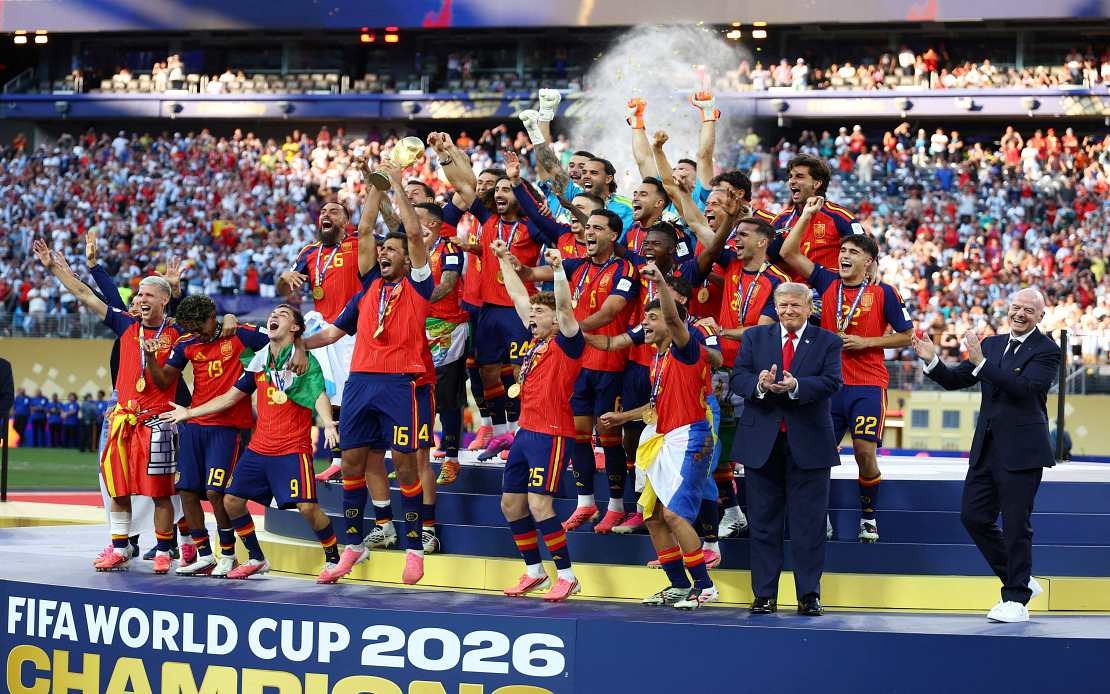
Spain's triumphant World Cup squad will touch down in Madrid on Monday afternoon to begin an extended homecoming celebration that organisers expect will draw hundreds of thousands of supporters throughout the capital. The arrival at Adolfo Suárez Madrid-Barajas Airport is scheduled for 12:50 pm local time, setting the stage for what promises to be one of Spain's largest sporting celebrations in recent memory. Captain Rodri will lead the team through a carefully choreographed series of events designed to allow the nation to collectively honour their second men's World Cup triumph, achieved just hours earlier in the United States.
The celebration reflects the magnitude of Spain's achievement on Sunday evening, when forward Ferran Torres converted an extra-time opportunity to secure a victory against Argentina in the final match. This victory represents the pinnacle of the Spanish national team's resurgence after a period of relative international underperformance, cementing the squad's place in the nation's sporting pantheon alongside the legendary Euro 2008 and Euro 2012 European Championship-winning teams. The success has reignited passionate support among Spanish football fans who have waited years for another global title to match the country's extraordinary track record in continental competitions.
King Felipe VI will personally welcome the team at the Royal Palace later in the afternoon, underscoring the cultural and symbolic importance the Spanish state places on sporting achievement. The royal reception provides an official endorsement of the team's accomplishment and offers a formal moment of national recognition before the celebrations move to the streets. Prime Minister Pedro Sánchez demonstrated his enthusiasm for the victory by posting on social media immediately following the final whistle, declaring "We Are World Champions. Our national team is tremendous. Thanks, Team," and both he and the King attended the final match in person at the New Jersey stadium, demonstrating top-level government commitment to supporting the national squad.
Following the Palace reception, the squad will participate in an open-top bus parade through central Madrid, allowing millions of supporters lining the streets to glimpse their heroes and express their gratitude for the World Cup victory. Such parades have historically drawn crowds numbering in the hundreds of thousands, with supporters leaving work and bringing families to witness the momentous occasion. The route through the capital will likely pass iconic Madrid landmarks, creating a symbolic journey that connects the nation's sporting success with its geographical and cultural centre.
Defender Marc Cucurella articulated the team's perspective on the homecoming celebrations, emphasising the importance of sharing the triumph with supporters who could not attend the final in the United States. "We are really looking forward to returning to Spain. Many people couldn't be here and we want to celebrate with everyone. I think we deserve a good celebration," Cucurella stated, reflecting the squad's understanding that World Cup victory belongs to the entire nation rather than solely to the 23 players who competed. This sentiment underscores the broader significance of the achievement for Spanish national identity and collective pride.
The culminating event of Monday's festivities will occur at Cibales Square, where organisers have scheduled a major concert and celebration programme beginning at 6 pm, with the team expected to make their appearance at approximately 9 pm. The square, one of Madrid's most recognisable public spaces, provides an appropriate venue for addressing the anticipated crowd size. This final gathering will likely feature performances by Spanish musical acts alongside speeches from government officials and team representatives, allowing supporters to participate in a festival atmosphere celebrating both the football victory and Spanish cultural pride.
For Malaysian and Southeast Asian readers, Spain's World Cup success holds particular relevance within the broader context of global football dynamics and the resilience of traditional European powerhouses in adapting to evolving international competition. Spain's victory demonstrates how established football nations can reinvent themselves while maintaining their competitive edge, a lesson applicable to all aspiring football-playing nations in the region. The Spanish team's journey from relative underperformance to world champions illustrates the importance of sustained investment in player development and tactical innovation, themes that resonate across Asian football federations examining their own pathways to international competitiveness.
The celebrations unfolding across Madrid on Monday also highlight the profound connection between sporting achievement and national sentiment in contemporary Europe. Where football serves as a unifying force transcending political divisions and socioeconomic boundaries, World Cup victories provide rare moments of collective national expression and shared joy. For Spain, emerging from periods of internal political tension and economic challenges, the World Cup triumph offers a symbolic moment of national renewal and international validation of the country's capabilities and character.
The homecoming celebrations represent not merely the conclusion of a tournament but the beginning of a new chapter in Spanish football history. The team's achievement will influence youth participation in the sport, enhance the country's international prestige, and likely reshape the national football narrative for years to come. As supporters gather across Madrid on Monday to welcome their champions home, the nation demonstrates its capacity to celebrate achievement collectively and reinforce the bonds that connect citizens through shared sporting passion and national pride.

