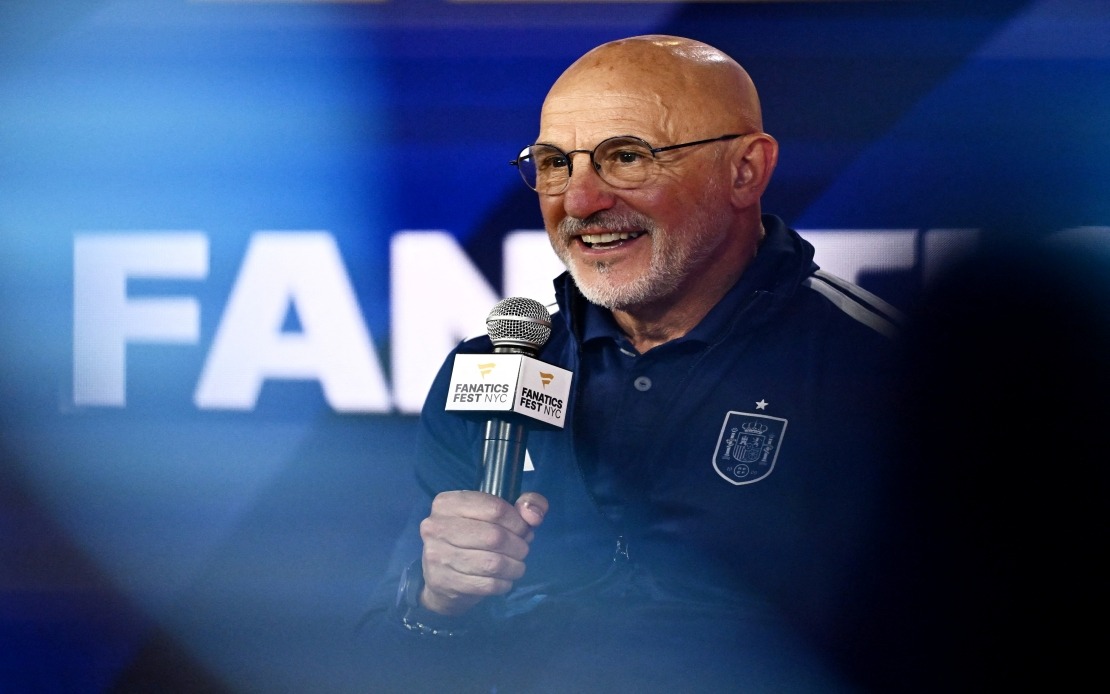
Spain's head coach Luis de la Fuente has issued a pointed warning to the referee appointed for Sunday's World Cup final, insisting that officiating must be firm and impartial throughout the match against Argentina. The remarks, directed at Slovenian official Slavko Vinčić, suggest underlying concerns about how the game will be managed and reflect the high stakes surrounding what promises to be a fiercely contested encounter at the Met Life Stadium in New Jersey.
Vinčić's appointment carries particular resonance given his involvement in Argentina's shock defeat to Saudi Arabia during the 2022 tournament in Qatar. On that occasion, his decisions drew criticism from observers who felt the official had favoured the Middle Eastern underdog with several contentious calls. The memory of that encounter appears to linger, prompting De la Fuente to be explicit about his expectations for Sunday's showdown.
De la Fuente's intervention reflects a common pre-match tactic among coaches seeking to influence officiating decisions, though his comments carried a notably serious tone. The Spanish tactician emphasised that match officials cannot adopt a passive stance and must actively prevent any transgressions of football's rules. His reference to "lines of footballing legality" suggests concerns that Argentina might test the boundaries of acceptable conduct, whether through tactical fouls, time-wasting, or other gamesmanship tactics often employed under pressure.
Yet De la Fuente was careful to frame his comments within an expression of confidence in referees more broadly. He stressed his unwavering belief in the integrity of match officials whilst simultaneously making clear that Spain understands the type of competition it must undertake. This duality suggests a coach preparing his team mentally for a contest where both sides will push boundaries, rather than one making unfounded allegations.
The Spanish coach's broader philosophy emerged as he discussed how his team intends to approach the final. He signalled that Spain will remain true to its established playing style, characterised by technical excellence and adherence to football principles. De la Fuente warned his players against being drawn into provocations or deviating from their model, suggesting that maintaining discipline and composure would prove essential against opponents known for their competitive intensity and occasional controversies.
The final holds special significance as potentially the last World Cup appearance for Argentina's Lionel Messi, the 39-year-old forward who is unlikely to feature in international football by 2030. De la Fuente shared a telling anecdote from his youth coaching days at Sevilla, when his team faced Messi and conceded four goals in fifteen minutes after an opponent was sent off. The story illustrated both Messi's devastating quality and served as a reminder of the threat Argentina's legendary forward continues to pose.
Argentina's head coach Lionel Scaloni offered a contrasting perspective during his own press conference, focusing on his concerns about Spain's capabilities. Scaloni expressed anxiety about facing the European champions, whose experience and quality he clearly respects. His apparent nervousness reflected the genuine threat posed by a Spanish side that has reached multiple major finals in recent years, including the Euro 2020 championship and the Nations League final.
Scaloni's comments revealed a coach acutely aware of Spain's pedigree and consistency at the highest level. He acknowledged that Spain's players have operated successfully in the world's most demanding football environments and possess experience from competing in high-pressure final matches. The Argentina manager's repeated expressions of concern seemed designed partly to build respect for his opponents and partly to ensure his own squad recognised the magnitude of the challenge ahead.
Interestingly, Scaloni appeared to suggest that pressure plays less significantly once competitive action begins. He indicated that elite players tend to reset mentally once the match starts, focusing purely on performance rather than broader implications. This observation suggests that both coaches view the psychological dimension as important but ultimately secondary to technical execution and tactical discipline.
Scaloni harbours ambitions of becoming only the second manager to win consecutive World Cups, a feat last achieved by Italy's Vittorio Pozzo in 1934 and 1938. The historical weight of such an achievement underscores the significance of Sunday's contest. Argentina, having claimed the 2022 World Cup in Qatar, stands on the cusp of cementing a dynasty if Scaloni can guide them to victory against the formidable Spanish challenge.
The contrast between the coaches' public statements reflects different preparation strategies. De la Fuente appeared focused on external factors and maintaining his team's composure amid potential distractions, whilst Scaloni sought to emphasise the quality of opposition and unite his squad through shared respect for their opponents. Both approaches are designed to maximise their respective teams' performance in a match where margins are razor-thin.
With Vinčić's appointment confirmed and the competing narratives now fully established, both camps have staked their positions ahead of what promises to be one of football's most compelling finals. The referee's ability to maintain control whilst allowing the match to flow naturally will prove crucial, and De la Fuente's warning signals that Spain intends to monitor his performance closely throughout proceedings.

