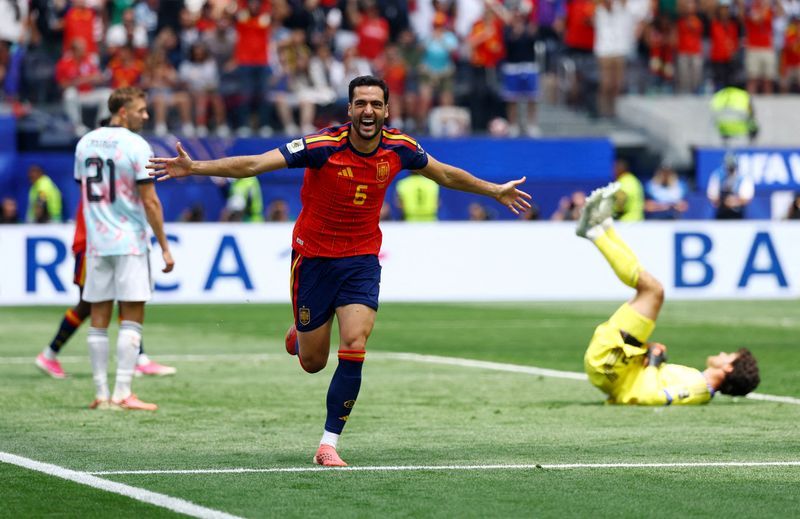
Spain booked their place in the World Cup semi-finals on Friday with a stirring comeback that highlighted both their attacking prowess and Belgium's mounting injury crisis. The dramatic conclusion came in the 88th minute when substitute Mikel Merino capitalised on a goalkeeping error to fire home the winner at Los Angeles Stadium, securing a 2-1 triumph that will see the European champions face tournament heavyweights France in Dallas on Tuesday.
The path to Spain's victory was shaped largely by Belgium's defensive vulnerabilities in the latter stages of the contest. When backup goalkeeper Senne Lammens replaced the injured Thibaut Courtois during the second half, the visitors' luck continued to deteriorate. A low drive from Pau Cubarsi proved the undoing of the makeshift Belgian rearguard as Lammens failed to secure the ball cleanly, allowing it to bounce loose in front of goal where Merino pounced with the composure required in such high-pressure circumstances.
Spain's route to this point had been marked by Luis de la Fuente's bold tactical choices. The coach's decision to start Fabian Ruiz ahead of Pedri proved inspired, with the Paris Saint-Germain midfielder opening the scoring in the 30th minute. Following up on Courtois's diving save, Ruiz reacted quickest to thread a shot between Timothy Castagne's legs with clinical finishing. This early advantage appeared to give Spain control of proceedings during an intensely hot afternoon in Southern California.
Belgium's response came swiftly, demonstrating the fighting spirit that has kept them competitive despite a depleted squad. Charles De Ketelaere restored parity eleven minutes after Ruiz's opener, timing his run perfectly to direct home Timothy Castagne's cross past goalkeeper Unai Simon. This represented the first goal Spain had conceded throughout the entire tournament, indicating just how miserly they had been defensively up to this point. The equaliser injected fresh energy into the Belgian team as they approached the interval, with both sides battling through oppressive heat to reach halftime level.
Belgium's campaign had been systematically undermined by injuries affecting key personnel. Captain Youri Tielemans was withdrawn from the starting lineup mere moments before kickoff after failing to recover from a warm-up injury, forcing Hans Vanaken into the breach. More significantly, midfielder Amadou Onana remained sidelined following an anterior cruciate ligament tear sustained during their dramatic round-of-16 victory against the United States. These absences substantially weakened Belgium's midfield control and defensive stability.
The second half proved decisive as Spain adjusted their approach and pressed forward with renewed intensity. After introducing Merino from the bench with approximately four minutes remaining in normal time, Spain finally found the breakthrough that their possession and pressing had merited. The dramatic timing of the goal, arriving so late in the contest, exemplified both Spanish resilience and Belgium's inability to sustain their defensive structure under sustained pressure.
Spain's progression marks only the second occasion they have reached the World Cup semi-finals in their history. Their previous semi-final appearance came in 2010 when they ultimately captured the tournament title, securing global recognition as football's dominant force during that era. Prior to that, Spain had finished fourth in the 1950 competition when the final round operated as a group stage format rather than the knockout structure familiar to modern audiences.
The atmosphere at the sold-out Los Angeles Stadium underscored the match's significance, with the crowd overwhelmingly backing Spain throughout the contest. Celebrity attendees including Spanish actors Penelope Cruz and Javier Bardem watched alongside international figures such as American actor Brad Pitt, while musicians Courtney Love and Noel Gallagher added to the glittering audience. The venue's electric energy provided a tangible home advantage for the Spanish contingent.
Spain's advancement sets the stage for a compelling semi-final encounter against France, the tournament's preferred challengers according to betting markets and analytical assessments. The Dallas fixture on Tuesday will pit two of European football's most accomplished nations against each other, with the winner advancing to claim a place in the final. This matchup represents perhaps the tournament's most tantalising encounter given both teams' technical abilities, tactical sophistication, and track records in major competitions. For Spanish and wider Southeast Asian football supporters accustomed to following the world's elite competition, this semi-final encounter promises compelling theatre.

