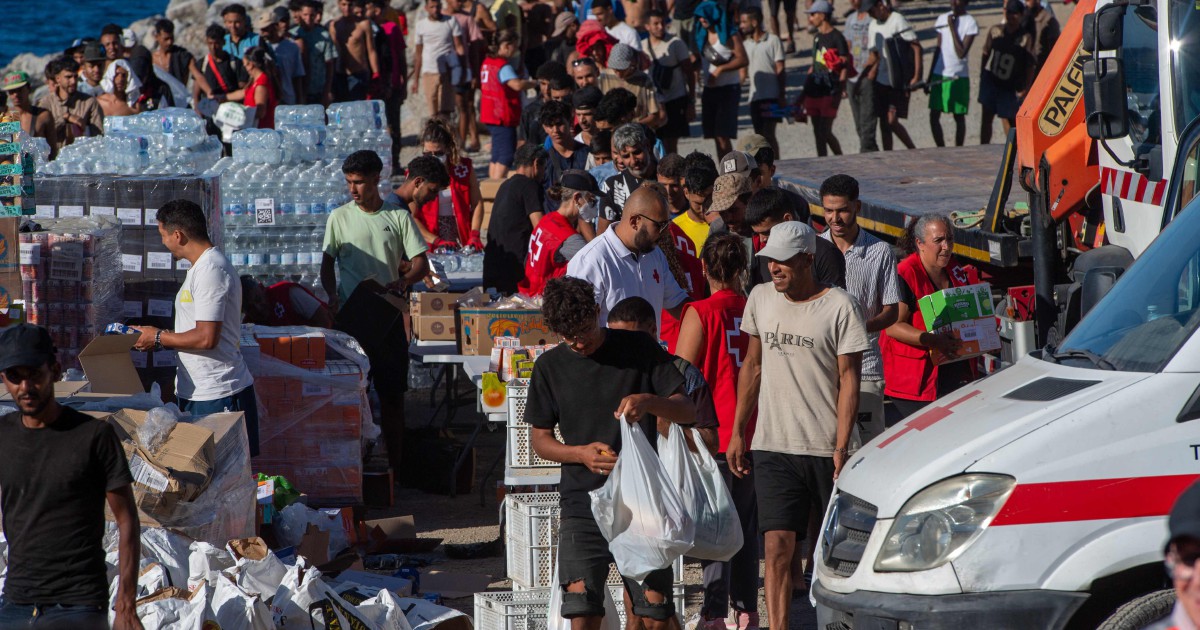
Spain's Prime Minister Pedro Sanchez has pinpointed Russia and Israel as the likely architects behind a disinformation campaign that fuelled a significant migration surge into the Spanish enclave of Ceuta last month, according to statements made on Monday. The Spanish government, having conducted an assessment of the circumstances surrounding the crisis, discovered indicators suggesting both nations played roles in disseminating misleading information about Madrid's immigration policies. Notably, Sanchez explicitly stated that Morocco, Spain's closest neighbour across the Strait of Gibraltar, bore no responsibility for orchestrating the false narratives that precipitated the influx of migrants.
The allegation represents a notable development in Spain's diplomatic relations with both Russia and Israel, whilst simultaneously preserving ties with Morocco at a moment when cross-Mediterranean cooperation on migration management remains critical. Spain has long struggled with irregular migration flows from North Africa, and the Ceuta episode underscored how information warfare can destabilise borders and complicate security challenges. The government's determination to publicly name these alleged actors signals confidence in its intelligence assessment, even as it navigates the geopolitical sensitivities of accusing two nations with significant global standing.
The disinformation campaign, according to Spanish authorities, weaponised narratives around Spain's migration approach to create confusion and panic among potential migrants. By distorting factual details about asylum procedures, entry conditions, and the likelihood of successful transit into Europe, the false information apparently motivated greater numbers of individuals to attempt crossings into Ceuta. This represents a sophisticated application of information operations in which external actors exploited existing migration pressures to amplify humanitarian challenges and strain Spain's border management capacity.
The geopolitical dimensions of Russia's alleged involvement align with broader patterns of Russian disinformation activities across Europe. Moscow has repeatedly employed false narratives and social media manipulation to destabilise Western nations, particularly on sensitive topics like immigration that trigger public anxiety and political division. Spain's accusation fits within this established framework of Russian interference, suggesting coordinated efforts to exploit migration as a wedge issue in European societies. The timing of such campaigns often coincides with moments of political vulnerability or diplomatic tension.
Israel's alleged participation in the disinformation effort represents a less conventional vector for such operations, given the nation's primary focus on Middle Eastern geopolitical competition. However, the attribution may reflect a broader understanding of how various state actors coordinate or independently engage in information campaigns targeting European nations. The specific mechanisms through which Israeli disinformation allegedly spread into Spanish discourse require further examination, though Sanchez's willingness to name Israel suggests Spanish intelligence possesses substantive findings supporting the accusation.
Morocco's exoneration from involvement carries significant diplomatic weight, particularly given the historical tensions between Spain and its southern neighbour over territorial disputes, fishing rights, and migration management. By clearing Rabat of responsibility, Sanchez appears to reinforce the framework of bilateral cooperation that both nations have developed around controlling irregular migration flows. This distinction is crucial for regional stability, as attributing the crisis to Moroccan state action could have triggered diplomatic escalation and undermined ongoing negotiations on shared security challenges.
For Malaysian and Southeast Asian observers, the Spanish case illuminates how disinformation campaigns weaponise migration and border security as instruments of geopolitical competition. The region faces its own migration pressures, particularly involving Rohingya and Bangladeshi populations, where external actors could similarly exploit information warfare to destabilise transit countries and receiving nations. Understanding Spain's experience provides a template for identifying and countering such operations before they escalate humanitarian and security situations.
The Ceuta crisis, which saw thousands of migrants attempt entry within a compressed timeframe, strained Spain's immediate response capacity and forced Madrid to reassess its migration infrastructure. The revelation that disinformation amplified the phenomenon underscores how modern migration management cannot focus solely on physical borders and enforcement mechanisms but must equally address the information environment in which migration decisions occur. Disrupting false narratives about successful crossing routes or destination conditions represents an underexplored frontier in migration policy.
Spain's decision to publicly attribute the disinformation campaign signals a shift toward greater transparency about information warfare threats affecting border security and migration. Rather than managing the crisis silently, Sanchez's government has chosen to expose the alleged external actors, potentially deterring future campaigns and raising international awareness about information-based threats to European security. This approach contrasts with earlier European responses that downplayed or ignored disinformation operations until they had achieved significant damage.
The broader implications for European security architecture remain substantial. If Russia and Israel have indeed coordinated or independently conducted disinformation operations targeting migration-sensitive European nations, the continent faces a systemic vulnerability requiring coordinated institutional responses. European Union institutions may need to develop more robust protocols for identifying and countering such campaigns before they translate into humanitarian crises or security escalations. Spain's experience demonstrates the cascading consequences of successful disinformation in the migration domain.
Moving forward, Spain's findings should prompt both bilateral and multilateral discussions about attribution mechanisms and accountability frameworks for state-sponsored disinformation. The willingness to name Russia and Israel specifically, alongside the exoneration of Morocco, suggests Madrid is attempting to navigate complex diplomatic terrain whilst maintaining credibility regarding security threats. How other European nations respond to Spain's allegations may shape broader European policy toward information warfare and state-sponsored disinformation operations affecting critical national interests.

