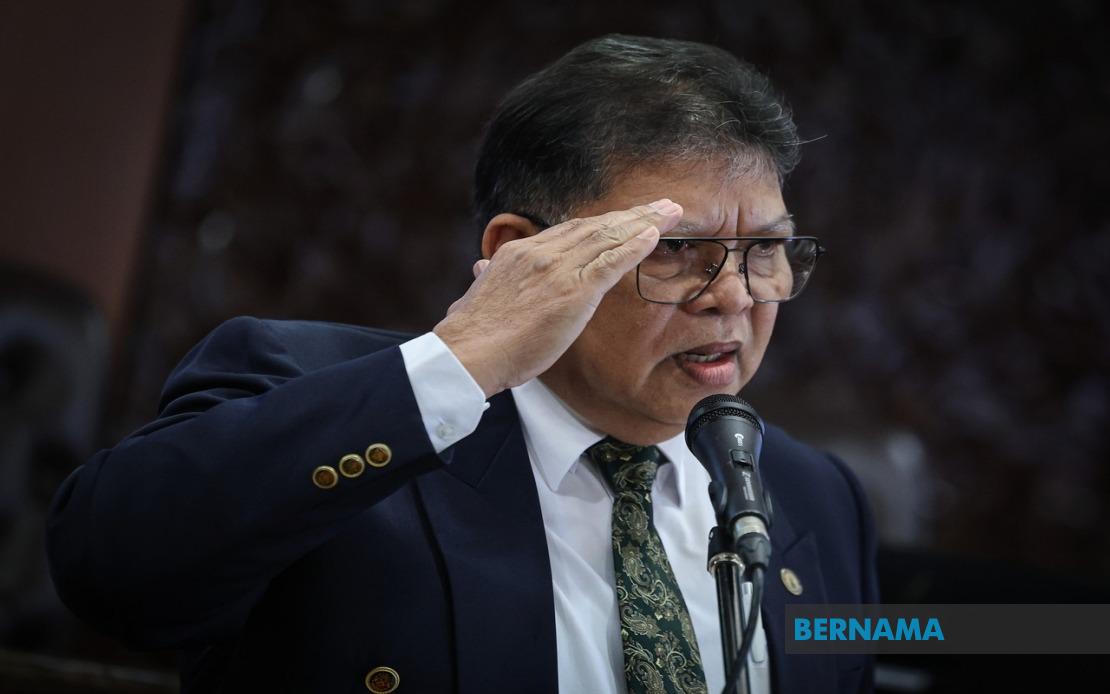
Dewan Rakyat Speaker Tan Sri Johari Abdul has made a significant intervention in Malaysia's democratic design by proposing the adoption of a proportional representation voting system. Speaking at the Harmony Symposium held at the Parliament building on June 26, Johari positioned this electoral reform as essential to maintaining the parliamentary voice of minority communities in an increasingly demographically skewed nation. His proposal signals growing concern among parliamentary leadership about the long-term inclusiveness of Malaysia's current first-past-the-post electoral system and its capacity to represent the country's ethnic diversity.
The urgency of Johari's call rests on stark demographic projections. Population forecasts indicate that Bumiputera Malays will constitute 77 per cent of Malaysia's total population by 2050, a dramatic increase from current levels. This projection raises fundamental questions about electoral representation under the existing constituency-based system, where minorities predominantly inhabit urban centres and dispersed communities rather than geographically concentrated blocs. Under first-past-the-post mechanics, such demographic distribution translates into declining electoral competitiveness in constituencies where minority voters lack numerical dominance.
Johari articulated the political logic underpinning minority representation with directness. In a system where majority-dominated constituencies proliferate and minority populations become statistically marginal, the mathematical likelihood of minority candidates winning seats diminishes substantially. This structural consequence of demographic change threatens to compress minority voices not through explicit disenfranchisement but through the ordinary operation of an electoral system that rewards geographic concentration of voting blocs. Johari's concern extended beyond the abstract mathematics of representation to its real-world implications—silent communities breed disconnection from governance, generating grievances that threaten social stability.
The Speaker's intervention reflects broader regional and global trends in electoral system evolution. Many democracies facing demographic heterogeneity have adopted or debated proportional representation variants to ensure minority representation without diluting majority influence. The Netherlands, Belgium, and Switzerland maintain complex proportional systems specifically designed to accommodate linguistic and cultural diversity. For Malaysia, such mechanisms could translate voting percentages into parliamentary seats more faithfully, ensuring that communities representing 10 or 15 per cent of the electorate secure corresponding parliamentary presence rather than facing near-total exclusion.
Johari framed the question not as a contemporary political crisis but as a civilisational challenge spanning generations. His emphasis on temporal perspective—dismissing present grievances in favour of century-long strategic thinking—represents an attempt to elevate the discussion beyond immediate partisan advantage. This rhetorical move positions proportional representation not as a favour to current minorities but as an institutional safeguard for Malaysia's future political sustainability. A nation of 77 ethnic groups, he emphasized, requires governance structures capable of accommodating that diversity across time, not merely at present snapshot moments.
The symposium itself reflects institutional efforts to mainstream harmony discussions within Parliament rather than confining them to civil society forums. The presence of Syahredzan Johan, chairman of the Malaysia Cross-Party Parliamentary Group on Racial and Religious Harmony, alongside the Speaker, indicated cross-partisan engagement with electoral and representational questions. Syahredzan articulated the group's ambition to translate parliamentary discussions into policy recommendations and legal mechanisms—positioning the body as a bridge between parliamentary debate and executive implementation rather than as merely a discussion platform.
Proportional representation systems introduce distinct trade-offs that Malaysian policymakers would need to navigate carefully. Such systems typically require coalition-building across party lines to form governments, potentially increasing legislative fragmentation. They may empower smaller parties beyond their numerical weight, occasionally granting kingmaker status to narrow interests. Malaysia's complex constitutional architecture, balancing federal and state powers alongside the role of constitutional monarchies, would require careful integration of any new electoral mechanics. The current system's clarity and decisiveness, while excluding minority voices, has provided predictable governance outcomes that some constituencies value.
The proposal also intersects with Malaysia's ongoing constitutional discussions about electoral boundaries and voter distribution. The Election Commission has faced persistent criticism over alleged gerrymandering, with disparities in constituency sizes creating imbalances between votes cast and seats won. Some reform advocates view proportional representation as complementary to boundary redistribution, while others argue it supersedes traditional boundary-based concerns. The relationship between these reform dimensions remains contested among constitutional scholars and political analysts.
From a Southeast Asian perspective, Malaysia's consideration of proportional representation holds regional significance. Indonesia, the Philippines, and Thailand have all experimented with mixed or modified proportional systems at various points in their democratic histories, generating practical experience about implementation challenges. Singapore's dominance under first-past-the-post mechanics contrasts with Malaysia's ethnic complexity, suggesting that electoral systems cannot be divorced from specific demographic and political contexts. Regional peer learning could inform whether Malaysian adaptations of proportional principles might draw from successes or failures elsewhere in the neighbourhood.
The Speaker's proposal does not constitute government policy or formal legislative agenda. Rather, it represents intellectual leadership from Malaysia's highest parliamentary officer advocating for democratic reform in response to anticipated demographic realities. Implementation would require constitutional amendment—a formidable hurdle requiring two-thirds majorities in Parliament and potentially navigating complex negotiations about seats and representation ratios. The proposal's reception among government backbenchers and opposition legislators remains unclear, though Johari's seniority and cross-party credibility on institutional matters may grant the idea traction within Parliament.
Minority political leaders and civil society organizations will likely scrutinize the proportional representation concept carefully. While superficially protective of minority interests, specific design details—threshold requirements, list construction methodologies, and coalition mechanics—determine whether proportional systems actually enhance minority voice or merely diffuse it differently. Malaysia's experience with the government transformation programme and electoral management suggests that devil-in-the-details implementation challenges often frustrate reform intentions.
The broader context involves Malaysia's conscious effort to position itself as a multiethnic democracy serving as a model for diverse societies. This self-perception, tested repeatedly by internal tensions around religion, citizenship, and resource distribution, depends partly on institutional mechanisms that genuinely include minority voices in decision-making. If electoral mathematics progressively exclude minorities regardless of actual policy commitments, the gap between Malaysia's democratic self-image and institutional reality could widen dangerously. Johari's proposal suggests that maintaining that self-image requires proactive electoral architecture, not merely good intentions.
Looking forward, whether Malaysia pursues proportional representation or explores alternative reforms to preserve minority representation, the Speaker's intervention signals that demographic change is prompting fundamental questions about electoral design among institutional elites. The challenge lies in designing mechanisms that simultaneously maintain governance stability, preserve majority voice, and ensure minority political participation—balancing objectives that different democratic systems resolve through divergent institutional choices.

