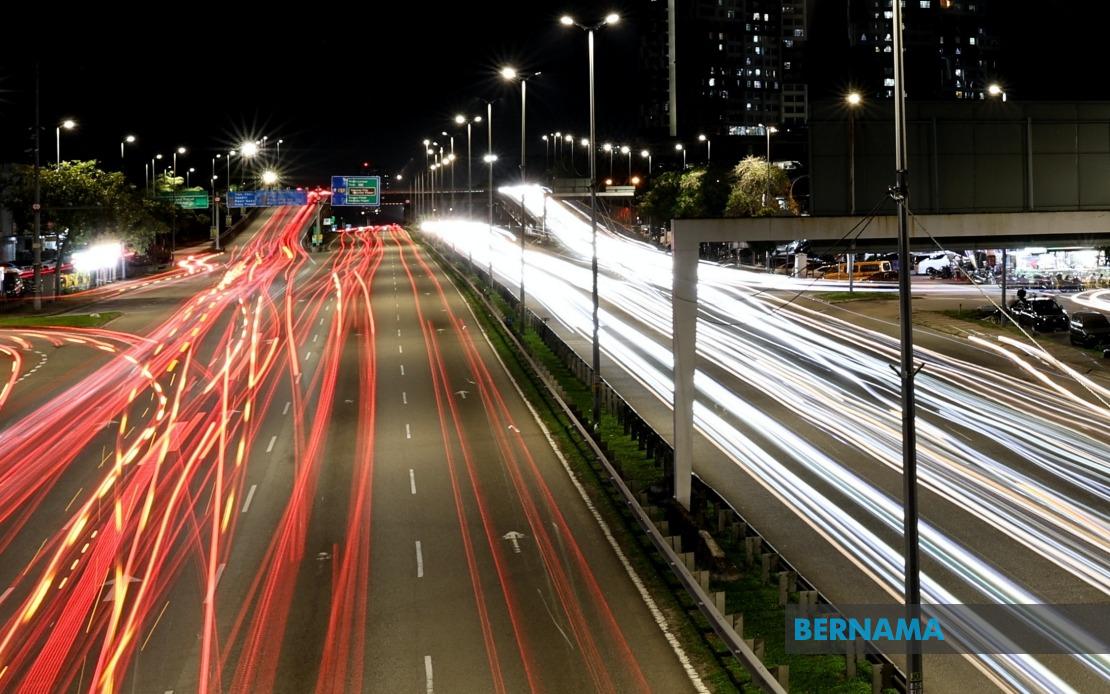
The Malaysian government has moved to close a significant legal loophole that allowed motorists to test vehicle performance on public thoroughfares without facing racing charges. Deputy Transport Minister Datuk Hasbi Habibollah confirmed that individuals engaging in speed testing—whether on motorcycles or cars—now face serious criminal penalties, even when no competitive racing is involved. The distinction matters considerably, as enforcement officers have traditionally struggled to distinguish between casual speeding and deliberate high-speed testing activities. Hasbi's statement came as Parliament passed the Road Transport (Amendment) Bill 2026, a comprehensive overhaul designed to address the growing menace of illegal street racing and vehicle testing across the country.
The legislative change represents a deliberate expansion of police powers and prosecution criteria under Malaysian traffic law. Previously, authorities could pursue offenders primarily for excessive speeding violations, but the new amendment specifically targets the act of testing a vehicle's capabilities on public roads as a standalone offence. This distinction is crucial for prosecutors, as it removes ambiguity about the driver's intent. A motorist accelerating to dangerous speeds might argue they were simply exceeding the limit momentarily, but deliberate speed testing implies premeditation and a clear purpose beyond normal driving. The amendment recognises that speed testing typically involves sustained acceleration and higher velocities sustained over longer distances, behaviours that pose significantly greater risk to other road users.
Under the new Section 42A(2) of the Road Transport Act 1987, penalties have been set at considerable levels to deter participation. Offenders face minimum fines of RM2,000, with maximum penalties reaching RM10,000. Additionally, courts may impose imprisonment terms of up to two years, or combine both financial and custodial sentences. These consequences align the law with Malaysia's increasingly strict approach to traffic safety enforcement, reflecting a government recognition that street-based vehicle testing has become a public safety crisis in urban and suburban areas. The graduated penalty structure allows judges discretion to reflect circumstances, from first-time offenders to repeat violators or cases involving particularly dangerous conduct.
The amendment addresses a practice that has become entrenched in Malaysian car and motorcycle culture, particularly among younger enthusiasts seeking thrills outside sanctioned environments. Speed testing on public roads carries multiple dangers: it exposes innocent bystanders and other motorists to collision risks, creates unpredictable hazards for pedestrians and cyclists, and ties up emergency resources responding to accidents. Malaysian highways and city streets are already congested; adding high-speed testing activities exponentially increases accident probability and severity. The government's decision to criminalise this behaviour reflects mounting public and policy concern about fatalities and injuries linked to reckless driving practices.
Deputy Minister Hasbi acknowledged that distinguishing between speed testing and ordinary speeding requires careful definitional work. Authorities will develop detailed guidelines following gazetting of the Act amendments, providing enforcement officers and prosecutors with clear criteria for determining when conduct crosses from exceeding speed limits into deliberate performance testing. This operational clarity is essential for consistent application and successful prosecutions, as defence lawyers will inevitably challenge charges claiming their clients were simply driving fast rather than intentionally testing vehicle capabilities. The regulations will likely consider factors such as acceleration patterns, vehicle modifications, location selection, repetition of runs, and witness testimony regarding the driver's apparent purpose.
The Road Transport (Amendment) Bill 2026 passed with majority support in the Dewan Negara, indicating broad political consensus that legislative intervention was necessary and appropriate. This cross-party backing strengthens the law's legitimacy and signals unified commitment to reducing traffic casualties. Parliamentary approval also suggests consultation with stakeholders, including law enforcement, road safety advocates, and transport specialists, ensuring the legislation reflected practical enforcement realities and achievable objectives. The voice vote procedure indicates the measure was uncontroversial among senators, despite potentially impacting popular recreational activities within certain demographics.
For Malaysian motorists and vehicle enthusiasts, the amendment marks a clear boundary: speed testing must occur exclusively on dedicated racetracks where vehicles, drivers, and spectators are appropriately equipped and separated from general traffic. Malaysia possesses several purpose-built racing facilities designed specifically for this purpose, and the law implicitly directs performance-focused drivers toward these legitimate venues. This approach balances accommodation of automotive passion with public safety imperatives. Enthusiasts retain legal avenues for testing vehicles while society is protected from collateral risks. The amendment effectively communicates that public roads—regardless of congestion levels, time of day, or perceived safety—remain unsuitable testing environments.
The timing of this legislation reflects broader Southeast Asian trends toward stricter traffic enforcement and vehicle regulation. Regional counterparts including Singapore, Thailand, and Indonesia have progressively tightened penalties for reckless driving and illegal racing. Malaysia's amendment aligns with this regional trajectory while addressing specifically local manifestations of the problem. Speed testing on Malaysian roads has reportedly involved organised groups coordinating runs on specific routes, suggesting organised elements that warranted legislative response beyond existing speeding statutes. The criminal framework now addresses this organisational dimension more effectively.
For the transport ministry and enforcement agencies, implementation will require training police and vehicle inspectors to recognise speed testing indicators during routine traffic stops or accident investigations. Evidence collection protocols must be refined to document testing activities convincingly, establishing prosecution cases beyond reasonable doubt. Insurance implications may develop as well; insurers could potentially deny claims for accidents occurring during speed testing activities, given the now-explicit illegality. This financial exposure may serve as additional deterrent beyond criminal penalties. Workplace implications for delivery drivers or service providers caught speed testing company vehicles may also emerge, as employers face potential liability and reputational damage.
The legislative response also indirectly addresses motorcycle culture practices that have escalated dramatically in Malaysian cities and towns. Young riders gathering for impromptu speed tests have become visible phenomena in numerous locations, creating public nuisance and safety concerns even before accidents occur. The amendment empowers authorities to intervene earlier in such situations, dispersing gatherings and issuing summons before dangerous acceleration occurs. This preventive capacity may prove as valuable as prosecution of completed violations, deterring participation through certainty of enforcement rather than sole reliance on conviction severity.
Malaysian road safety advocates have long contended that excessive velocity—whether from racing, testing, or ordinary speeding—remains disproportionately responsible for fatal and serious injury accidents. The Road Transport (Amendment) Bill 2026 represents concrete policy response to this advocacy, embodying preventive philosophy alongside punitive measures. As implementation proceeds, success metrics will include conviction rates, compliance levels, and ultimately casualty reductions on Malaysian roads. The legislation provides enforcement tools and legal foundation; practical effectiveness depends on consistent application and public awareness campaigns explaining the new requirements and consequences to the driving population.

