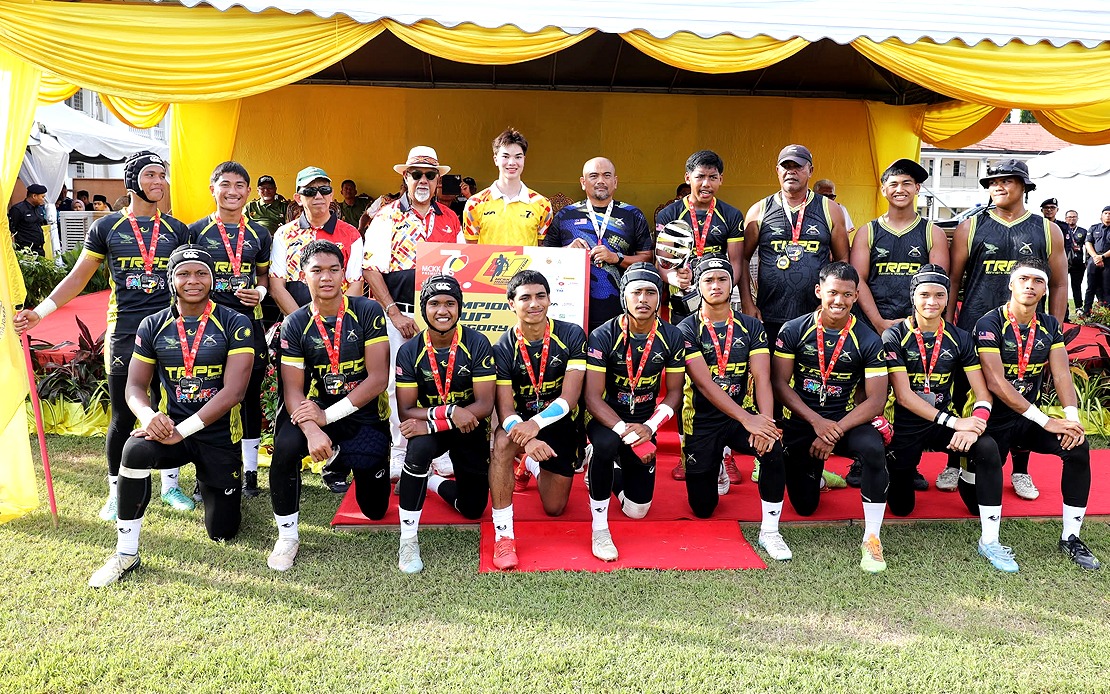
Sekolah Sukan Malaysia Pahang (SSMP) has successfully defended its title as the nation's premier school rugby sevens champion, overcoming Sekolah Sukan Tunku Mahkota Ismail (SSTMI) in a closely fought Cup final that ended 19-14 at the Malay College Kuala Kangsar (MCKK) field in Perak on Saturday. The victory marks the second consecutive year that SSMP has claimed the coveted NJ Ryan Trophy, cementing the institution's status as a rugby powerhouse within Malaysian secondary school sport.
The final between these two established rivals proved to be a compelling encounter, with both teams demonstrating high technical proficiency and tactical awareness throughout the match. Despite SSTMI's determined challenge, SSMP's players managed to maintain their composure and edge ahead, ultimately prevailing through disciplined execution and superior finishing in the latter stages of the contest. The narrow margin of victory underscores the competitive intensity between Malaysia's leading school rugby programmes and the depth of talent available within the country's youth rugby development ecosystem.
Beyond the Cup competition, the tournament saw multiple divisions contested across different skill and competitive levels, reflecting the structured approach that Malaysian school rugby takes towards talent development and inclusivity. In the Plate category, SMK Tun Hussein Onn (THOR) proved too strong for Sekolah Sultan Alam Shah (SAS), securing a 24-19 triumph in what was evidently another closely contested match. This secondary competition serves as an important pathway for schools that fall outside the elite tier but remain committed to building competitive rugby programmes and nurturing young athletes.
The Bowl division provided another layer of competitive opportunity, with SMK Hosba (HOSBA) claiming the title through a hard-fought 17-12 victory against SMK Syed Sirajuddin (SEMSIRA). These intermediate-level competitions are crucial for developing depth within Malaysian school rugby, allowing younger or less established programmes to gain meaningful competitive experience and benchmark themselves against similar-standard opponents. The structure encourages broader participation across the nation's secondary schools rather than concentrating resources and prestige solely at the highest level.
Meanwhile, the Shield competition saw a more decisive outcome, as MRSM Balik Pulau (MRSMBP) delivered a commanding performance to defeat Royal Military College (RMC) with a shutout scoreline of 22-0. This emphatic result highlights the performance gap between different tiers of schools, though even such decisive victories remain valuable for competitive development and confidence-building among emerging programmes. The breadth of divisions ensures that schools of varying competitive standards can participate meaningfully within the broader tournament structure.
The 14th edition of the MCKK Premier 7s tournament represents a significant milestone for this longstanding fixture within Malaysian school sports. Over more than a decade, the competition has evolved to become one of the nation's premier secondary school rugby events, attracting participation from schools nationwide and serving as a showcase for emerging rugby talent. The tournament's longevity and consistent quality reflect sustained commitment from participating schools, rugby administrators, and supporting organisations to maintain high standards.
The closing ceremony featured ceremonial significance befitting the tournament's prestigious status, with Raja Datuk Seri Azlan Muzaffar Shah, the son of the Sultan of Perak, presiding over proceedings and distributing trophies and medals to the winning teams across all divisions. Such official recognition underscores the importance placed upon school rugby within Malaysia's broader sporting landscape and acknowledges the dedication of young athletes and coaching staff involved. Royal patronage of school sporting events reinforces the value placed upon youth development and athletic excellence within Malaysian society.
SSMP's successful defence of its title reflects sustained institutional commitment to rugby excellence and the quality of coaching and facilities available within the school's sports programme. The school's consecutive victories against SSTMI—including in the previous year's final—suggest either superior current performance levels or greater consistency in player development and recruitment strategies. Understanding these competitive patterns helps contextualise the broader state of play within Malaysian school rugby and identifies which institutions are successfully translating resources into tangible sporting outcomes.
For Malaysian readers and rugby enthusiasts, these results illustrate the vibrant competitive ecosystem that exists within secondary school rugby and the quality of performances being produced by teenage athletes. The sevens format, with its emphasis on pace, fitness, and continuity of play, showcases different athletic attributes than the traditional fifteen-a-side game and has grown substantially as an entry-level competition format globally. School-level sevens tournaments serve important functions both in identifying talented young players and in making rugby more accessible to schools with smaller playing populations.
The tournament outcomes also carry implications for player pathways towards higher-level rugby, whether through university-level competition, provincial development programmes, or potential national representation. Schools that consistently produce winners like SSMP and SSTMI often generate players who progress to compete at senior levels, and tournament success frequently correlates with access to quality coaching infrastructure and specialist facilities. For Malaysia's rugby development programme, these school competitions serve as essential talent identification and development mechanisms.

