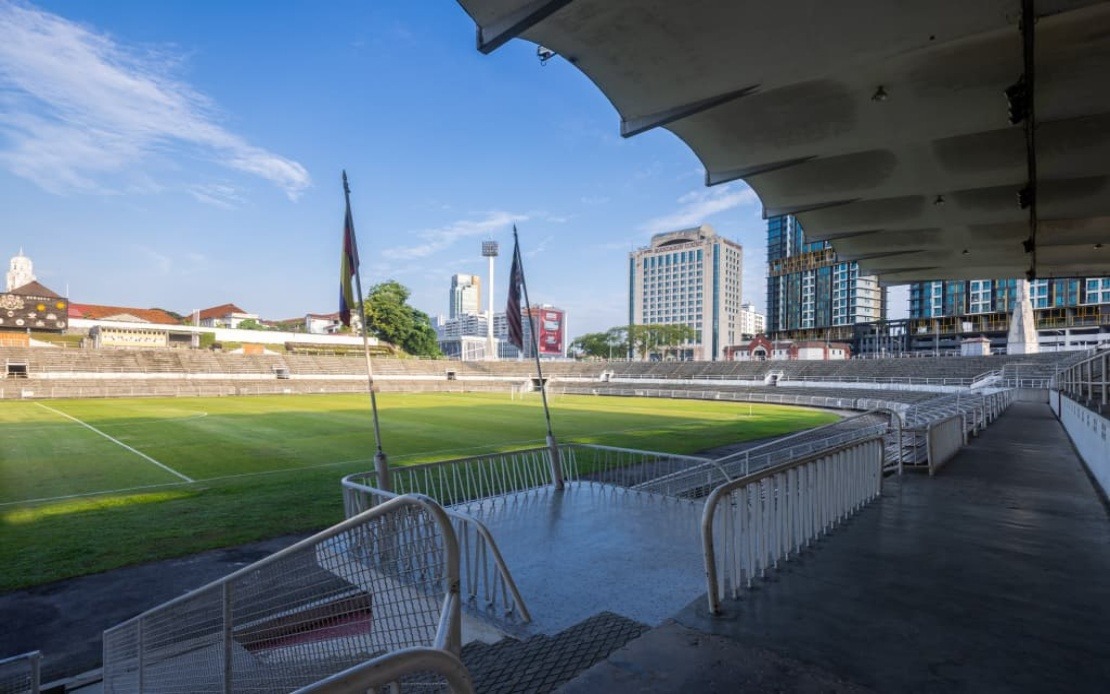
Stadium Merdeka stands as one of Southeast Asia's most resonant historical landmarks, a venue that transcends its original sporting purpose to embody an entire nation's birth. Nearly seven decades after Tunku Abdul Rahman Putra Al-Haj's proclamation of Malayan independence on August 31, 1957, the stadium continues to command deep emotional and cultural significance for Malaysians, serving as a tangible connection to the moment when the federation emerged as a free nation. Surrounded by the contemporary architecture of Kuala Lumpur's skyline, including the striking Merdeka 118, the stadium demonstrates how heritage preservation can coexist meaningfully within rapidly modernizing urban landscapes.
The remarkable achievement of Stadium Merdeka's construction deserves particular attention given Malaysia's developmental trajectory. Built within a single year at an investment of approximately RM2.3 million during the 1950s—representing a substantial commitment for a nation on the cusp of independence—the venue represented both practical vision and symbolic intent. The decision to construct such a facility ahead of formal independence signalled the confidence of nation-builders in Malaysia's imminent sovereignty and their determination to create an appropriate setting for this historic transition. This investment reflected broader post-war reconstruction efforts across the region as former colonies navigated the complexities of self-governance and nation-building.
The 1957 independence proclamation ceremony itself acquired particular power through the seven resonant cries of "Merdeka!" that echoed through Stadium Merdeka's original structure. Prof Dr Sarjit Singh Gill, a social anthropology specialist from Universiti Putra Malaysia, underscores the profound symbolism embedded in these moments. According to Gill, the ceremony represented far more than a bureaucratic transfer of administrative authority; it constituted the definitive conclusion of British colonial governance and the inauguration of a new national chapter. The stadium thus functioned as a vessel for collective national aspiration, with its physical boundaries containing not merely political theatre but genuine democratic transformation. This dimension remains relevant for contemporary Southeast Asia, where heritage sites increasingly serve as anchors for national identity amid rapid globalization.
The stadium's historical importance expanded in 1957 with the proclamation of Malaysian Federation formation in 1963, which formally integrated Sabah, Sarawak, and initially Singapore into the federation. This second major proclamation event reinforced Stadium Merdeka's role as the chosen venue for Malaysia's defining political moments. The federation's expansion represented the completion of decolonization across British territories in the region, though Singapore's subsequent departure in 1965 added complexity to the nation-building narrative. Stadium Merdeka thus witnessed both the optimism of Malaysia's initial formation and the subsequent territorial adjustments that would shape the modern federation's contours.
Like many post-colonial heritage sites across Asia, Stadium Merdeka confronted existential threats to its survival during the late 1990s, when redevelopment pressures threatened demolition in favour of contemporary commercial projects. The stadium's preservation reflects broader recognition across Malaysia that historical monuments possess irreplaceable cultural value that transcends economic calculations. Public opposition mobilized by heritage advocates, combined with government intervention, ultimately secured the venue's future. This outcome illustrates how community engagement can successfully counterbalance development imperatives, setting important precedent for heritage protection elsewhere in the region. The victory represented genuine consensus that some spaces deserve protection as national inheritance rather than commodification as development sites.
Permodalan Nasional Berhad's assumption of stewardship in 2000 initiated a comprehensive preservation phase guided by meticulous historical scholarship. PNB Merdeka Ventures Sdn Bhd Chief Executive Officer Datuk Dr Izwan Ibrahim articulates the organization's preservation philosophy as fundamentally rooted in authenticity maintenance. Restoration work consulted original Public Works Department construction documents to ensure interventions remained historically coherent. Later structural additions, including upper seating tiers, underwent systematic removal to restore the stadium's original 20,000-seat capacity. Specific features—the scoreboard, sanitation facilities, decorative mosaic tiles, and the distinctive cantilevered roof structure—received meticulous restoration attention. This approach demonstrates how heritage conservation can proceed with scientific rigor rather than ad hoc improvisation, ensuring that restored sites maintain genuine historical integrity rather than becoming themed performances of their former selves.
International recognition has reinforced Stadium Merdeka's status within the global heritage community. The 2008 UNESCO Asia-Pacific Heritage Award represented significant external validation of the preservation effort's quality and authenticity. Subsequent gazetting as a National Heritage site in 2009 formalized domestic protection through legal mechanisms, ensuring future generations cannot easily dismantle this legacy through administrative expedience. These designations position Stadium Merdeka within transnational heritage networks that facilitate knowledge exchange and resource sharing among conservation professionals. For Malaysia specifically, the designations underscore the nation's commitment to heritage preservation during a period of intensive urban transformation.
Cultural activation has transformed Stadium Merdeka from a static historical monument into a living venue where Malaysians actively engage with national heritage. The refurbished track now serves community recreation purposes, while cultural events including the Bazram Merdeka bazaar demonstrate how heritage sites can meaningfully serve contemporary social needs. The Ramadan Bazaar edition alone attracted over 250,000 visitors earlier in the current year, revealing substantial public appetite for heritage engagement when venues offer dynamic programming alongside historical education. This programming approach contrasts with conservation models that sequester heritage sites as museum-like spaces reserved for solemnized remembrance, instead positioning Stadium Merdeka as genuinely embedded within contemporary Malaysian community life.
Engaging younger generations represents a strategic priority for venue management, reflecting recognition that heritage preservation requires continuous intergenerational transmission of significance and meaning. For citizens born decades after 1957, independence exists primarily as textbook content rather than lived historical consciousness. Datuk Dr Izwan Ibrahim articulates the institutional commitment to facilitating experiential engagement whereby younger Malaysians encounter the stadium directly, participate in on-site activities, and develop organic connections to the space rather than remaining passive consumers of historical narratives delivered through formal education channels. School partnerships already demonstrate this strategy's viability, with educational institutions bringing students to Stadium Merdeka for firsthand historical engagement. This pedagogical approach acknowledges that authentic historical understanding emerges through embodied experience within significant spaces rather than through abstract didactic instruction.
The venue's stewards maintain particular awareness of how physical surroundings shape heritage appreciation. The juxtaposition of Stadium Merdeka against contemporary developments like Merdeka 118 creates visual tension between historical preservation and modern urban dynamism. This coexistence embodies broader questions about national identity in rapidly developing Southeast Asia: how can societies honor foundational historical moments while pursuing contemporary development ambitions? Stadium Merdeka's persistence within Kuala Lumpur's evolving skyline suggests that careful integration—rather than segregation or erasure—permits heritage and modernity to coexist productively. The stadium occupies neither nostalgic isolation nor insignificant peripherality; instead it maintains prominent positioning within the city's most symbolically resonant district.
Personal testimony from long-serving staff members illuminates the emotional dimensions of heritage stewardship that institutional narratives sometimes overlook. Alias Daud, who completed thirty-five years with PNB including a final decade devoted specifically to Stadium Merdeka's maintenance, articulates how heritage preservation constitutes meaningful personal vocation rather than mere employment. His descriptions of witnessing diverse Malaysians passing through the gates, each carrying individual stories and memories, reveal how national monuments function as repositories for collective and individual historical consciousness simultaneously. Daud's observation that visitors, particularly younger Malaysians, frequently express surprise and deepened appreciation upon learning that this unassuming venue hosted independence proclamation demonstrates the enduring capacity of physical heritage to generate genuine emotional resonance when context receives adequate emphasis.
The stadium's particular atmospheric resonance intensifies during the August national month, when government agencies, educational institutions, and universities deliberately schedule visits to engage with the independence narrative within its proper historical setting. Visitors undertake historical study, document the experience photographically, and participate in Merdeka-related content creation, transforming individual visits into acts of collective national remembrance. This seasonal intensification of heritage engagement suggests that physical monuments require complementary cultural programming and educational contextualization to fulfill their maximum potential in shaping national consciousness. Mere preservation of built structures, without accompanying efforts to facilitate meaningful public engagement, produces static reliquaries rather than living heritage.
Stadium Merdeka ultimately represents something increasingly rare in rapidly urbanizing Southeast Asia: a heritage site that successfully navigates preservation imperatives without devolving into museum-like irrelevance or commercialized inauthenticity. As modern skyscrapers continue rising around it, the stadium persists as a powerful and accessible reminder of the specific historical moment when Malaysia achieved sovereign nationhood. Its continued vitality depends upon ongoing commitment to authentic stewardship, intergenerational knowledge transmission, and programming that maintains relevance for contemporary publics. For Malaysia specifically, Stadium Merdeka exemplifies how heritage conservation can reinforce national identity and historical consciousness during periods of rapid social transformation, offering a model worthy of consideration as other nations throughout the region confront analogous challenges of balancing development with cultural preservation.

