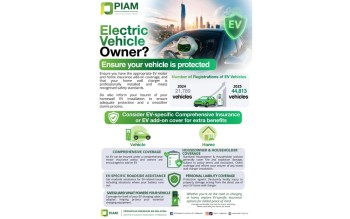
Following a significant fire incident in Cheras attributed to an electric vehicle home charger, Malaysia's insurance industry has moved to clarify coverage obligations and homeowner responsibilities. The General Insurance Association of Malaysia (PIAM) has issued comprehensive guidance on how existing domestic insurance policies address emerging risks posed by residential EV charging infrastructure, with the association's chief executive officer Chua Kim Soon providing detailed clarification on policy scope and exclusions.
Standard house owner and fire insurance policies sold across Malaysia incorporate coverage for specified perils, with fire damage protection extending to incidents regardless of their underlying cause. However, this protection operates within defined boundaries. Coverage remains valid only when homeowners comply fully with policy terms, meet all stated conditions, and do not engage in fraudulent conduct or deliberately cause damage. The insuring public must also avoid breaching specific conditions outlined in their individual policy documents. This framework reflects how Malaysian insurers balance risk management with consumer protection, ensuring that legitimate claims receive fair assessment whilst maintaining defences against moral hazard.
The distinction between different types of EV charging equipment carries significant implications for insurance classification and coverage. Permanently installed chargers, which are hardwired into a home's electrical system, typically fall within the 'buildings' category of standard home policies as fixtures and fittings. These fixed installations become part of the property structure itself. Conversely, detachable or portable charging cables generally do not qualify under conventional home policies and instead require coverage through specialised electric vehicle motor insurance policies or dedicated add-on packages that insurers increasingly offer to account for modern vehicle ownership patterns.
Insurers operating in Malaysia maintain consistent expectations regarding homeowner conduct and electrical standards. Property owners must exercise reasonable care and diligence to maintain their electrical installations in compliance with established safety standards. When evaluating fire-related claims, insurers conduct thorough assessment procedures that incorporate official investigation reports, particularly those issued by fire department authorities. These investigations serve a critical function in determining whether loss resulted from circumstances that would ordinarily trigger policy exclusions—principally deliberate acts such as arson, fraudulent claims, or failure to comply with statutory electrical regulations including the use of unauthorised, uncertified, or illegally modified electrical components.
Chua emphasised that homeowners face a positive obligation to disclose any permanent EV charger installation to their insurance provider. This notification requirement serves multiple practical purposes within the insurance relationship. By formally declaring electrical upgrades to their home, property owners enable insurers to reassess the sum insured figure, ensuring this amount accurately reflects current reconstruction costs given the property's modified condition. Such transparency also establishes clear documentation of what the policy covers, eliminating ambiguity during the claims process and preventing disputes about whether specific damage falls within or outside coverage parameters. Failure to notify insurers of permanent installations creates potential complications that could jeopardise claim validation.
Accurate sum insured valuations deserve particular attention in the contemporary property environment. Homeowners should carefully review whether their existing sum insured figure accounts for all modifications made to their residence, including modern electrical fixtures and upgrades. Property values and reconstruction costs have evolved significantly, meaning policies established several years ago may contain inadequate coverage limits for today's building and equipment costs. This underinsurance risk becomes especially acute when electrical systems have been upgraded to accommodate modern demands, including dedicated circuits for EV charging infrastructure. Periodic policy reviews help ensure protection remains appropriate to actual property value.
The potential for fire or electrical incidents to extend damage beyond a single property presents particular concern in Malaysian residential contexts, especially within terraced housing developments and high-rise residential complexes. An electrical fire originating from an EV charger installation could spread to neighbouring units, creating substantial third-party liability exposure. Standard house owner policies ordinarily provide public liability coverage with a limit of RM50,000, which may prove insufficient to cover damages if fire spreads to adjacent properties and causes significant injury or property loss. PIAM's guidance recommends that homeowners evaluate their existing liability limits and consider purchasing optional extensions to increase coverage ceilings where circumstances warrant additional protection.
The emergence of residential EV charging infrastructure represents a genuine challenge for insurance frameworks designed in earlier eras. EV owners should conduct thorough reviews of both their motor insurance policies and home insurance arrangements to identify and address any coverage gaps. Comprehensive protection requires thoughtful coordination across multiple policy types—the motor policy must adequately cover the vehicle itself and potentially portable charging equipment, whilst the home policy addresses fixed installations and property damage. This multi-policy approach to risk management reflects the reality that EV ownership creates intersecting insurance requirements that demand proactive attention rather than passive acceptance of standard policy terms.

