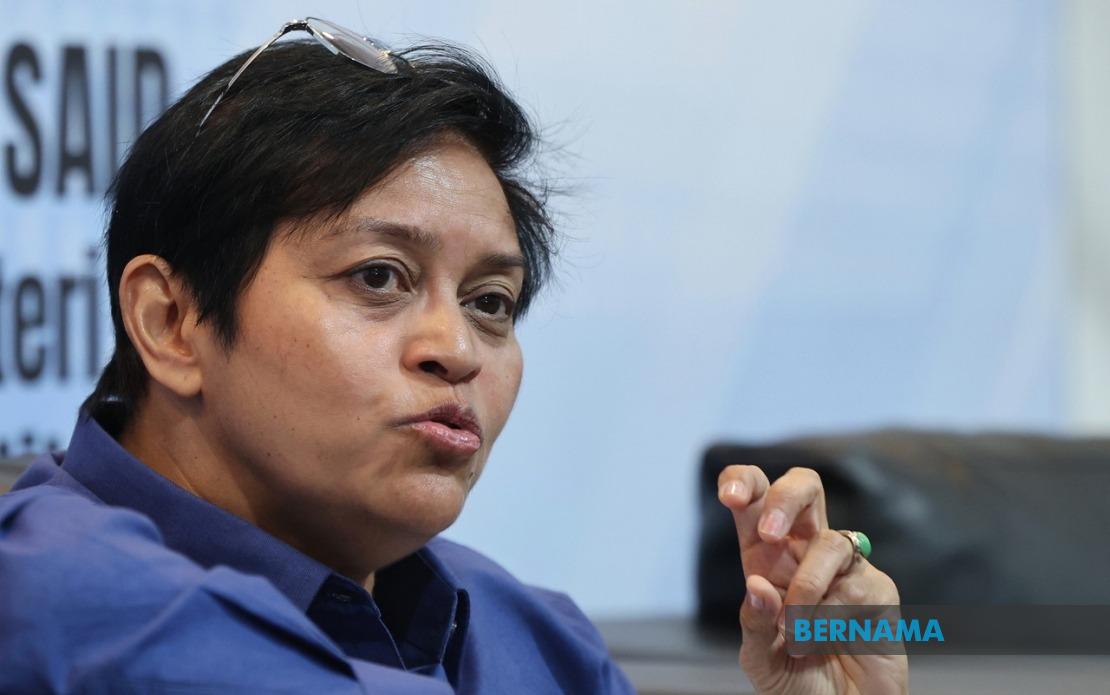
Malaysia's political structure allows for distinct coalitions at state and federal levels, according to Datuk Seri Azalina Othman Said, the Minister in the Prime Minister's Department (Law and Institutional Reform). Speaking in Putrajaya on August 3, she explained that Barisan Nasional's various political arrangements across different states do not compromise the party's commitment to the Unity Government partnership at the national level. Her remarks represent an attempt to quell mounting tensions within UMNO over the party's continued alignment with Pakatan Harapan in the federal government.
Azalina, who serves as UMNO's information chief, drew a clear distinction between political decision-making across Malaysia's 13 states and the governance structure at the federal level. Each state possesses its own constitutional framework, she noted, along with distinct political dynamics, leadership structures, and institutional arrangements with their respective rulers. This constitutional reality underpins the possibility of pursuing different political strategies at state and federal levels without creating contradiction or instability. The minister made her comments while addressing reporters following a monthly assembly with staff of her department.
The clarification comes in response to recent agitation from within UMNO's own ranks. Datuk Dr Mohd Puad Zarkashi, a former member of UMNO's Supreme Council, had publicly called for Barisan Nasional to terminate its federal-level cooperation with Pakatan Harapan. Such statements reflect deeper fissures within the coalition regarding the wisdom and sustainability of the current power-sharing arrangement. Puad's intervention highlights ongoing disquiet among some party figures who view the Unity Government partnership as strategically disadvantageous to UMNO's electoral interests and ideological positioning.
Azalina's response emphasizes that Barisan Nasional's leadership has consistently reaffirmed its commitment to the federal coalition. She referenced multiple public statements from UMNO's senior officials confirming this position, and noted that Prime Minister Datuk Seri Anwar Ibrahim has similarly articulated support for the arrangement. This repetition of assurances suggests awareness that internal skepticism requires regular reinforcement from party elders and government figures. The minister's intervention carries particular weight given her proximity to decision-making within both the party machinery and Prime Minister's Department.
The distinction between state and federal political arrangements reflects the nuanced nature of Malaysian federalism. Malaysia's constitutional design deliberately distributes power between federal authorities in Putrajaya and state governments throughout the nation. This framework has historically enabled different political coalitions to govern various states while a different coalition governs nationally. Voters in different states have consequently experienced alternating political control, and in some cases simultaneous periods of opposition rule at state level while the federal government remained under different parties.
Understanding this structural reality proves essential for assessing Malaysia's political trajectory over the coming years. The Unity Government formed following the 2022 general election represented a significant departure from Malaysia's previous pattern of zero-sum electoral competition. Instead of producing a clear single-party majority, the 2022 election resulted in a fragmented parliament where no coalition commanded sufficient seats to govern alone. Consequently, the three major blocs—Barisan Nasional, Pakatan Harapan, and Perikatan Nasional—were forced into negotiations that ultimately produced the Unity Government comprising UMNO, DAP, PKR, and smaller allies.
The stability of this arrangement faces ongoing challenges, particularly from within Barisan Nasional itself. Some party figures question whether remaining in the Unity Government serves UMNO's long-term interests, particularly if Pakatan Harapan emerges strengthened from state elections where the two coalitions compete directly. Azalina's insistence that state-level competition need not destabilize federal cooperation attempts to address this tension. Her framing suggests that UMNO can simultaneously campaign aggressively at state level while maintaining federal partnerships without creating unsustainable contradictions.
This position also carries implications for how Malaysian voters understand and evaluate political coalitions. If different levels of government can operate under different political arrangements, voters possess greater flexibility in their electoral choices. However, such flexibility introduces complexity for citizens attempting to hold governments accountable. Campaign messaging that contradicts across levels, or coalition partners who campaign against each other in state races while governing together nationally, may confuse public understanding of political positions and party identities.
For regional observers, Malaysia's handling of this constitutional puzzle offers lessons about managing coalition governance in fragmented political systems. Southeast Asian democracies with federal or quasi-federal structures have grappled with similar questions about coalition stability and voter expectations. The Malaysian experience demonstrates both the possibilities and challenges of separating state and federal political arrangements. Success requires disciplined communication from all coalition partners, clear articulation of why different arrangements operate at different levels, and sustained commitment to the federal partnership despite competitive pressures at state level.
Looking forward, the sustainability of Malaysia's current arrangements will likely depend on whether coalition members can maintain this distinction between competitive and cooperative politics. Future state elections, particularly in significant states like Selangor and Johor, will test whether parties can campaign vigorously against each other while remaining federal partners. Azalina's intervention suggests that UMNO's leadership believes this balancing act remains achievable. However, continued internal pressure from figures like Puad indicates that not all party members view the arrangement as acceptable long-term strategy, potentially creating dynamics that could shift Malaysia's political landscape.

