A black and white photograph preserved in a bedroom tells the story of two figures captured mid-dance in a 1950s hall, dressed immaculately and radiating an enthusiasm for life that would echo across generations. For Suzanne Lim, that image of her late grandparents represents far more than a moment frozen in time—it marks the genesis of a passion for vintage clothing that has since evolved into a deeply personal exploration of Malaysia's sartorial heritage. Now 33 and working as a graphic designer, Lim traces her fascination with period garments directly to those dancers who, she recalls, were "very fashion forward for their time."
Her grandfather's devotion to rock and roll and her grandmother's work as a taxi dancer positioned both as figures embedded within the social fabric of mid-twentieth-century Malaysia. These influences shaped Lim's own trajectory: she began dancing at age four, progressing through formal training in Latin and ballroom styles, which eventually led her to the cultural club at secondary school. It was there, performing traditional dances in elaborate costumes adorned with accessories, that her interest in heritage garments truly crystallised. What began as practical necessity—donning kebaya, cheongsam, batik and songket for performances—evolved into genuine intellectual curiosity about the pieces themselves.
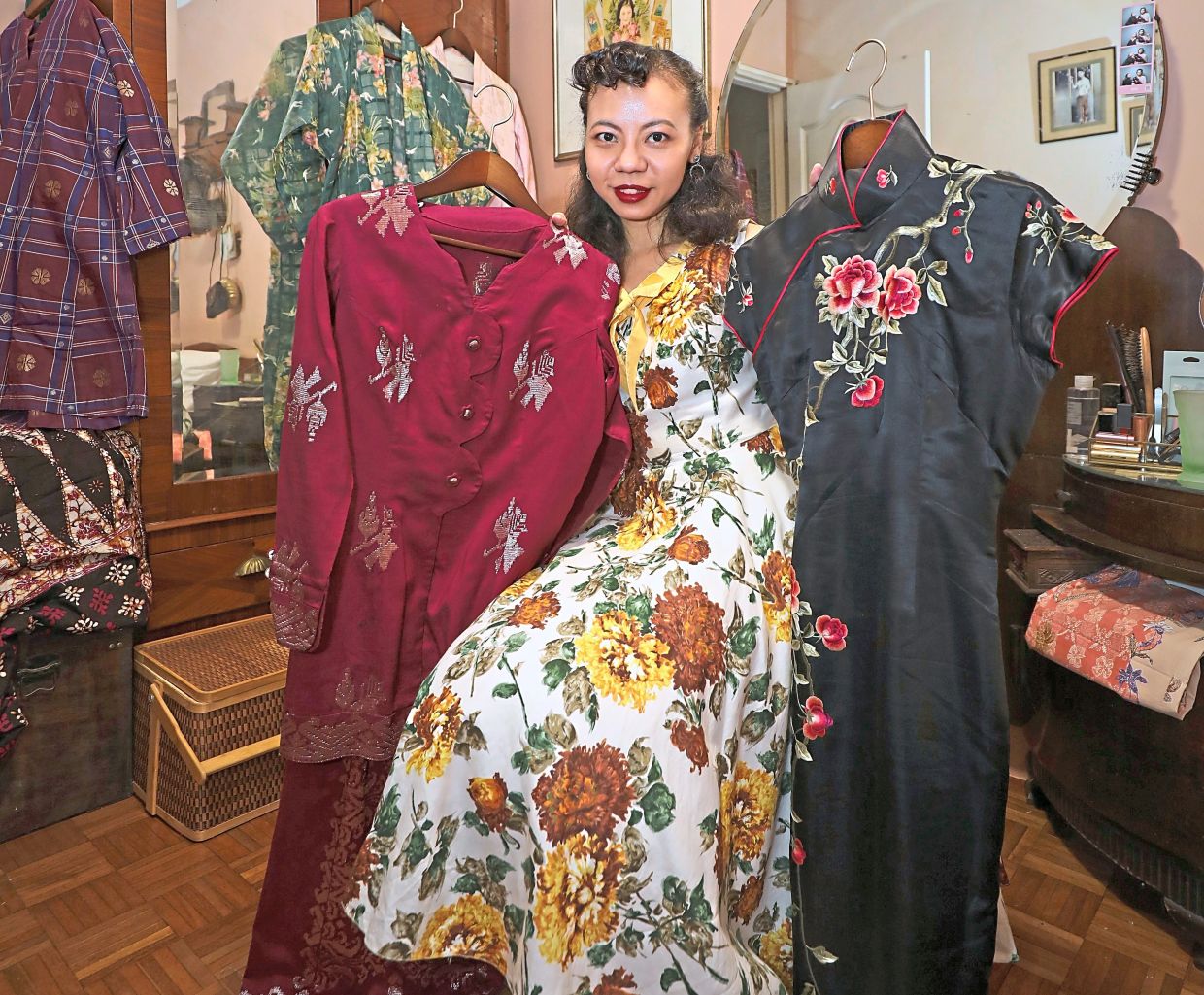
Today, Lim maintains an expanding collection of vintage Malaysian textiles and garments, each item serving as a tangible artefact connecting her to the country's past. Rather than relegating these pieces to storage, she documents herself wearing them against heritage backdrops on social media, creating a visual dialogue between historical fashion and contemporary presentation. This approach transforms her wardrobe into something far grander than mere aesthetics; each ensemble becomes a vessel for historical enquiry. "Fashion from the past can tell you a lot about how people lived," she explains, emphasising how clothing reveals the economic realities, social structures and cultural values embedded within specific historical moments.
Mohamad Alif Daniel Mohammad Nor, a 25-year-old fresh graduate, shares this conviction that historical garments function as historical documents themselves. His engagement with vintage items runs even deeper, rooted in childhood conversations with his late grandmother that gradually expanded into an obsession with history, music, cinema and uniforms. Beginning in his mid-teens with the collection of "duit pisang"—currency notes issued by Japanese occupation forces during the Second World War—Mohamad Alif eventually joined Persatuan Reka Ulang Sejarah (PRUS), an historical re-enactment society where he has become significantly more involved in reconstructing and embodying the past through material culture.
For both Lim and Mohamad Alif, this engagement with vintage clothing represents a departure from conventional historical learning. Where textbooks present history as distant abstraction, tangible garments ground it in lived experience. "Being passionate about fashion and history taught me more about the past than textbooks alone ever could," Mohamad Alif reflects, noting that such tactile learning illuminates culture, identity and the actual thought patterns of historical actors. Lim similarly views her collection as evidence of a world otherwise difficult to visualise, positioning herself as a bridge between museum spaces and digital platforms. "A lot of people don't walk into museums anymore, and they don't read about it either, especially from reliable sources," she observes, suggesting that social media documentation can democratise historical knowledge.
Yet authenticity remains a delicate matter. Lim acknowledges that not every piece in her collection is period-accurate, particularly when she experiments with contemporary styling applied to vintage garments. However, when authentic pieces and textiles are available, she makes deliberate efforts to honour their historical integrity. She recognises that even merely demonstrating the existence of specific local textiles can render heritage tangible and accessible to audiences who might otherwise encounter such materials only in museum contexts or academic texts. This balance between preservation and creative reinterpretation reflects a broader tension within contemporary heritage engagement: how to maintain cultural fidelity while allowing personal expression.
The surge in vintage collecting among young Malaysians cannot be disentangled from the digital age itself. Lim attributes the trend partly to a "yearning for something more tactile and nostalgic, a kind of escapism from the world we know today." In an era of screen-mediated existence and rapid technological change, vintage garments offer a counterpoint—objects that demand physical interaction, that carry the weight of history in their fibres and stitching. Yet this nostalgic impulse need not mean slavish historical recreation. Instead, many young collectors are drawn to the "creative freedom" of blending past inspiration with contemporary styling, a synthesis that drives broader interest in heritage without demanding rigid adherence to historical accuracy.
Such freedom, however, must operate within certain boundaries if cultural identity is to remain coherent and respected. Lim emphasises the importance of maintaining "the fundamentals of the clothes so they don't get muddled and misrepresented, in a way that may threaten our cultural identity." This statement reflects a sophisticated understanding of how cultural symbols function: they require both flexibility to remain living traditions and sufficient constraint to retain meaningful connection to their origins. The challenge, then, involves determining precisely where that line falls—recognising that cultures have historically adapted and evolved while ensuring that contemporary reinterpretation doesn't hollow out meaning through careless appropriation or ignorance.
Beyond personal satisfaction, this movement carries social dimensions that extend into questions of collective identity and belonging. Mohamad Alif has observed that his own social media posts showcasing traditional attire have inspired others to do likewise, particularly among individuals who previously felt shame or self-consciousness about wearing such garments in public spaces. This phenomenon suggests that visibility and normalisation, facilitated through digital platforms, can gradually shift cultural perceptions and reclaim spaces for heritage expression. When young Malaysians see peers confidently wearing kebaya or traditional attire in contemporary contexts, the psychological barriers to such self-presentation diminish. What emerges is not a retreat into the past but rather an integration of heritage into present-day identity.
The implications of this trend extend across Malaysian society and indeed the broader Southeast Asian region, where similar movements toward cultural reclamation are occurring. As younger generations increasingly seek meaning and identity amid globalisation and digital saturation, heritage provides both intellectual substance and emotional grounding. Clothing becomes political not through explicit activism but through the simple act of wearing it, making visible what might otherwise remain confined to history textbooks or museum vitrines. For Malaysia specifically, where cultural pluralism and questions of identity remain central concerns, such grassroots engagement with material heritage suggests potential pathways toward cultural confidence and cohesion.
The collectors and wearers driving this movement represent neither reactionary nostalgia nor frivolous fashion enthusiasm. Rather, they embody a generation seeking authentic connection to their own histories, operating at the intersection of rigorous historical interest and creative personal expression. Through social media platforms, they are constructing new spaces for heritage engagement that complement rather than replace traditional institutions. Whether documenting vintage pieces against heritage backdrops or recreating historical moments through period dress, these young Malaysians are quietly asserting that the past remains relevant, that cultural identity deserves careful attention, and that tangible objects can convey truths that words alone cannot capture. In doing so, they are not merely collecting clothes—they are weaving contemporary Malaysia closer to its own foundations.

