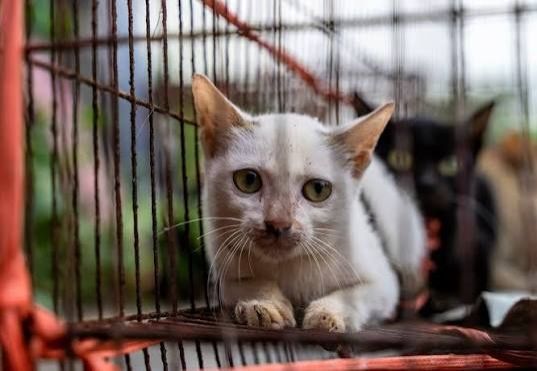
Vietnamese law enforcement has dealt a significant blow to an organised cat-theft operation in Ho Chi Minh City, recovering hundreds of stolen felines and returning dozens to their families following a major police raid last week. The operation, which targeted pets across southern Vietnam over a three-year period, came to light after authorities responded to mounting complaints of domestic cat abductions in the city. Nine individuals have been arrested in connection with the criminal enterprise, which specialised in systematically luring and trapping neighbourhood cats for resale to meat vendors and restaurants.
The scale of the recovery operation underscores the sophistication of the theft ring. Police secured more than 400 living cats during the raids, alongside 80 preserved carcasses stored on ice at the facilities where the animals were being held prior to slaughter. A separate location yielded an additional 21 cats. The operation has already resulted in the successful reunification of more than 40 victims with their owners, according to animal welfare advocates monitoring the case. The Ho Chi Minh City police department confirmed the details through its official newspaper, highlighting the co-ordinated nature of the investigation across multiple sites.
While cat and dog consumption remains legal in Vietnam, where numerous establishments openly market such meats, the law does impose requirements designed to prevent exploitation of stolen pets. Vendors are mandated to obtain documentation certifying the legal origin of the animals they procure. The three-year timespan of the alleged thefts suggests that the suspects may have been exploiting gaps in enforcement or falsifying such certificates. The investigation appears to have been triggered by widespread public alarm over disappearing pets rather than routine compliance monitoring, indicating that the scale of the problem had reached a critical point in Ho Chi Minh City's residential areas.
The toll on the rescued animals has been substantial. Humane World for Animals, the international animal rights organisation assisting in the recovery effort, reported that approximately 100 of the rescued cats died following their rescue, succumbing to injuries, illness, or trauma sustained during their captivity and transport. The surviving animals now face an extended period in police custody as evidence for the prosecution, creating ongoing welfare concerns despite their physical liberation. The conditions of their temporary detention have necessitated emergency interventions by animal welfare groups attempting to ensure their survival through the judicial process.
Animal advocates have praised the police operation as a critical intervention that prevented mass slaughter whilst simultaneously sending a strong deterrent message to would-be perpetrators. Karanvir Kukreja, representing Humane World for Animals, characterised the law enforcement response as decisive action that fundamentally altered the fate of hundreds of animals. The organisation has mobilised practical support, donating food supplies and arranging for cooling equipment including fans to maintain tolerable temperatures for the cats held at the police facility. These measures reflect the reality that standard police holding facilities, designed for evidence storage rather than animal welfare, require significant adaptation to preserve life.
The existence of such an organised criminal network targeting domestic animals reveals systemic vulnerabilities in pet security across urban Vietnam. The operation's success over three years suggests that residents may lack awareness of preventive measures, or that neighbourhood vigilance proved insufficient to detect systematic predation. The criminals' ability to transport and hold hundreds of animals without detection until a formal investigation commenced indicates gaps in monitoring of facilities involved in animal processing or trading. For Malaysian readers familiar with the urban pet ownership experience, the case serves as a cautionary example of the criminal opportunities that emerge when legal animal consumption intersects with weak enforcement and low awareness of theft risks.
The broader context of Southeast Asia's relationship with alternative protein sources complicates the narrative of animal welfare. In multiple countries across the region, cultural traditions surrounding dog and cat consumption persist alongside growing middle-class pet ownership and changing attitudes toward animal protection. Vietnam's legal framework acknowledging both permissible consumption and animal theft demonstrates this tension. However, the apparent ease with which criminals exploited the system suggests that modernising enforcement mechanisms and closing loopholes may be necessary to protect household pets regardless of cultural food traditions. The case also highlights how animal advocacy organisations are increasingly embedded in regional law enforcement responses, functioning as collaborators in investigation follow-up and victim care.
Efforts to reunify the remaining rescued cats with their original families continue, though the trauma inflicted on the animals and the challenges of identification mean that success rates will likely remain incomplete. The police station holding facility now houses a population of cats requiring sustained care that stretches beyond conventional evidence management protocols. The involvement of international animal welfare groups in providing materials and expertise suggests that domestic resources alone may prove insufficient for the task. The investigation's continuation through the prosecution phase will determine whether the arrested individuals face meaningful penalties, a factor that may influence the deterrent effect of the operation.