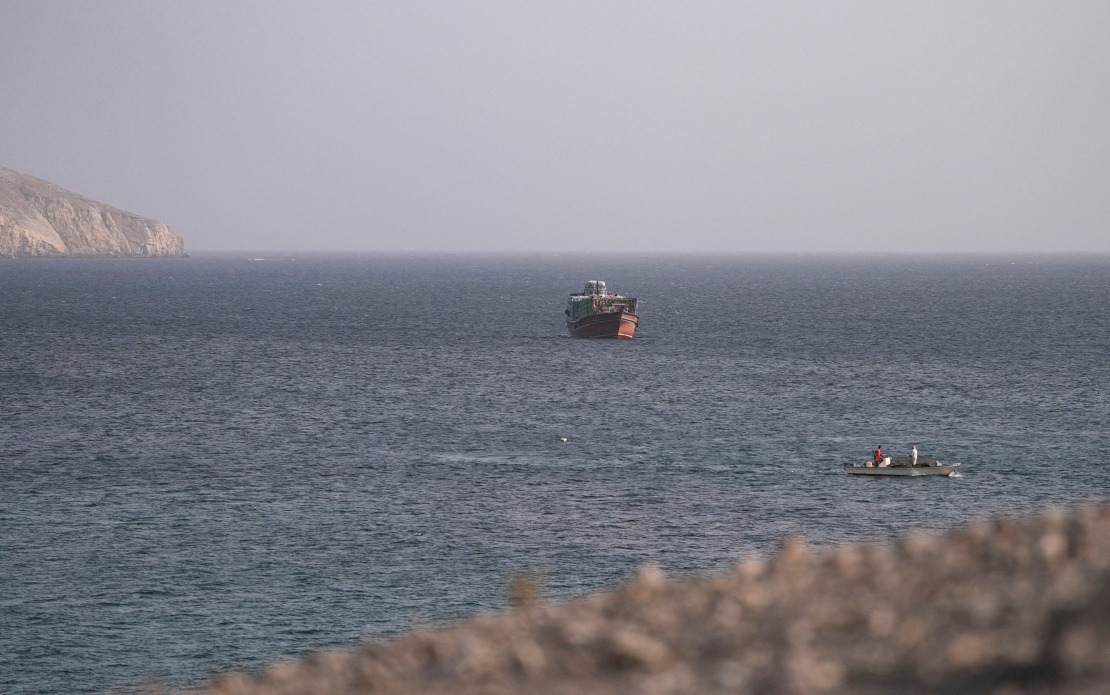
Iran's Foreign Ministry Spokesperson Esmaeil Baqaei has declared that the Strait of Hormuz will permanently diverge from its pre-war operational status, signalling a fundamental shift in how one of the world's most critical maritime chokepoints will function. Speaking during a televised interview on Sunday night, Baqaei stressed that recently concluded discussions between Tehran and Muscat do not constitute a simple reopening of the strategically vital waterway, but rather represent the foundation for an entirely reconfigured approach to maritime governance in the region.
The backdrop to these declarations remains significant for regional stakeholders, particularly those monitoring global energy security. Discussions between Iran and Oman have been ongoing for several months, with both nations working toward establishing a comprehensive framework designed to guarantee unimpeded maritime passage through one of the world's most economically consequential shipping lanes. Both countries, as the two coastal states bordering the Strait, have acknowledged their shared responsibility for ensuring safe navigation and maritime security.
Baqaei emphasized that Tehran's negotiations with Muscat commenced almost immediately after a ceasefire took effect on 8 April, following a significant escalation in regional tensions. Multiple rounds of diplomatic exchanges have already taken place, culminating in Foreign Minister Abbas Araghchi's first post-war international visit being directed toward Oman. During those high-level conversations with the Sultan of Oman and the Omani foreign minister, both parties discussed not only the immediate future of the Strait but also the broader question of establishing secure maritime corridors in the region.
Under the memorandum of understanding that ended the recent conflict, specific provisions mandate that future management of the Strait of Hormuz should be administered by Iran in consultation with Oman and through broader dialogue with other regional actors. Crucially, Baqaei noted that the initial three weeks of implementing this agreement witnessed complete security along the northern shipping route, with vessels successfully transiting the passage. However, he suggested that an undisclosed "act of aggression" against Iran prior to the completion of a planned 30-day period for restoring pre-war traffic levels disrupted these initial positive developments.
The proposed arrangement will differ markedly from existing routing practices. Rather than defaulting to either the current northern or southern passages through the Strait, Iran and Oman have signalled their intention to establish an entirely new maritime corridor to be determined through mutual agreement. This fundamental reconfiguration reflects the altered security landscape and Iran's determination to ensure that the waterway cannot be exploited by parties deemed hostile to Iranian interests.
Baqaei underscored that these arrangements remain strictly bilateral negotiations between Tehran and Muscat, with no involvement from external parties. He articulated Iran's core concern about preventing the Strait from being misused by actors previously engaged in military action against the Islamic Republic. Accomplishing this objective, according to the spokesperson, requires establishing mechanisms that fully respect Iran's sovereign prerogatives and security requirements.
The Iranian official also addressed contemporary geopolitical tensions, responding to recent statements from Washington with characteristic firmness. Baqaei dismissed threats emanating from American officials as neither novel nor ultimately persuasive to Iranian decision-making. He noted that Iran has previously endured what he characterized as two or three high-intensity military aggressions from the United States, surviving each confrontation by adhering to its own strategic calculus. This historical experience, he argued, demonstrates that intimidation and media pressure prove ineffective instruments for altering Tehran's fundamental policy positions.
Regarding specific claims attributed to US President Donald Trump about Iranian efforts to prevent attacks, Baqaei rejected such assertions as demonstrably baseless and repeatedly contradicted by available evidence. He characterized contemporary American media output as constituting psychological and information warfare targeting Iran, employing social media platforms as primary delivery mechanisms. Drawing upon historical precedent, Baqaei maintained that Iran's policy trajectory remains determined exclusively by national interest calculations and security imperatives, proving resistant to external coercion.
Baqaei also referenced recent diplomatic contact from several Western nations, noting that Bulgaria, the United Kingdom, and Ukraine had initiated communications with Iranian officials during the preceding 24 hours. He reiterated Tehran's position that any nation collaborating in military aggression against Iran or providing military bases, facilities, or logistical support to aggressors would bear full responsibility for such actions and must accept corresponding consequences. This statement carries particular significance for regional powers and NATO members potentially navigating complex relationships with both the United States and Iran.
The Iranian diplomat contextualized his country's stance within the broader framework of international law and the right to self-defence, arguing that all states possess legitimate authority to protect their national interests and security apparatus. He emphasized that Iran's responses derive from these universally recognized principles rather than from provocative intent or regional adventurism.
Critically, Baqaei distinguished between two separate but interconnected issues: the question of whether a new maritime route will function through the Strait, and whether the waterway itself remains operationally open or subject to restrictions. He suggested that the ultimate status of the Strait depends substantially upon regional security developments and specific actions undertaken by Washington, indicating that Iran views American policy choices as determinative for the trajectory of maritime commerce through this vital passage.
For Malaysian and Southeast Asian observers, these developments merit careful attention, as the Strait of Hormuz remains crucial for regional energy security and international commerce. The emergence of a new maritime governance framework, negotiated bilaterally between Iran and Oman, could establish precedents for how regional powers manage shared waterways and resolve navigational disputes. The outcome of these negotiations will influence not only energy prices and shipping costs affecting the region but also broader patterns of geopolitical accommodation in the Middle East and the Indian Ocean, territories of strategic consequence to ASEAN members.

