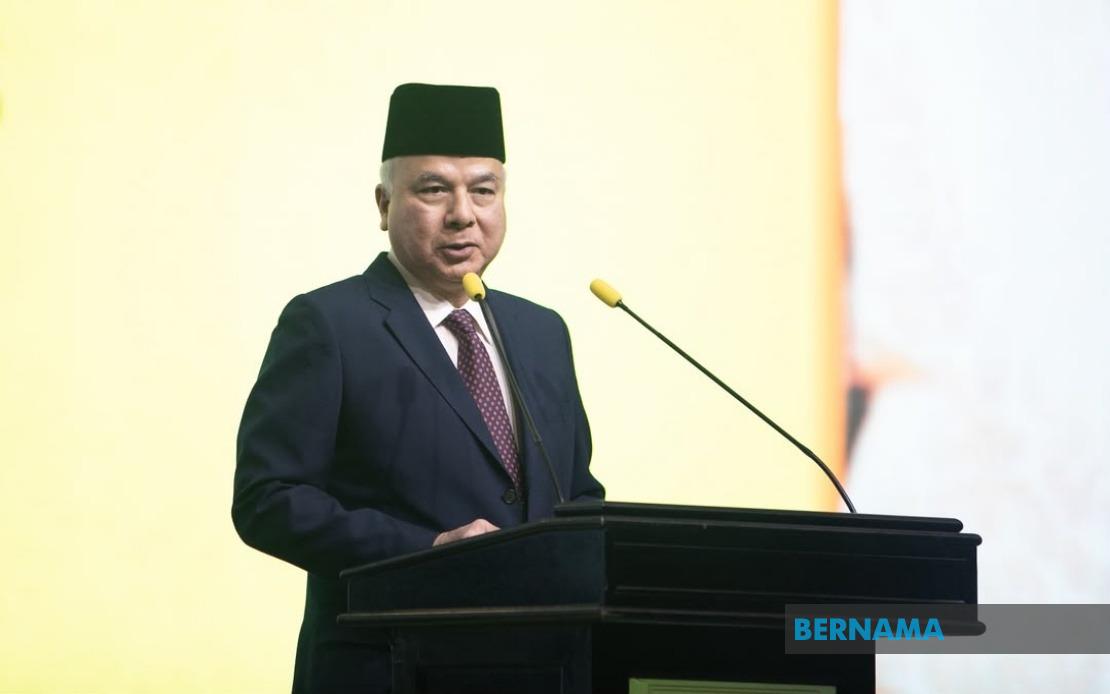
The Sultan of Perak, Sultan Nazrin Shah, has delivered a significant address on the foundations of effective nationhood, arguing that even nations blessed with considerable wealth, skilled workforces and cultural richness will ultimately disappoint their populations if institutional frameworks remain fragile and political leadership prioritises personal gain over public welfare. Speaking at the 8th World Conference on Islamic Thought and Civilisation in Ipoh on July 21, His Royal Highness articulated a vision of governance rooted in institutional resilience, rule of law and civic integrity.
The Sultan's framework for understanding good governance moves beyond abstract principles to outline concrete practical requirements. Effective governance demands that institutions possess sufficient robustness to endure beyond any single administration or leader, ensuring continuity and stability regardless of electoral cycles or leadership transitions. This institutional permanence becomes crucial because it allows citizens to maintain confidence in the system itself rather than placing their faith in particular individuals. The Sultan emphasised that transparency in public financial management—how revenue is collected and expenditure allocated—forms an essential pillar of this trust, reassuring citizens that their contributions serve collective rather than partisan interests.
Central to Sultan Nazrin's conception of legitimate governance is the impartial application of law, a principle that transcends status and circumstance. True accountability means that power and privilege do not exempt anyone from legal consequences, whilst vulnerability and poverty do not deprive anyone of legal protection. This equal application of law creates the psychological and institutional foundation upon which peaceful political competition can flourish. The Sultan outlined a political culture characterised by civil disagreement, where opposition parties function as essential institutional checks rather than existential threats, and where power transfers between competing groups occur through predetermined democratic processes rather than through coercion or irregular means.
Speaking alongside Deputy Prime Minister Datuk Seri Fadillah Yusof, Perak Menteri Besar Datuk Seri Saarani Mohamad, and Higher Education Minister Datuk Seri Dr Zambry Abd Kadir, the Sultan observed that political stability should not be confused with the absence of debate. Indeed, many of the world's most politically stable democracies maintain vigorous argumentative traditions within their publics and parliaments. The crucial distinction lies in channelling disagreement through legitimate institutional pathways rather than allowing disputes to spill into streets or manifest through violence. When institutions lose public confidence—when elections are perceived as compromised, courts appear politically influenced, or public office becomes commodified—the entire social contract begins to dissolve.
The Sultan warned that institutional erosion disproportionately harms marginalised populations, the economically vulnerable and those without political voice. As formal institutions fail, these groups lack alternative mechanisms to protect their interests or access state resources. This insight transforms governance from a technical matter into a moral imperative. Government budgets, in this framework, represent moral documents as much as financial instruments, their allocations revealing which populations a government has selected for prioritisation and which it has overlooked. The principle that everyone matters must commence within government itself, informing budgetary decisions and administrative practices.
The Sultan articulated a vision of civil service as the embodiment of state unity in tangible form. An administrative apparatus that serves all citizens equally, regardless of ethnic background, religious identity or partisan affiliation, demonstrates that the state transcends sectional interests. Similarly, leadership characterised by humility, willingness to listen before legislating, and recognition that power constitutes a temporary stewardship rather than personal property generates stronger citizen loyalty than rhetorical slogans ever could. This conception positions governance as ethical practice rather than mere institutional mechanics.
On the question of economic development, the Sultan rejected any notion that prosperity can be pursued in isolation. No nation, however talented or resource-endowed, can thrive through autarky. Modern economic success depends on transnational flows of capital, technology, expertise and goods. Strategic cooperation across national boundaries, between public and private sectors, and between government and organised civil society has become the operational prerequisite for sustainable development. The Sultan pointed to empirical evidence demonstrating that economies embracing open trade whilst simultaneously cultivating resilient, diversified domestic industries substantially outperform those retreating into protectionism or dependent on single economic sectors.
However, the Sultan cautioned against allowing international cooperation to become synonymous with dependency or surrendering national autonomy. Balancing openness with self-determination represents the sophisticated approach required of developing nations. This means welcoming foreign investment and international expertise whilst simultaneously building domestic institutional and human capacity. For Malaysia and other Southeast Asian economies, this balance becomes particularly crucial as these nations navigate relationships with both developed and emerging powers.
The Sultan identified Islamic finance as a grossly underutilised instrument for fostering economic cooperation, particularly given Malaysia's established position as the world's leading Islamic finance hub. Whilst Malaysia has successfully developed sukuk markets, takaful insurance products and Syariah-compliant investment funds, the deeper philosophical potential of Islamic finance remains largely unrealised. Beyond merely avoiding interest-based transactions, Islamic finance embodies a distinctive economic philosophy emphasising risk-sharing, asset-backed transactions and equitable participation in economic returns. If this philosophy were taken seriously, Islamic finance could catalyse cross-border infrastructure investment, facilitate small and medium enterprise lending across Organisation of Islamic Cooperation member states, and provide the patient capital that development challenges—including water security and renewable energy transitions—urgently require.
The Sultan's address carries particular significance for Malaysia and the broader Southeast Asian region. As nations in this region navigate complex relationships with various global powers, manage significant income inequality and work to strengthen institutional resilience, the Sultan's framing of governance as fundamentally about institutional strength, accountability and equitable public service offers both cautionary and aspirational guidance. The emphasis on institutional permanence beyond individual leaders speaks to concerns about political personalisation visible across Southeast Asia. The focus on equal application of law and equal citizen worth challenges the factional politics and patronage networks that afflict governance quality throughout the region. His advocacy for balanced openness and domestic capacity building reflects the genuine strategic dilemmas confronting middle-income economies seeking prosperity without vulnerability.

