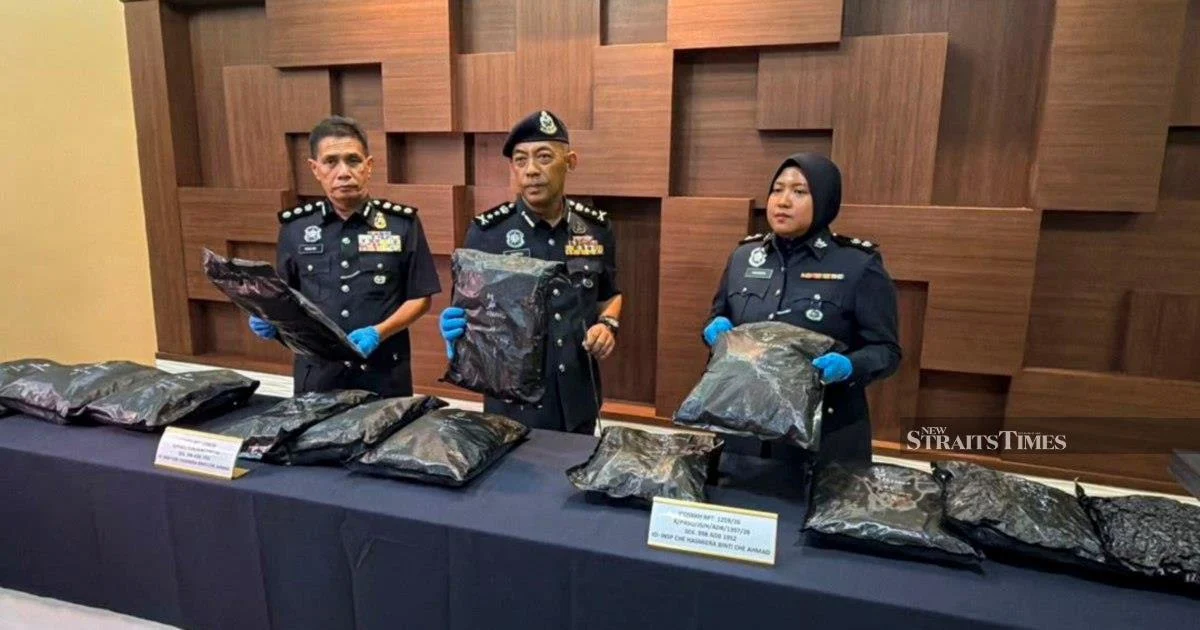
A student enrolled at a private higher education institution has been taken into custody following the discovery of 14.63 kilograms of cannabis buds during a routine operation at Bukit Kayu Hitam on Monday. Law enforcement officers valued the seized cannabis at RM1.17 million, marking another significant interception in the ongoing battle against narcotics trafficking along Malaysia's northern frontier.
The arrest underscores the vulnerability of Malaysia's border regions to organised drug smuggling networks that routinely exploit transportation routes and checkpoints. Bukit Kayu Hitam, strategically located at the Malaysia-Thailand border crossing in Kedah, remains a critical transit point for illicit substances entering the country. The checkpoint has historically served as a focal point for anti-narcotics operations, given its position as one of the primary land gateways between the two nations.
The apprehension of a student in this case reveals a troubling trend in drug trafficking operations: the recruitment of young individuals from academic backgrounds to serve as couriers or transporters. Criminal syndicates have increasingly targeted university and college students, exploiting their relative freedom of movement and perceived lower risk profile compared to professional smugglers. The involvement of someone pursuing higher education suggests that perpetrators view students as expendable assets in larger distribution networks.
Authorities have not yet disclosed comprehensive details regarding the circumstances of the arrest or the broader investigation. Investigators will likely examine whether the student was acting as an independent operator or functioning as part of an organised drug trafficking cell. The scale of the seizure—RM1.17 million in street value—indicates involvement beyond simple personal consumption, pointing instead towards commercial distribution intended for local markets.
The interception adds to Malaysia's growing narcotics control challenges in northern states. Kedah, along with Perlis and Penang, has witnessed escalating drug seizures over recent years, reflecting both increased trafficking activity and enhanced enforcement efforts. The proximity to Thailand's Golden Triangle region, notorious for opium and methamphetamine production, ensures that Malaysian law enforcement agencies face relentless pressure from supply-side operations originating across the border.
Cannabis trafficking has evolved significantly within Southeast Asia over the past decade. What once appeared as a comparatively lower-priority drug has emerged as a lucrative commodity for trafficking organisations. High-value botanical cannabis cultivated in regions across Southeast Asia now commands substantial profit margins, with Malaysian street prices reflecting international market dynamics. The RM1.17 million valuation placed on this single seizure demonstrates the financial incentives driving such smuggling operations.
The case also highlights the sophistication of contemporary drug logistics. Unlike traditional hand-to-hand transactions, modern trafficking operations employ concealment techniques, multi-stage relay systems, and strategic timing to move contraband across borders. Students and other individuals recruited as transporters occupy a critical role in these chains, often receiving modest compensation relative to the risks they assume and the ultimate value of substances they carry.
Law enforcement responses at Bukit Kayu Hitam have intensified in recent years, with authorities implementing advanced detection technologies and intelligence-sharing protocols. Nevertheless, determined smugglers continually adapt their methodologies to circumvent checkpoints and monitoring systems. The successful interception of 14.63 kilograms demonstrates the effectiveness of vigilant border security operations, yet the persistence of smuggling attempts indicates that criminal networks regard such risks as manageable costs within their broader operational frameworks.
For Malaysian policymakers and enforcement agencies, the case presents multiple dimensions requiring strategic attention. Student recruitment into drug trafficking networks demands educational awareness campaigns and community engagement initiatives targeting educational institutions. Simultaneously, enhanced intelligence cooperation with Thai authorities could address supply-side challenges originating from cross-border production facilities. The involvement of young perpetrators also raises rehabilitation and social reintegration considerations within Malaysia's criminal justice system.
The student faces serious legal consequences under Malaysia's Dangerous Drugs Act, which establishes severe penalties for trafficking offences. Depending on investigation outcomes and prosecutorial decisions, sentencing could extend to extended imprisonment terms, reflecting the severity with which Malaysian law treats commercial drug trafficking. The distinction between personal use and trafficking significantly influences judicial outcomes, making comprehensive investigation crucial in determining the student's precise role and culpability.
Regionally, this seizure contributes to broader Southeast Asian drug control narratives. Nations across the region grapple with transnational trafficking networks that exploit porous borders, inconsistent enforcement standards, and limited inter-agency coordination. Malaysia's proactive stance at its border checkpoints, while generating results like Monday's seizure, ultimately requires complementary efforts from neighbouring nations to address root causes of supply and demand dynamics driving the region's narcotics crisis.