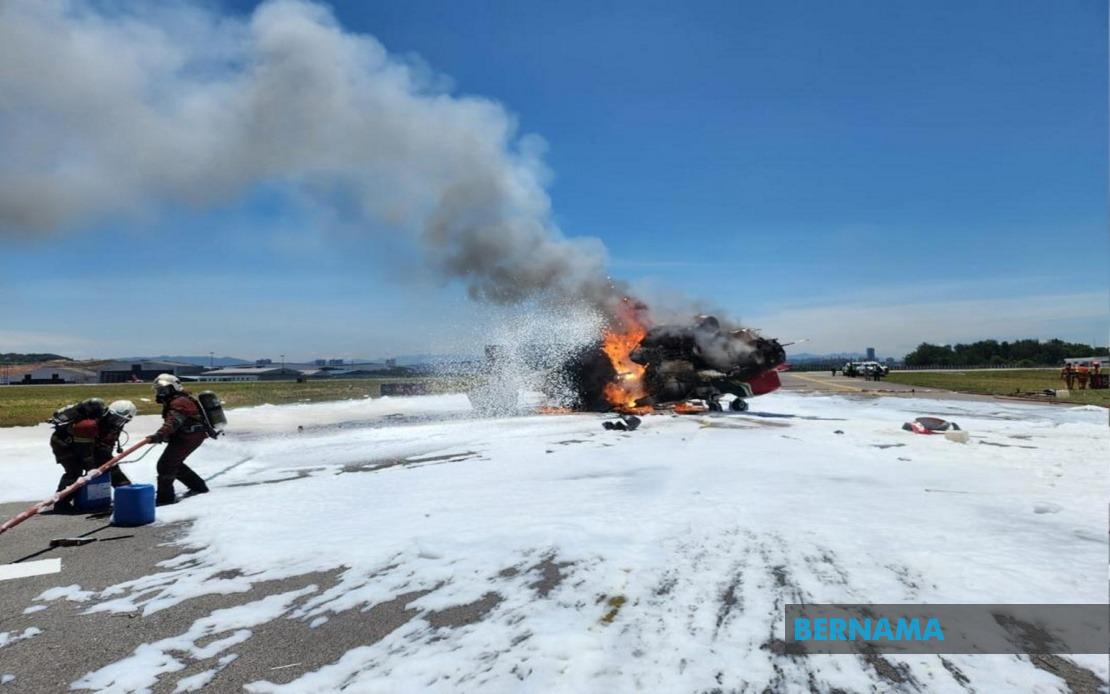
The runway at Sultan Abdul Aziz Shah Airport in Subang resumed normal operations on August 15 after a brief closure triggered by a helicopter fire during routine engine maintenance. The Malaysian Civil Aviation Authority announced the reopening at 2.57 pm, allowing air traffic to resume following the incident that had occurred earlier in the afternoon at Taxiway Victor. The prompt response by airport authorities and emergency services limited operational disruption, though the incident highlighted the inherent risks associated with aircraft maintenance activities at busy regional aviation hubs.
According to CAAM chief executive officer Capt Datuk Norazman Mahmud, the explosion involved a Kamov KaV-32S helicopter registered to a Ukraine-based operator. The aircraft caught fire at approximately 12.28 pm when maintenance personnel were conducting an engine run-up test as part of scheduled maintenance work. The timing of the incident during midday operations meant immediate action was required to ensure the safety of airport users and personnel. The runway closure, though necessary, created a cascading series of disruptions across the airport's flight schedule that affected both inbound and outbound traffic.
During the period when the runway remained closed to air operations, airport management diverted eight incoming flights to alternative airports across the region, a measure taken to prevent congestion and maintain safety protocols. Simultaneously, three aircraft scheduled for departure were required to delay their takeoffs until the runway could be certified safe for operations. The diversions represented a significant operational undertaking, as airlines had to coordinate with ground crews at receiving airports and communicate revised arrival times to passengers across different destinations. This scenario underscores the cascading impacts that even relatively short airport closures can have on regional flight networks where capacity is often stretched during peak hours.
The four-person crew aboard the helicopter—comprising a pilot, co-pilot, and two additional crew members—were all Ukrainian nationals conducting the maintenance work when the engine fire broke out. One crew member sustained minor injuries from debris ejected during the explosion, though medical personnel at the airport were able to provide immediate assistance. The relatively contained nature of injuries suggested that safety protocols and the presence of emergency response teams at the airport functioned effectively during the incident. Nevertheless, the incident raises questions about the adequacy of maintenance facilities and fire suppression capabilities at the airport for handling aircraft emergencies.
From a regulatory perspective, CAAM's swift response in reopening the runway after verification demonstrates the authority's confidence in the airport's safety infrastructure and its ability to manage the aftermath of such incidents. The decision to reopen approximately two and a half hours after the explosion indicates that investigators and safety officials completed preliminary assessments determining that the runway itself had sustained no damage preventing its use. This efficiency in restoring operations is crucial for maintaining the airport's role as a critical gateway for commercial aviation in the Klang Valley region, serving both scheduled airlines and general aviation operators.
Sultan Abdul Aziz Shah Airport serves as an important facility for Malaysia's aviation sector, particularly for charter operations, helicopter services, and some regional carriers that supplement operations at the country's primary international hub. The airport's dual role as both a commercial aviation facility and a maintenance base for various aircraft types means that ground incidents like engine test failures, while uncommon, carry particular significance. The concentration of maintenance activities at facilities serving such diverse aircraft types requires robust safety management systems and clear protocols for managing emergencies that could affect wider airport operations.
The incident also highlights the distinction between aircraft maintenance activities and regular flight operations. Engine run-up tests, while essential for confirming the integrity of powerplants after servicing, involve controlled but inherently risky procedures where engines operate at high power settings while the aircraft remains stationary. When such tests are conducted at active airports where other flight operations occur, the potential for incidents to disrupt broader airport functions exists. Airport designers and operators must balance the need to accommodate maintenance facilities with the imperative to isolate such activities from regular passenger operations.
Airline passengers at the airport received updated information through flight information display systems that reflected the revised schedules necessitated by the closure. CAAM advised all passengers to confirm their flight status directly with their respective airlines, recognizing that the diversions and delays would require individual airline communications regarding rebooking options or alternative arrangements. In an era where passengers expect real-time information and seamless travel experiences, such disruptions—though manageable—can create frustration and operational challenges for carriers managing multiple affected services.
The reopening of the runway and resumption of normal flight operations by late afternoon demonstrated the airport's resilience and the effectiveness of its emergency response procedures. However, the incident will likely prompt a comprehensive investigation into the helicopter's mechanical condition, the maintenance procedures being conducted, and whether any operational or maintenance protocol failures contributed to the engine fire. Such investigations typically involve both CAAM and international aviation authorities, given that the aircraft was foreign-registered and the crew was not Malaysian.
For Malaysian aviation stakeholders, the incident reinforces the importance of rigorous maintenance standards and the necessity of proper separation between maintenance activities and active airport operations. As aviation activity in Southeast Asia continues to expand, airports like Sultan Abdul Aziz Shah must balance accommodating increasingly diverse aircraft types and maintenance requirements with maintaining the safety standards that reassure passengers and operators alike.

