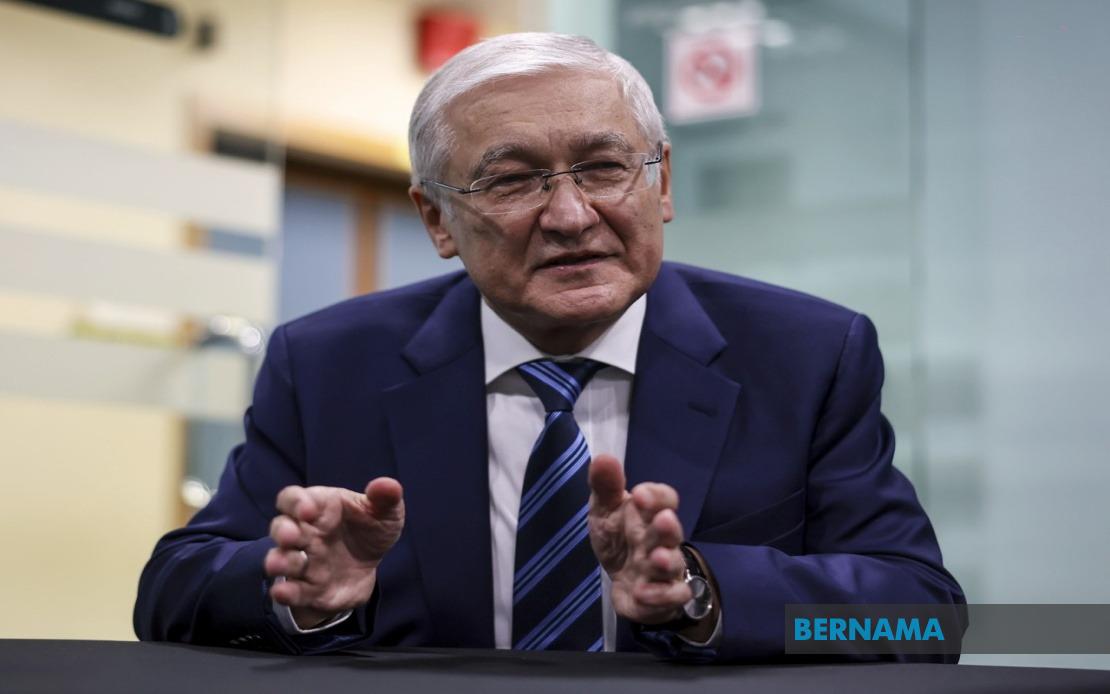
The diplomatic relationship between Malaysia and Russia has undergone a remarkable transformation under the personal engagement of Sultan Ibrahim, whose unprecedented visits to Moscow have fundamentally altered the tenor and scope of bilateral relations between the two nations. Russian Ambassador to Malaysia Naiyl Latypov has credited the King's distinctive approach to statecraft with creating unprecedented warmth in ties that had previously lacked the personal dimension now characterised by direct engagement with the Kremlin's leadership. This shift carries particular significance as the two countries approach the 60th anniversary of formal diplomatic relations next year, with the ambassador emphasising that Sultan Ibrahim's royal diplomacy has elevated cooperation into spheres previously unexplored through conventional diplomatic channels.
Sultan Ibrahim made history in August last year by undertaking the first state visit by a reigning Malaysian monarch to Russia since the nations established relations in 1967, a breakthrough that symbolised a deliberate pivot toward deeper engagement with Moscow. The King's subsequent return visit in January this year, during which he toured the renowned Hermitage Museum in St Petersburg alongside President Vladimir Putin, demonstrated the sustained momentum of this diplomatic initiative beyond mere ceremonial protocol. A third visit followed in May for Russia's Victory Day celebrations, an occasion of profound national significance in the Russian calendar, during which the King and President Putin held substantive discussions resulting in formal agreements designed to strengthen bilateral cooperation. The frequency and substantive nature of these engagements represent a marked departure from the more measured pace of historical Russia-Malaysia relations.
During his May visit, Sultan Ibrahim extended an invitation to President Putin to conduct a reciprocal state visit to Malaysia in 2027, timed deliberately to coincide with the milestone 60th anniversary of bilateral relations. This prospective visit carries considerable symbolic weight, as it would represent a corresponding commitment from Russia's leadership to deepen ties with Malaysia at the highest governmental level. The Kremlin has reportedly welcomed this invitation, signalling genuine interest in broadening the relationship beyond current parameters. For Malaysia, the prospect of hosting the Russian president offers an opportunity to negotiate further agreements on matters central to the nation's strategic interests and economic development.
Energy security has emerged as a cornerstone of the reinvigorated relationship, reflecting Malaysia's strategic imperatives in an increasingly complex geopolitical environment. Russia has committed to guaranteeing long-term supplies of petroleum, oil and gas to Malaysia, addressing one of the nation's most pressing resource requirements. This assurance carries particular importance given Malaysia's position as an energy-consuming nation vulnerable to market volatility and supply disruptions. The agreement essentially provides Malaysia with a stable, predictable source of hydrocarbon supplies from a major global producer, reducing exposure to price fluctuations and geopolitical pressures that might otherwise constrain economic growth. Such guarantees represent concrete benefits extending well beyond the symbolic realm of diplomatic relations.
Bilateral trade figures demonstrate the practical benefits of renewed engagement between the two nations. President Putin noted during discussions with Prime Minister Datuk Seri Anwar Ibrahim that trade between Russia and Malaysia expanded by 12.9 per cent in the previous year, a growth rate substantially outpacing many other bilateral trade relationships. As of 2025, Russia ranked as Malaysia's ninth-largest trading partner among European nations, with total bilateral commerce valued at RM8.72 billion. Malaysia's export portfolio to Russia centres on electrical and electronic products, machinery, equipment and components, alongside processed food products, whilst Russian exports to Malaysia consist primarily of petroleum products, minerals, and chemical-based items. This complementary trade structure suggests considerable scope for further expansion, particularly if cooperative frameworks can be expanded beyond current parameters.
The diplomatic initiative also reflects Malaysia's broader strategic positioning within the evolving multipolar international system. By cultivating closer ties with Russia, Malaysia diversifies its diplomatic relationships and reduces dependency on any single great power, a positioning entirely consistent with the nation's traditional policy of non-alignment and strategic autonomy. The engagement demonstrates Malaysia's capacity to maintain substantive relationships across ideological and geopolitical divides, particularly important in Southeast Asia's complex regional dynamics where maintaining equidistance between major powers remains essential to regional stability. Sultan Ibrahim's diplomacy thus serves broader strategic objectives beyond the bilateral sphere, signalling to the international community that Malaysia pursues pragmatic relationships based on national interest rather than ideological conformity.
Geostrategic analysts have noted the distinctive character of royal diplomacy in achieving diplomatic breakthroughs otherwise elusive through conventional state-to-state channels. Professor Azmi Hassan of the Nusantara Academy for Strategic Research emphasises that the Yang di-Pertuan Agong's personal engagement carries prestige and access that transcend ordinary diplomatic protocols, creating what he characterises as crucial windows of opportunity. The expansion of cooperation across diplomatic, energy security, and commercial dimensions following Sultan Ibrahim's initial August visit validates this analytical framework. Hassan particularly highlights the energy security dimension as substantively significant, representing not merely symbolic gestures but concrete arrangements addressing Malaysia's material security requirements. The acquisition of reliable energy supplies from a major global producer constitutes a major strategic achievement with implications extending well beyond bilateral relations.
Looking toward President Putin's prospective 2027 visit, policymakers and analysts have begun identifying priorities that should command attention during high-level discussions. Beyond traditional commercial considerations, Hassan advocates that Malaysia should prioritise accessing advanced science and technology from Russia, particularly in sectors where the Russian Federation possesses capabilities comparable to Western suppliers but offers more competitive pricing. This perspective reflects a pragmatic recognition that development aspirations require technological advancement, and that Russia represents a viable alternative source for sophisticated goods and knowledge transfer. The cost advantage associated with Russian technology procurement relative to Western sources could prove particularly valuable for Malaysian firms operating in capital-intensive industries requiring continuous technological upgrading. Strategic economic planners should therefore view Putin's prospective visit as an opportunity to negotiate comprehensive technology cooperation agreements extending beyond energy sector considerations.
The historical context of Russia-Malaysia relations provides perspective on the significance of recent developments. Formal diplomatic relations were established on April 3, 1967, accompanied by the signing of a trade agreement establishing the foundational framework for bilateral engagement. Russia subsequently opened a Trade Office in Kuala Lumpur in November 1967 and established its embassy in April 1968, whilst Malaysia reciprocated by opening an embassy in Moscow in November 1968. For nearly five decades following these initial institutional arrangements, the relationship proceeded along comparatively modest trajectories, characterised by steady but unspectacular engagement. The recent acceleration represents the most significant deepening of ties in the relationship's history, transforming Russia-Malaysia relations from a peripheral component of each nation's foreign policy into an increasingly central concern commanding attention at the highest levels of government.
Additional developments underscore the broadening scope of engagement beyond traditional diplomatic frameworks. In June, the Russian news agency TASS reported that Russia aims to eliminate visa requirements for citizens of select countries, including Malaysia, a measure that would substantially facilitate people-to-people contact and commercial transactions. Prime Minister Anwar Ibrahim's June attendance at the ASEAN-Russia Commemorative Summit in Kazan demonstrated Malaysia's commitment to advancing engagement not merely bilaterally but within broader regional and multilateral frameworks. Russia's explicit offer to guarantee long-term energy supplies to Malaysia, formalised during the Prime Minister's visit, represents governmental commitment to sustain the relationship through concrete mechanisms transcending political fluctuations. These accumulating developments suggest that the deepening of Russia-Malaysia ties reflects sustained strategic interest from both capitals rather than episodic diplomatic gestures.
The implications of intensified Russia-Malaysia engagement extend beyond the bilateral sphere to influence Southeast Asia's broader strategic landscape. Malaysia's demonstrated capacity to cultivate closer ties with Russia whilst maintaining existing relationships with Western powers and other regional actors reinforces the principle of strategic autonomy central to ASEAN's historical positioning. The energy security assurances obtained from Russia enhance Malaysia's resilience in the face of potential supply disruptions, whether geopolitically driven or market-induced. For other Southeast Asian nations observing Malaysia's diplomatic initiative, the example demonstrates the continued viability of independent foreign policy conduct and the possibility of securing material benefits through proactive engagement with diverse international partners. As Malaysia and Russia approach their 60th diplomatic anniversary, the relationship appears poised for continued expansion, with potential reverberations throughout Southeast Asia's diplomatic architecture.

