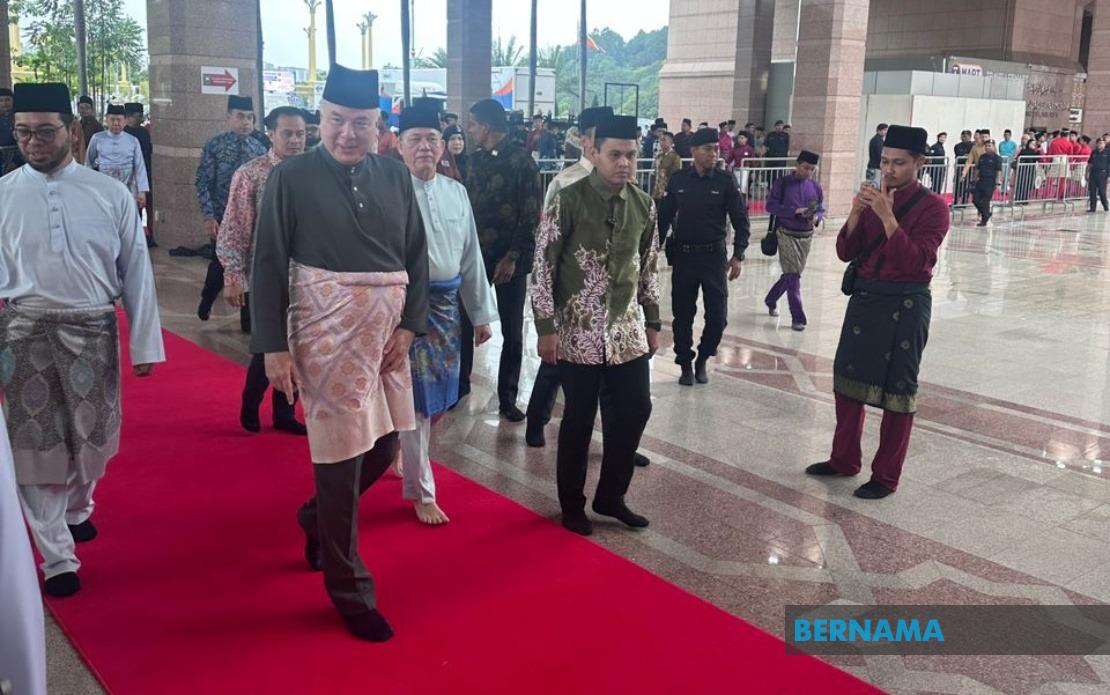
Deputy Yang di-Pertuan Agong Sultan Nazrin Shah delivered a pointed critique of impulsive governance during the National Level Maal Hijrah 1448 Celebration in Putrajaya, arguing that leaders who prioritise emotional reactions over deliberative thought inflict lasting damage on their nations. Speaking at the Putra Mosque on June 17, the Sultan of Perak stressed that reckless decision-making rooted in personal feelings ultimately shifts the burden of consequences onto ordinary citizens who bear no responsibility for poor choices made in corridors of power. The occasion, themed "MADANI Dihayati, Ummah Diberkati" and attended by approximately 5,000 people including Deputy Prime Minister Datuk Seri Fadillah Yusof and Minister in the Prime Minister's Department Dr Zulkifli Hasan, provided Sultan Nazrin with a platform to articulate principles he views as fundamental to stable, effective governance.
The Sultan underscored that measured, informed judgment represents a cornerstone of competent leadership. He contended that openness combined with strategic caution enables decision-makers to navigate complex policy terrain more successfully than those who rely on gut instinct or knee-jerk reactions. This distinction carries particular weight in Malaysia's context, where coalition governments often face pressure to act decisively on contentious issues ranging from religious affairs to economic policy. Sultan Nazrin's remarks appear to address a broader pattern of governance challenges facing the nation, where political fragmentation and competing interests sometimes incentivise reactive rather than proactive policymaking. The emphasis on thoughtful deliberation suggests concern that Malaysia's current political landscape may reward urgency over wisdom, a dynamic that could undermine institutional stability and public confidence.
Drawing from Islamic history, Sultan Nazrin invoked the Hijrah as a model of strategic planning and wise leadership. He highlighted Prophet Muhammad's decision to appoint Abdullah bin Uraiqit, a non-Muslim, as guide for the migration to Medina, precisely because of the guide's expertise, reliability, and intimate knowledge of desert routes. This example, the Sultan noted, demonstrates Islam's recognition of competence and integrity regardless of religious identity, provided such expertise does not compromise Muslim welfare. The anecdote carries contemporary relevance for Malaysian society, which comprises multiple faith communities and requires leaders capable of acknowledging expertise wherever it originates. By invoking this historical precedent, Sultan Nazrin suggested that meritocratic principles need not conflict with Islamic values, a message potentially aimed at policymakers who sometimes frame religious considerations and professional excellence as mutually exclusive.
Sultan Nazrin expanded his address to encompass national character, arguing that genuine national greatness flows not from dwelling on past achievements but from extracting lessons that enable construction of stronger futures. This reframing of national identity proves particularly significant for Malaysia, a nation with complex postcolonial history and ongoing debates about national narrative and purpose. Rather than encouraging backward-looking nostalgia or pride in historical moments, the Sultan positioned Malaysia as a nation capable of learning and evolving, a subtle but important repositioning that counters stagnation and encourages forward momentum. The implicit message resonates especially during periods of political uncertainty, when societies often retreat into mythologised versions of their pasts rather than confronting present challenges with fresh perspective.
A substantial portion of the Sultan's remarks focused on sacrifice as the enabling force behind sustainable national progress. He distinguished sacrifice from mere loss, defining it instead as the conscious subordination of personal interest to collective wellbeing, requiring courage, perseverance, and sincerity in equal measure. Sultan Nazrin expressed concern that contemporary Muslim societies have largely abandoned this ethos, reduced sacrifice to rhetorical flourish rather than lived practice. This anxiety addresses a genuine phenomenon in rapidly urbanising, increasingly consumerist Southeast Asia, where individual advancement and material accumulation often supersede communal obligation. The Sultan's call to resurrect sacrifice as a quotidian practice responds to fragmentation he perceives in social cohesion and civic commitment, conditions that undermine national resilience during periods of economic or political turbulence.
Unity and interethnic cooperation formed another central theme of the Sultan's discourse. He drew explicitly from the Medina Charter, the seventh-century constitutional framework that established governance principles transcending ethnic and religious boundaries. Sultan Nazrin credited the Charter's success to combination of tolerance, justice, and wise leadership, conditions he posited as essential to contemporary advancement of Islamic civilisation. In the Malaysian context, this historical reference carries particular salience given the nation's 1957 social contract, which similarly attempted to balance competing communal interests through negotiated accommodation. By invoking the Medina Charter's success, Sultan Nazrin implicitly suggested that Malaysia's own multiethnic compact remains viable if leaders demonstrate justice, wisdom, and genuine commitment to cross-community cooperation.
The Sultan cautioned against superficial commemoration of Maal Hijrah, rejecting the notion that this Islamic observance merely marks calendar progression or constitutes nostalgic reflection on events from thirteen centuries past. Instead, he positioned Maal Hijrah as opportunity for genuine self-examination, individual and collective stocktaking of failures and shortcomings, and deliberate awakening to spiritual and moral complacency. This characterisation transforms a religious observance into framework for national introspection and course correction, applicable beyond Muslim populations to the broader Malaysian project. The Sultan's emphasis on mindfulness and awareness of heedlessness responds to concerns about societies becoming overwhelmed by material preoccupations and losing sight of transcendent values and communal obligations.
Looking beyond the specific religious context, Sultan Nazrin's remarks articulate principles applicable across Malaysia's diverse governance landscape. His emphasis on deliberation over impulsiveness, expertise over ideology, sacrifice over self-interest, and unity over division speaks to challenges confronting the nation's political leadership across party lines and institutional domains. The Deputy Yang di-Pertuan Agong's willingness to articulate these principles publicly during an official national occasion suggests growing concern in Malaysian institutions about governance quality and decision-making processes. Whether policymakers will heed these admonitions remains uncertain, yet the prominence given to these themes in official discourse indicates that Malaysia's traditional leadership recognises fundamental deficits in contemporary governance approaches.
The attendance of key government figures underscored official acknowledgment of the Sultan's message, though whether such acknowledgment translates into altered behaviour remains speculative. Deputy Prime Minister Fadillah Yusof and Minister Dr Zulkifli Hasan's participation suggests at least formal endorsement of these principles, even if implementation proves inconsistent with articulated commitment. The challenge for Malaysian governance lies in bridging gap between rhetoric and practice, between acknowledgment of principles and their embodiment in actual policymaking. Sultan Nazrin's address therefore functions simultaneously as celebration of Islamic heritage, call to national renewal, and gentle but firm critique of contemporary governance shortcomings. Whether subsequent actions reflect these admonitions or whether the moment passes into historical record as missed opportunity for institutional reform will become clearer through observation of policy trajectories in coming months.