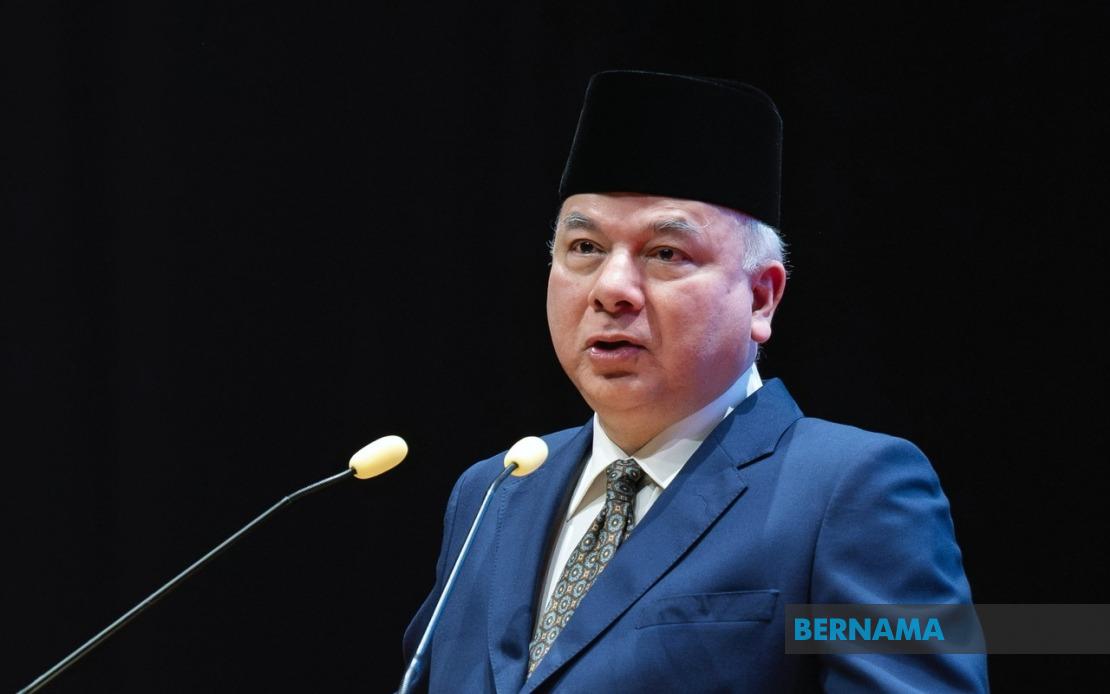
Sultan Nazrin Shah has thrown his weight behind a transformative overhaul of how Islamic endowments are managed globally, advocating for a unified governance framework that could reshape the administration of waqf institutions from Southeast Asia to beyond. Speaking at the International Waqf Da'wah Convention 2026 in Kuala Lumpur, the Perak Sultan proposed developing a common set of core principles for waqf management that countries and institutions could voluntarily adopt, building upon existing standards already pioneered by Indonesia, the Accounting and Auditing Organisation for Islamic Financial Institutions (AAOIFI), and Kazakhstan.
The Sultan's intervention addresses a long-standing challenge in Islamic finance: the fragmentation of waqf governance across different jurisdictions and institutions. Rather than creating entirely new standards from scratch, his approach emphasises consolidating and harmonising existing best practices into a coherent international framework. This pragmatic strategy acknowledges that governance models already exist but lack coordination at the global level. By bringing together expertise and experience from multiple countries and organisations, the proposed working group would develop guidance flexible enough for diverse contexts while maintaining core principles of integrity and accountability.
Crucially, Sultan Nazrin suggested that the International Centre for Education in Islamic Finance (INCEIF) University in Malaysia serve as the secretariat for this initiative, positioning the country as a thought leader in Islamic finance governance. This proposal could elevate Malaysia's role in shaping international standards for waqf administration, giving local institutions significant influence over how Islamic endowments are managed across the Muslim world. The designation would also reflect Malaysia's growing prominence in Islamic financial innovation and regulatory frameworks.
Beyond governance standardisation, the Sultan emphasised the urgent need for technological transformation in how waqf assets are tracked and reported. He called for widespread adoption of digital cash waqf platforms equipped with real-time public dashboards that would radically enhance transparency and accountability. This modernisation addresses a critical weakness in current waqf administration: the opacity that often surrounds fund management and asset allocation. By leveraging technology to create instantaneous visibility into waqf operations, institutions can build public trust while enabling donors to monitor how their contributions are utilised.
The Sultan highlighted a troubling reality that resonates across the Islamic world: vast waqf assets remain underutilised due to poor governance. Incomplete records, disputed land titles, weak administration, and inadequate management have rendered much of the global waqf portfolio dormant and unproductive. This inefficiency represents a profound missed opportunity for addressing socioeconomic challenges in Muslim-majority regions. Modernising governance systems and digitising asset management could unlock billions in dormant capital for productive social and economic purposes.
Addressing Southeast Asia specifically, Sultan Nazrin proposed launching a pilot "Waqf for Peace and Planetary Resilience" initiative involving selected institutions across Malaysia, Indonesia, and other ASEAN nations. This programme would direct waqf funds toward renewable energy projects and climate-resilient infrastructure while simultaneously promoting environmental stewardship and peaceful coexistence among communities. The initiative reflects an emerging global consensus that waqf can serve contemporary development challenges, from climate change to regional stability, positioning Islamic endowments as tools for addressing 21st-century problems.
The Sultan stressed that waqf institutions must embed principles of balance, justice, mercy, and trusteeship into their governance frameworks. These values extend beyond technical compliance to encompass the spiritual and moral dimensions of waqf administration. Trustees and managers bear an amanah—a sacred trust—to uphold the highest standards of integrity and accountability. This framing elevates waqf governance from a mere administrative exercise to a religious obligation, potentially mobilising broader commitment to reform among Muslim leaders and institutions.
The gathering itself underscored Malaysia's centrality to international waqf discourse, with prominent attendance from Sarawak Premier Tan Sri Abang Johari Tun Openg, who leads the Malaysian Islamic Welfare Organisation (PERKIM), alongside Minister Zulkifli Hasan from the Prime Minister's Department (Religious Affairs). This convergence of state and civil society figures at a major international convention demonstrates Malaysia's commitment to positioning itself as a regional hub for Islamic financial governance and development.
Sultan Nazrin's proposals arrive at a critical juncture for Islamic finance. As waqf assets globally are estimated in the hundreds of billions of dollars, the efficiency of their management carries enormous implications for social development, poverty alleviation, and community welfare. Weak governance not only fails beneficiaries but also diminishes public confidence in Islamic institutions. Conversely, implementing international standards and digital transparency could unlock waqf's potential as a transformative vehicle for Islamic social finance.
The Sultan's emphasis on international collaboration rather than unilateral standard-setting reflects diplomatic sophistication. By framing the initiative as an open, consultative process that honours existing work by Indonesia, AAOIFI, and Kazakhstan, he positions Malaysia as a convening power rather than a hegemon. This approach is more likely to gain buy-in from diverse stakeholders across different Muslim nations with varying legal systems and institutional capacities.
For Malaysia specifically, Sultan Nazrin's articulation of these principles reinforces the country's aspirations to lead Islamic financial innovation. INCEIF's potential role as secretariat could strengthen Malaysia's brand as a centre of Islamic financial education and governance development. Moreover, the Waqf for Peace initiative offers an opportunity for Malaysian institutions to demonstrate thought leadership in applying traditional Islamic concepts to contemporary development challenges, particularly climate action and regional stability.
The Sultan concluded with a call to action suffused with historical consciousness, urging his generation not to be remembered merely as admirers of forefathers' achievements but as contributors to ongoing advancement. This sentiment encapsulates the broader challenge facing Islamic institutions: moving beyond custodianship of tradition to active innovation. The proposed frameworks, digital platforms, and sustainability initiatives represent precisely this balance between honouring Islamic principles and embracing modern approaches to governance and accountability.
As the International Waqf Da'wah Convention 2026 unfolds in Kuala Lumpur, Sultan Nazrin's vision establishes an ambitious agenda for the coming years. Success in realising this framework—establishing international standards, implementing digital transparency, and launching pilot regional initiatives—could fundamentally reshape how the Islamic world manages endowments. For Malaysia and its peers, the opportunity to lead this transformation offers both the responsibility to demonstrate effective governance and the potential to influence Islamic finance architecture globally.

