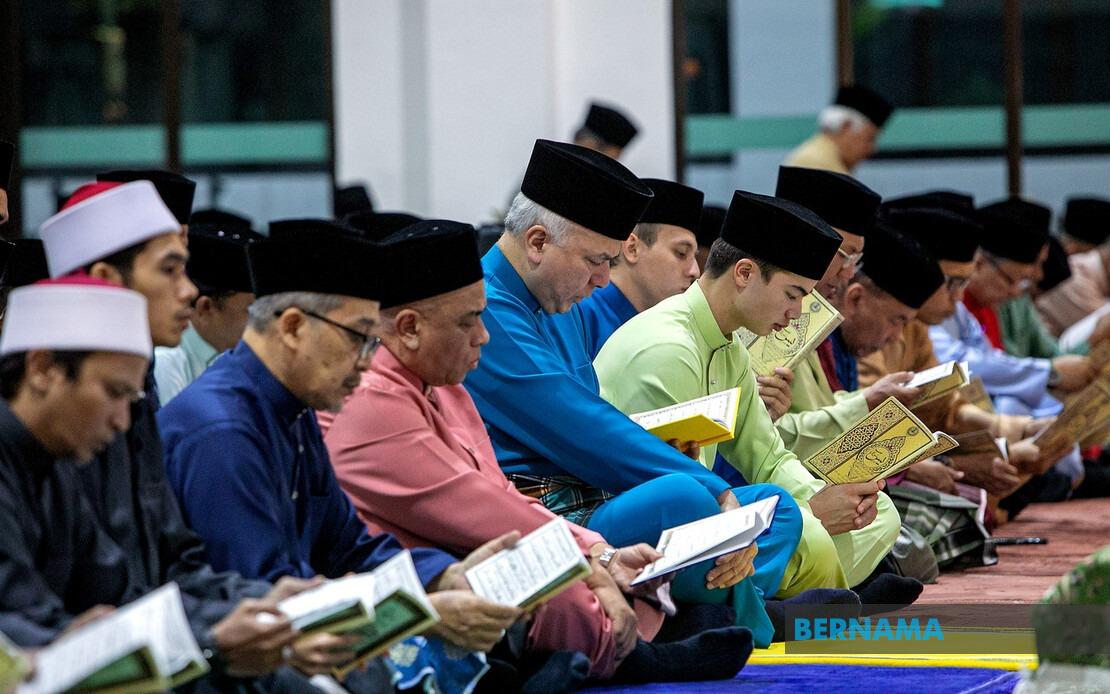
Sultan Nazrin Shah, the Sultan of Perak, took centre stage at the state-level National Day observance on Friday evening when he officiated Masjid Imam As Syafie in Ipoh. The formal opening ceremony formed part of broader commemorative activities held throughout Perak to mark Malaysia's independence day, with the religious component of the celebrations underscoring the significance of faith in the nation's constitutional framework and the monarchy's custodial role in matters of religion.
The gathering drew approximately 1,000 congregants to the newly completed house of worship, demonstrating robust community participation in both the national commemoration and the mosque's dedication. Among the dignitaries present were Menteri Besar Datuk Seri Saarani Mohamad, the chief minister overseeing Perak's state government, and Tan Sri Mohd Annuar Zaini, who chairs the state Islamic Religious and Malay Customs Council, or MAIPk. The convergence of political and religious leadership at a single event reflects Malaysia's institutionalised integration of Islam within the constitutional monarchy and state apparatus.
The mosque itself represents a significant infrastructural investment for Ipoh and the wider Perak community. Completed the previous year at a total cost of RM8.7 million, the facility can accommodate approximately 1,600 worshippers during peak prayer times, making it a substantial addition to the state's religious infrastructure. The scale of this investment suggests growing recognition among local authorities of rising demand for prayer spaces in urban areas, particularly as Ipoh continues to develop as a regional commercial and administrative hub.
Sultan Nazrin performed the formal opening by drawing back a curtain that had been draped across a dedicatory plaque, a ceremonial gesture that has become standard practice in Malaysia's official opening protocols. This symbolic act carried particular weight given the Sultan's position as both the constitutional head of state in Perak and the protector of Islam within his jurisdiction—a dual role that emphasises the inseparability of monarchy and religious patronage in Malaysia's political system.
Following the official opening, the Sultan engaged fully in the religious programme that had been prepared for the evening. He joined the congregation in doa selamat, a supplication prayer traditionally performed to seek blessings and prosperity, and subsequently participated in the Yasin recitation, which involves the reading of Surah Yasin from the Quran. The tahlil—a form of remembrance involving the repetition of the phrase "La ilaha illallah" (there is no god but Allah)—formed another component of the spiritual observance.
The religious proceedings were led by Imam II Muhammad Luqmaan Mohd Helmi of Masjid As Syafie, who guided both the Yasin recitation and tahlil portions of the evening. The fact that a senior imam personally directed these proceedings highlights the ceremonial importance attributed to the event. Following these readings and remembrances, Sultan Nazrin remained at the mosque to participate in the congregational Isyak prayer, one of the five obligatory daily prayers in Islam, demonstrating his commitment to engaging substantively rather than perfunctorily with the religious community.
This event is noteworthy within the context of Malaysia's ongoing efforts to reinforce the connection between national identity and Islamic observance. State-level National Day celebrations increasingly incorporate religious components, particularly in states with active Islamic councils and strong sultanates. In Perak specifically, where Sultan Nazrin has been known for emphasising Islamic education and scholarship, such occasions serve to reinforce the monarchy's guardianship role over religious matters and its integration within everyday political life.
The timing of the mosque's opening—coinciding with National Day observances—carries symbolic significance. It positions the state's investment in religious infrastructure as integral to nation-building and demonstrates how physical development projects intersect with national commemorative calendars. For Ipoh residents and Perak citizens more broadly, the new mosque provides expanded capacity for worship while also serving as a testament to state and royal commitment to supporting Islamic institutions.
From a regional perspective, Malaysia's deliberate interweaving of Islamic observance with national celebrations reflects a broader pattern across Southeast Asia where majority-Muslim nations navigate the relationship between religious identity and civic nationalism. The presence of senior political figures alongside religious authorities at these events reinforces the constitutional settlement that underpins Malaysia's federal system, wherein Islam holds a special but constitutionally defined position.
The RM8.7 million investment in the mosque also reflects economic priorities within Perak's development planning. As one of Malaysia's larger states by area but with a relatively dispersed population across urban and rural regions, infrastructure investments in Ipoh—the state capital—typically carry outsized significance for urban development narratives. Religious facilities, when constructed to modern standards and substantial capacity, become part of the broader urban infrastructure ecosystem alongside commercial, administrative, and residential developments.
Looking forward, the opening of Masjid Imam As Syafie adds to Perak's portfolio of religious institutions and may influence discussions about urban planning, community facilities, and the allocation of state resources. The successful completion of a major mosque project within budget and on schedule—a notable achievement in Malaysia's construction sector—may also encourage further confidence in similar undertakings elsewhere in the state. For communities in Ipoh, the facility addresses practical worship requirements while signalling continued investment in social infrastructure by both state authorities and the monarchy.

