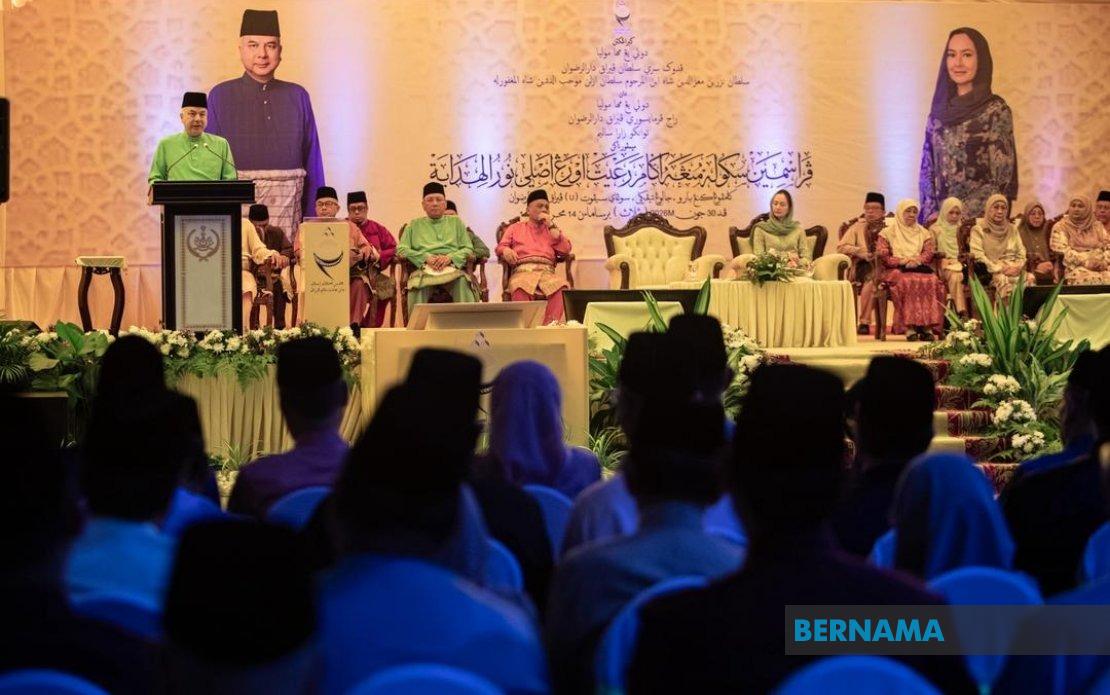
Perak's Sultan Nazrin Shah has inaugurated Sekolah Menengah Agama Rakyat (SMAR) Orang Asli Nurul Hidayah in Kampung Kenang, Sungai Siput Utara, underscoring a pivotal development in educational provision for indigenous communities across Malaysia. The official opening ceremony on June 30 brought together high-ranking royal and government officials, including Raja Muda of Perak Raja Jaafar Raja Muda Musa and Raja Di Hilir Perak Raja Iskandar Dzurkarnain Sultan Idris Shah, signifying the occasion's importance within Perak's administrative and educational landscape.
The institution represents a watershed moment for Malaysia's Orang Asli communities, as it stands as the country's first SMAR dedicated exclusively to indigenous students. What distinguishes this school is its comprehensive approach to combining academic rigour with Islamic religious education, a model that emerged from humble origins. The school began three decades ago as a learning centre focused on Islamic fundamentals and basic religious knowledge before evolving into a full secondary institution offering an integrated curriculum that bridges secular and religious disciplines.
In his address, Sultan Nazrin articulated a vision extending far beyond conventional school infrastructure. He characterised the establishment as a strategic investment in securing lasting prosperity for Orang Asli youth, one that transcends the physical construction of classrooms and laboratories. The Sultan's remarks positioned education not merely as a mechanism for academic achievement but as a comprehensive developmental process that shapes intellectual capacity, spiritual awareness, emotional maturity and physical wellbeing. This multidimensional understanding reflects growing recognition within Malaysia's education policy circles that sustainable community advancement requires holistic approaches rather than narrowly focused interventions.
The Perak Islamic Religious and Malay Customs Council (MAIPk) and the Perak Islamic Religious Department (JAIPk), represented by their senior leaders Tan Sri Mohd Annuar Zaini and Datuk Harith Fadzilah Abdul Halim respectively, have demonstrated commitment to narrowing educational disparities affecting marginalised indigenous populations. Sultan Nazrin characterised their efforts as embodying Malaysia's national educational aspiration—ensuring that every child, regardless of socioeconomic circumstances or geographic remoteness, can access quality education and realise meaningful life trajectories. This framing connects the school to broader national development objectives outlined in Malaysia's educational policy frameworks.
The practical outcomes at SMAR Orang Asli Nurul Hidayah provide compelling evidence supporting the model's viability. Beyond academic achievement, the institution has catalysed a notable phenomenon where former students have returned to their communities as educators and awareness advocates, creating multiplier effects throughout the Orang Asli population. This cycle of giving back represents critical social capital formation within communities historically experiencing limited intergenerational educational mobility. Such outcomes demonstrate that properly resourced, culturally sensitive educational initiatives can generate transformative ripple effects extending beyond individual learners to reshape entire community trajectories.
Sultan Nazrin's emphasis on character development and moral education reflected broader concerns within Malaysia's leadership about producing graduates who combine academic competence with ethical grounding. In an era where technical skills alone insufficient for meaningful societal contribution, the Sultan stressed that education should develop individuals capable of applying knowledge responsibly, demonstrating integrity, and exercising leadership informed by religious values and social consciousness. This holistic competency model acknowledges that sustainable national development depends upon creating citizens whose education encompasses knowledge, character formation and spiritual development in integrated fashion.
The timing and location of this school opening carry particular significance for Malaysia's education equity agenda. Orang Asli communities across Peninsular Malaysia have historically experienced lower educational access and attainment compared to other population groups, a disparity with compounding consequences for economic participation, health outcomes and social mobility. By establishing a secondary religious school specifically serving indigenous students, Perak has addressed a notable gap in educational provision whilst simultaneously validating indigenous educational aspirations within Islamic frameworks. This approach respects religious identity whilst expanding pathways for community advancement.
Menteri Besar Datuk Seri Saarani Mohamad's participation underscored state-level commitment to indigenous educational development, positioning the initiative within Perak's broader development strategy. When state executive leadership directly endorses and attends such occasions, it signals systemic priority rather than peripheral concern. This administrative endorsement facilitates resource allocation, policy coordination and long-term institutional sustainability essential for schools serving disadvantaged populations. The convergence of royal patronage, Islamic institutional leadership and state administrative support created a powerful symbolic and practical platform for advancing Orang Asli educational opportunities.
The new infrastructure improvements at SMAR Orang Asli Nurul Hidayah assume particular importance within this context. Sultan Nazrin expressed confidence that enhanced facilities would motivate both educators and learners toward higher achievement standards. Physical school quality profoundly influences educational outcomes, particularly for students from communities with limited household resources. Modern laboratories, well-equipped libraries, adequate classrooms and improved teaching amenities directly impact instructional quality and student engagement. For Orang Asli learners who may lack enriched home learning environments, school infrastructure quality becomes an even more critical determinant of academic progress.
The school's evolution from informal religious learning centre to formal secondary institution illustrates adaptive responses within Malaysia's Islamic education sector toward addressing gaps in conventional provision. This model demonstrates potential for replication across other states and indigenous communities facing similar educational access challenges. Community-rooted institutions that emerge organically from grassroots initiatives often possess legitimacy and sustainability advantages over top-down implementations. The thirty-year trajectory suggests that patient, community-embedded approaches may yield more robust outcomes than rapid centralised expansion, an insight with relevance across Malaysia's education development debates.
Moving forward, the challenge confronting SMAR Orang Asli Nurul Hidayah involves maintaining educational quality whilst expanding access to serve growing numbers of eligible indigenous students. Scaling successful models demands careful attention to resource constraints, teacher quality, curriculum adaptation and cultural appropriateness. The institution's success in producing knowledgeable graduates with strong character and spiritual grounding must extend across larger cohorts without dilution. Success metrics should encompass university progression, vocational certification, community leadership contributions and long-term socioeconomic outcomes, not merely examination performance.
The broader implications for Malaysia's indigenous policy framework merit consideration. As the country pursues Vision 2050 and various development blueprints, ensuring that Orang Asli communities participate fully in educational opportunity and economic advancement remains foundational. Schools like SMAR Orang Asli Nurul Hidayah demonstrate that targeted, culturally responsive investments can catalyse meaningful progress. However, individual schools cannot substitute for systemic improvements in indigenous education access, teacher training in indigenous contexts, curriculum materials reflecting Orang Asli histories and cultures, and adequate infrastructure funding across all indigenous communities. The opening of this single institution should inspire rather than substitute for comprehensive policy attention to addressing persistent educational disparities affecting Malaysia's most marginalised populations.

