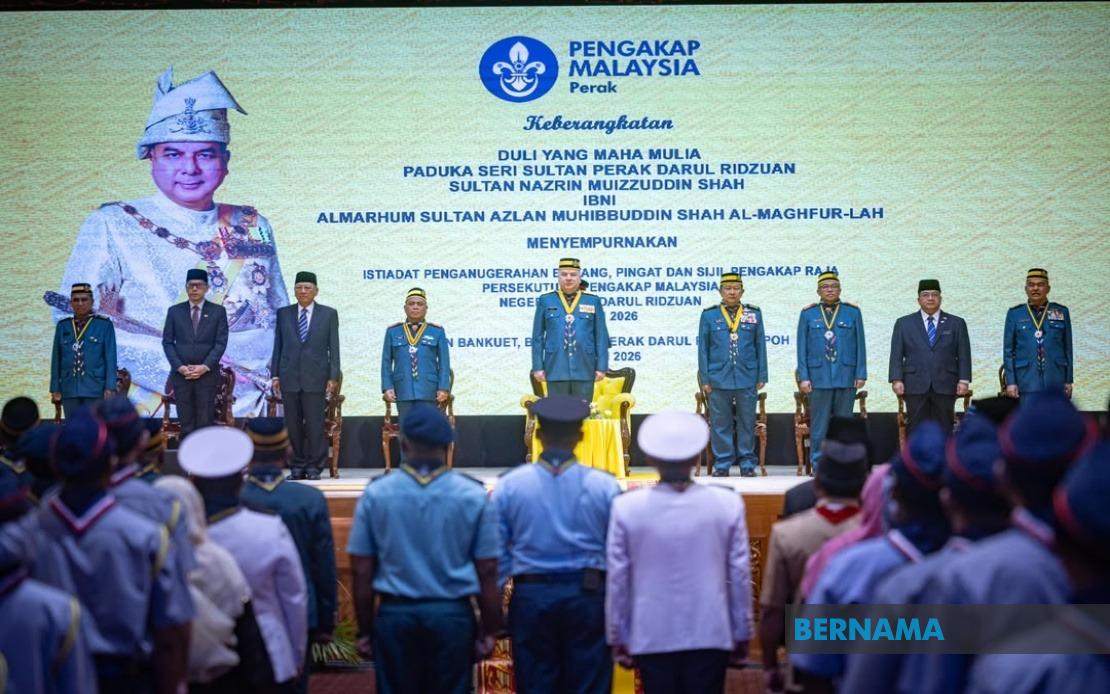
Sultan Nazrin Shah, the Sultan of Perak, presided over the presentation of King's Scout Awards, decorations, medals and certificates at a ceremony in Ipoh on July 25, honouring the achievements of scouts within the Perak branch of the Scouts Association of Malaysia. The significant gathering included Menteri Besar Datuk Seri Saarani Mohamad and National Chief Scout Maj Gen Prof Datuk Mohd Zin Bidin, underscoring the ceremonial importance of recognising excellence within the scouting movement at the state and national levels.
A diverse group of 239 scouts and scouting officials received formal recognition for their contributions and advancement within the organisation. Among the recipients was the Head of the Regional Scout Council of Yogyakarta, Gusti Kanjeng Ratu Mangkubumi Hamemayu Hayuning Bawono Langgeng Ing Mataram, who earned the prestigious Bintang Semangat Rimba Emas award, demonstrating the international reach and cooperation within scouting circles across Southeast Asia.
The Bintang Semangat Rimba Emas represents the third-tier honour within Malaysia's scouting hierarchy, awarded exclusively to individuals who have demonstrated exceptional dedication and service to advancing the scouting movement's mission and values. The recognition of an Indonesian scout leader at this Malaysian ceremony reflects the cross-border collaborative spirit that characterises modern regional scouting networks, where shared principles transcend national boundaries.
Maj Gen Prof Datuk Mohd Zin Bidin used the occasion to articulate a broader vision for the Scouts Association of Malaysia, announcing that the organisation is entering what he characterised as a bold new transformational phase. This evolution extends beyond superficial adjustments to encompass a comprehensive modernisation effort designed to position scouting as a contemporary, forward-thinking institution capable of addressing the challenges and opportunities of the twenty-first century.
A cornerstone of this transformation lies in Malaysia's elevated position within the global scouting architecture. The establishment of Kuala Lumpur as the headquarters of the World Scout Bureau has positioned the country at the epicentre of international scouting governance and operations. This institutional arrangement creates tangible advantages for Malaysian scouts and scouting professionals, facilitating direct engagement with world-class expertise, enabling the adoption of internationally proven pedagogical methods, and fostering collaborative partnerships with scout organisations across all continents.
The rebranding initiative undertaken by the Scouts Association of Malaysia signals institutional confidence and renewal, encompassing refreshed visual identity through a new logo, modernised uniforms that reflect contemporary design sensibilities, and updated organisational structures. According to Mohd Zin, these changes represent far more than cosmetic enhancements or stylistic preferences; they embody the association's strategic determination to confront emerging challenges with revitalised determination and ambitious growth objectives.
Particular significance attaches to the timing of this transformation in relation to Perak's scouting heritage. The year 2026 will mark the centennial anniversary of the Scouts Association's establishment in Perak, providing a natural inflection point for reflection on a hundred years of sustained community engagement and youth development. This milestone offers both a moment for celebrating accumulated achievements and a platform for recommitting to scouting's foundational mission of nation-building through youth empowerment.
For Malaysian readers, the modernisation of scouting holds particular resonance given the movement's historical role in developing young leaders and fostering civic values. The international recognition of Malaysia's scouting establishment, demonstrated through the World Scout Bureau headquarters location, validates decades of institutional development and positions the country's scouts as contributors to global youth development conversations. The integration of regional scouts, such as those from Yogyakarta, into Malaysia's formal awards structures illustrates the deepening collaborative frameworks within Southeast Asian youth movements.
The strategic positioning of scouting as a forward-looking institution comes at a time when youth engagement and leadership development have assumed heightened importance across the region. By modernising its approaches, visual identity, and operational frameworks, the Scouts Association of Malaysia is signalling its relevance to contemporary generations whilst maintaining fidelity to core scouting principles. This balance between tradition and innovation represents a nuanced response to demographic and social changes affecting youth participation in structured voluntary organisations across Southeast Asia.

