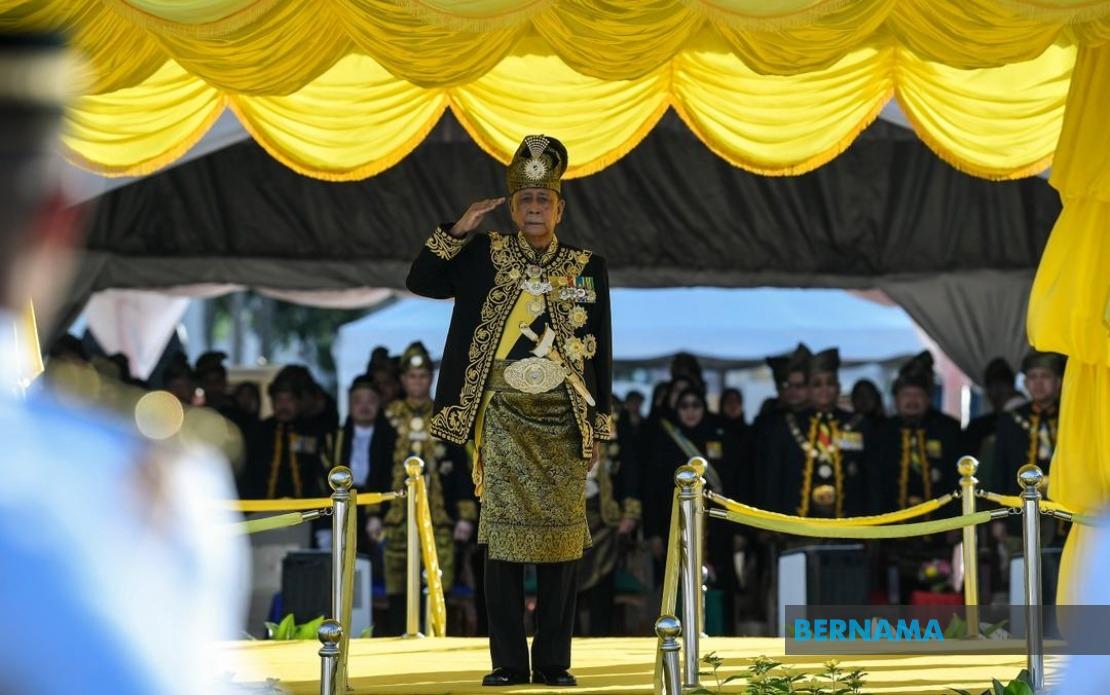
The Sultan of Kedah, Al Aminul Karim Sultan Sallehuddin Sultan Badlishah, was the centrepiece of a ceremonial parade held at Dataran Medan Bandar in Alor Setar on July 5 to mark his 84th birthday. The formal proceedings reflected the constitutional significance of the sultanate within Malaysia's federal system, with the event drawing participation from senior state officials and military personnel representing key institutions of the nation.
Accompanying the Sultan throughout the day was the Raja Muda of Kedah, Tengku Sarafudin Badlishah Sultan Sallehuddin, who stood alongside his father during the official proceedings. The presence of both the reigning Sultan and his heir underscored the continuity of the Kedah royal line and the importance placed on visible succession planning within the state's governance structure. This dual presence at state occasions reinforces the stability and ceremonial traditions that characterise Malaysia's constitutional monarchy system, where state rulers maintain significant symbolic and ceremonial authority.
Kedah's political leadership turned out in force to participate in the celebration. Menteri Besar Datuk Seri Muhammad Sanusi Md Nor, who heads the state government, joined State Secretary Datuk Seri Norizan Khazali and the full roster of State Executive Council members in paying respects to the Sultan. This attendance pattern demonstrates the formal protocol observed in Malaysian state governance, where chief ministers and senior administrative officials make their presence felt at significant royal events. Such displays of unified state leadership, gathering to honour the Sultan on his milestone birthday, reflect the careful balance between executive and ceremonial authority that characterises Malaysia's constitutional arrangements.
The military dimension of the celebration was substantial. The 6th Battalion of the Royal Malay Regiment (RAMD) deployed 103 members and three officers to stage the guard of honour, with Major Muhammad Nasrullah Abdullah commanding the contingent. The formality and scale of the military presence—involving over a hundred uniformed personnel—demonstrated the respect accorded to the Sultan's position as head of state and the ceremonial commander-in-chief functions that accompany the sultanic office in Malaysia's federal structure. The precise choreography of such occasions requires months of planning and coordination among multiple military branches.
The visual spectacle of the parade was orchestrated with considerable attention to traditional military ceremony. Lieutenant Mohamad Aiman Hanif Samsudin carried the colour, while Warrant Officer 1 Mohd Fairuz Ramli bore the regiment standard—positions of significant symbolic weight in military tradition. The RAMD Central Band, under Captain Muhamad Fauzee Japar with support from Sergeant Mohd Shahrilaizad Bakhtiar, provided the musical accompaniment, transforming the parade into a comprehensive display of ceremonial performance that characterises high-level state occasions throughout Malaysia.
Air power formed a striking component of the festivities. The Flying Training Institute contributed five aircraft to execute a ceremonial flypast: two EC120B helicopters from INSPEN 2 and three PC-7 MK II training aircraft from INSPEN 1. Such aerial displays, while visually impressive, underscore the coordination required across multiple military and civilian aviation establishments to stage state ceremonies at this level. The inclusion of training aircraft rather than front-line military machines reflects both budgetary considerations and the demonstration of broader military institutional capability.
The artillery component added further gravitas to the proceedings. The 41st Battery of the Royal Artillery Regiment (Ceremonial), stationed at Sungai Buloh Camp in Selangor, fired a 21-gun salute under the direction of Major Hafizan Md Ghani. The presence of the ceremonial artillery unit, brought specifically from another state to participate in Kedah's royal celebrations, illustrates how significant state occasions activate military resources across multiple locations and commands. The precision timing required for such salutes—coordinating with the parade movements and aerial elements—demands extensive coordination and rehearsal among disparate units.
Birthday milestones for Malaysia's sultans represent more than personal celebrations; they serve as occasions for reaffirming the constitutional role of the states within the federation and demonstrating the institutional support structures that undergird the monarchy system. The Sultan of Kedah, as one of nine rulers who collectively elect the Yang di-Pertuan Agong, holds constitutional significance extending well beyond his individual state's boundaries. His 84th birthday provided an opportunity for state institutions to publicly express their allegiance and support for the continuity of the royal institution.
For Malaysian observers and particularly those in Kedah, such ceremonial occasions reinforce the visible linkages between the various tiers of governance—federal military forces coordinating with state authorities to honour the state's titular head. The multi-institutional participation, from the Menteri Besar's office to the armed forces to the state bureaucracy, sends a message of cohesion and shared commitment to the constitutional framework. At a time when Malaysian federalism frequently generates political tensions between federal and state governments, these ceremonial moments crystallise the unity underlying formal constitutional structures, even as operational governance frequently involves significant contestation and negotiation.

