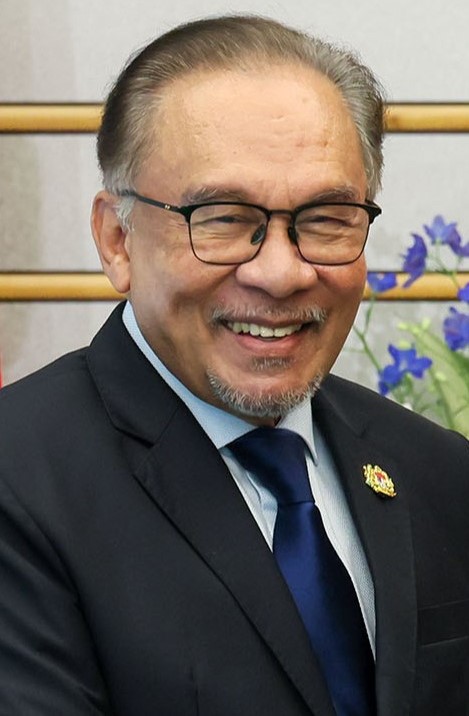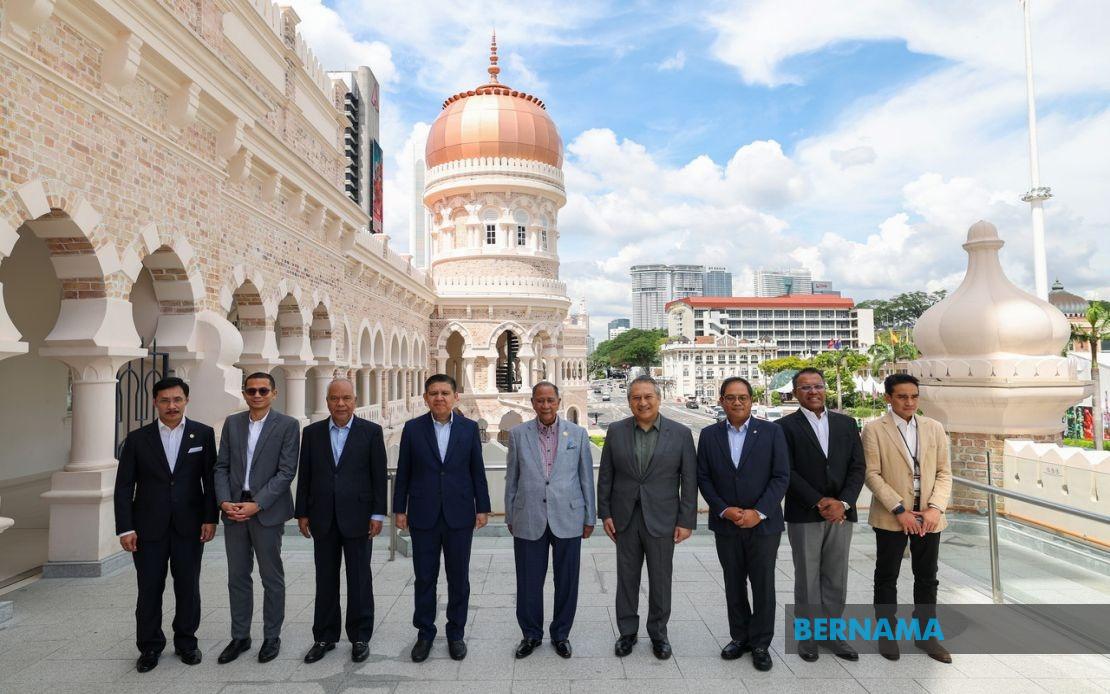
The Sultan of Kedah, Al Aminul Karim Sultan Sallehuddin Sultan Badlishah, conducted a tour of the Sultan Abdul Samad Building in Kuala Lumpur on Monday, reinforcing royal patronage of the nation's most iconic heritage preservation initiative. Arriving at approximately 10:30 am, the royal visitor was welcomed by senior management from Khazanah Nasional, the state investment fund overseeing the landmark's comprehensive restoration and public interpretation programme.
This visit represents a significant endorsement of efforts to transform the century-old structure into a living museum that documents Malaysia's journey from colonial administration to independent nationhood. The Sultan's presence underscores the continued importance that Malaysia's royal institutions place on safeguarding architectural heritage and national historical narratives, particularly sites intertwined with the country's founding moments and institutional memory.
During the two-hour visit, His Royal Highness examined the Confluence Hall, a newly curated gallery space that traces Kuala Lumpur's origins and subsequent expansion into a modern metropolitan centre. Senior curators from Think City provided detailed briefings on the exhibition's conceptual framework and the research underpinning displays about the city's multicultural development and evolving urban character across different historical periods.
The tour progressed through the Visionary Hall, where visitors encounter scaled architectural models and interactive multimedia installations illustrating Kuala Lumpur's transformation over decades. These displays employ contemporary interpretative techniques to help visitors contextualise the capital's growth within broader narratives of national development, connecting physical infrastructure with economic and social change.
Particularly symbolic was the Sultan's visit to the iconic Porte Cochere balcony, the architectural feature most closely associated with Malaysia's independence ceremonies. From this very vantage point, the British colonial flag was ceremonially lowered and the Federation of Malaya's banner raised for the first time in 1957, making it arguably the single most historically charged location within the building for modern Malaysian consciousness.
The itinerary included a stop at the School of Hard Knocks, a retail and artisanal space operated by Royal Selangor, reflecting contemporary uses layered atop the heritage core. The Sultan then attended a luncheon before departing, signalling the royal household's engagement with the broader revitalisation strategy extending beyond mere conservation into viable commercial and cultural programming.
Khazanah Nasional's managing director, Datuk Amirul Feisal Wan Zahir, characterised the royal visit as validating the organisation's dual mandate: preserving the building's architectural integrity whilst simultaneously activating it as an educational and interpretive space. He remarked that such patronage carries particular significance given that heritage conservation in Malaysia often struggles for sustained funding and public attention outside official ceremonies.
Since opening to the public on February 2, the Sultan Abdul Samad Building has attracted approximately 200,000 visitors, suggesting substantial popular interest in accessing and experiencing the nation's premier administrative heritage site. This visitor volume indicates successful positioning of the venue as both tourist attraction and educational resource, though questions remain about demographic composition and whether visitation reflects diverse socioeconomic engagement or concentrates among specific groups.
The restoration work itself, completed in January under the Khazanah Heritage Fund programme, consumed eleven months and addressed structural vulnerabilities, environmental controls, and accessibility infrastructure accumulated across decades of institutional use. His Majesty Sultan Ibrahim, King of Malaysia, formally inaugurated the Phase One completion, embedding royal legitimacy into the restoration narrative and demonstrating continued monarchical involvement in defining national historical interpretation.
The Sultan Abdul Samad Building's original incarnation as the Secretariat Building positioned it at the administrative nerve centre of the colonial state apparatus. Its subsequent transformation into a site of contested memory—simultaneously representing imperial authority, anti-colonial struggle, and post-independence nation-building—makes careful curatorial choices about which histories to emphasise consequential for contemporary understanding of Malaysia's political trajectory.
For Malaysian heritage advocates, this visit exemplifies how royal institution engagement can accelerate public sector investment in conservation and cultural infrastructure. The Kedah Sultan's tour provides institutional gravitas to grassroots efforts arguing that preserving historical architecture strengthens national cohesion by anchoring collective identity to tangible, accessible places rather than abstract historical narratives confined to textbooks.
The broader implications extend to Southeast Asia's heritage preservation landscape, where royal patronage frequently catalyses resource allocation and public interest. As other regional nations grapple with balancing development pressures against conservation imperatives, Malaysia's Sultan Abdul Samad Building experience offers a case study in integrating heritage sites into contemporary urban economies whilst maintaining interpretive authority over politically sensitive historical narratives.