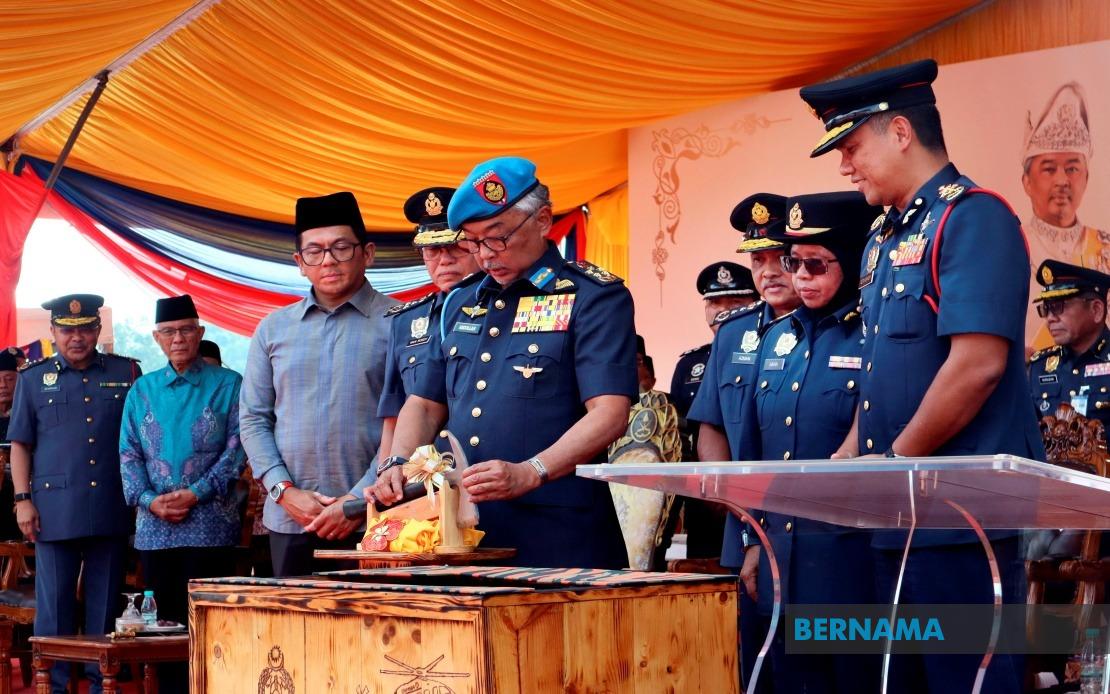
The Sultan of Pahang, Al-Sultan Abdullah Ri'ayatuddin Al-Mustafa Billah Shah, has publicly acknowledged the commitment of both federal and state authorities to channelling resources into development initiatives that directly improve residents' quality of life. Speaking at the opening ceremony of the Sungai Lembing Fire and Rescue Station in Kuantan on July 2, His Royal Highness highlighted the significance of sustained investment in flood defence infrastructure, recognising it as one of the most pressing infrastructure challenges facing the state.
Among those attending the official opening were Pahang Menteri Besar Datuk Seri Wan Rosdy Wan Ismail, Deputy Housing and Local Government Minister Datuk Aiman Athirah Sabu, and Deputy Economy Minister Datuk Mohd Shahar Abdullah, who also serves as Member of Parliament for Paya Besar. The high-level attendance underscores the national importance being placed on Pahang's infrastructure development agenda.
Flood mitigation represents a particularly critical concern for Pahang, a state with a long history of experiencing severe inundation during monsoon seasons. Sungai Lembing, situated in the district of the same name, carries special significance as an early warning system for broader flooding risks affecting the Kuantan urban area. The region's topography and its proximity to river systems make it consistently vulnerable to overflow during periods of heavy rainfall. By prioritising investment in this locality, authorities acknowledge that protection at Sungai Lembing has cascading benefits for downstream communities.
The Sultan underscored the substantial financial commitment required to deliver effective flood mitigation infrastructure, indicating his recognition of the budgetary pressures facing government at both levels. Large-scale flood defence projects demand considerable capital investment, ongoing maintenance, and coordination between multiple agencies, making them among the most resource-intensive infrastructure undertakings. His acknowledgement of this burden reflects an understanding of the competing priorities facing public finances while affirming that such spending represents a prudent investment in public safety and economic stability.
Beyond flood defences, the Sultan issued a directive ordering the deepening of watercourses adjacent to populated settlements, a practical intervention aimed at reducing overflow risk during intense rainfall. This instruction reflects an adaptive approach to flood management that combines engineered solutions with geographic modifications. River deepening projects increase capacity during peak water flow periods, serving as a fundamental mitigation strategy complementary to embankment construction and drainage system upgrades.
The new Fire and Rescue Station itself symbolises a broader commitment to emergency response infrastructure across Pahang. The Sultan used the occasion to publicly recognise the dedication of fire and rescue personnel, acknowledging the comprehensive scope of their responsibilities extending beyond firefighting to encompass vehicle accident response, disaster relief, and rescue operations across various emergency scenarios. His observation that daily news bulletins regularly feature fire and rescue activities underscores the frequency with which these services are called upon across the state.
The Sultan's personal engagement with emergency personnel and disaster-affected communities has become a defining characteristic of his tenure. He has frequently visited incident scenes to provide direct comfort and acknowledgement to those experiencing emergencies and their aftermath. This hands-on approach demonstrates royal leadership that extends beyond ceremonial functions, establishing a visible connection between the monarchy and frontline service providers.
Looking forward, His Royal Highness expressed determination to continue accompanying fire and rescue personnel to operational sites whenever circumstances allow. Such engagement serves multiple purposes: it demonstrates the highest level's commitment to emergency services, provides morale support to personnel working in dangerous conditions, and ensures the monarchy remains connected to the lived experiences of residents confronting crises. This practice, conditional upon operational feasibility and security considerations, reflects an inclusive approach to royal responsibility.
A notable component of the Sultan's remarks involved advocating for enhanced emergency service coverage in remote areas. He specifically highlighted Kampung Bantal in Ulu Tembeling, Jerantut, proposing the establishment of a volunteer fire brigade to address response time challenges inherent in geographically isolated communities. The remoteness of such settlements can result in critical delays in emergency service arrival during fires and other time-sensitive incidents. Volunteer-staffed brigades represent a cost-effective solution for addressing coverage gaps in areas where permanent, full-time stations may not be economically sustainable.
This proposal carries particular significance for Malaysia's rural development strategy, as emergency service capacity often lags behind infrastructure provision in less densely populated regions. By championing community-based emergency response mechanisms, the Sultan advocates for decentralised solutions that harness local human resources rather than relying exclusively on centralised service provision. Such approaches can improve response times dramatically while building local capacity and emergency preparedness awareness.
The remarks by the Sultan reflect a broader political narrative within Pahang emphasising developmental progress and state-level capacity building. With the Menteri Besar and multiple federal ministers present, the event functioned partly as a showcase of inter-governmental cooperation on infrastructure priorities. This alignment between state and federal perspectives, mediated and affirmed by the Sultan, demonstrates consensus around resource allocation toward flood mitigation and emergency services across Pahang's diverse communities.
For Malaysian policymakers nationwide, the Sultan's public endorsement of flood mitigation investment carries weight beyond ceremonial significance. As climate patterns intensify rainfall variability and urbanisation increases vulnerability to inundation, his emphasis on dedicated infrastructure spending and river management provides political cover for continued budgetary commitment to these unglamorous but essential projects. Equally, his advocacy for volunteer emergency services in remote areas suggests a model applicable across Malaysia's peripheral communities.

