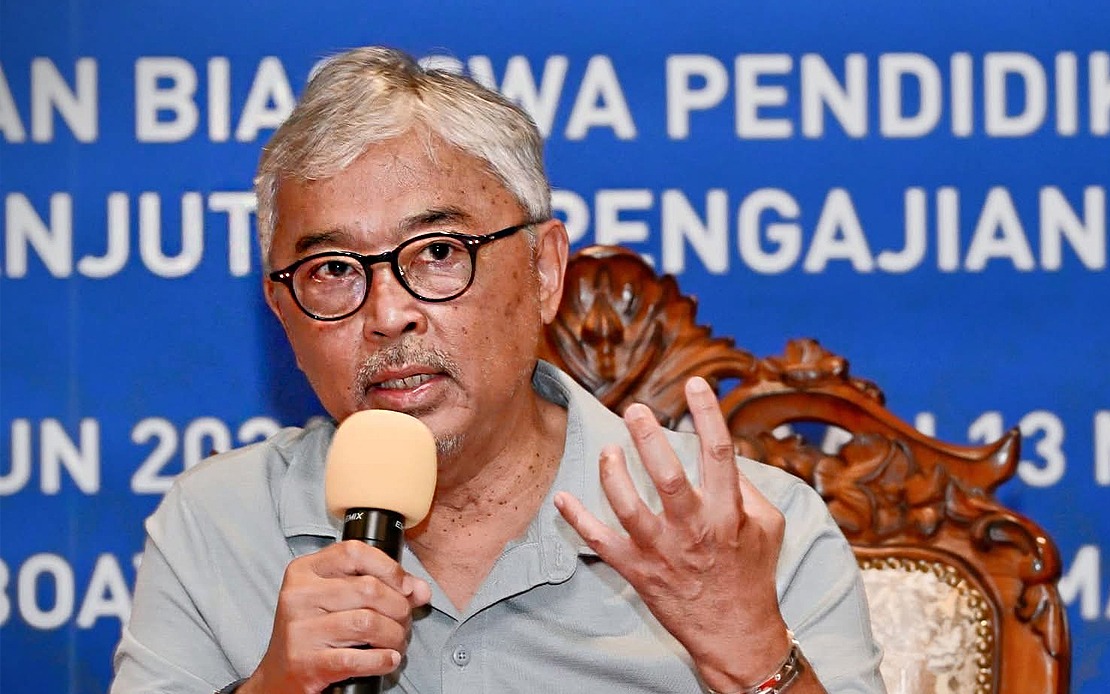
The Sultan of Pahang, Al-Sultan Abdullah Ri'ayatuddin Al-Mustafa Billah Shah, has made a significant call to action, inviting higher education institutions throughout Pahang to expand their commitment to supporting students from Tioman Island. Speaking through the Pahang Sultanate's official channels, His Royal Highness encouraged universities to follow the lead of the Institut Jantung Negara University College (IJNUC), which recently awarded scholarships to two exceptional students from the island, establishing what the Sultan views as a compelling model for broader educational support across the state.
The initiative addresses a persistent gap in educational access for students hailing from isolated island and rural communities. Tioman Island, situated off Pahang's coast, presents unique geographical challenges that can hinder young people's pursuit of tertiary education. By leveraging institutional resources to bridge this divide, the Sultan argued that universities can play a meaningful role in developing human capital from underserved regions. The royal decree underscores a commitment to ensuring that geographic remoteness does not translate into educational disadvantage for capable students.
The Sultan will personally attend the IJNUC Scholarship Presentation Ceremony to honour the two recipients, signalling the royal institution's strong backing for this educational enterprise. This high-level endorsement carries substantial weight within Malaysian governance structures, as royal patronage frequently catalyses institutional action and demonstrates state-level prioritisation of particular initiatives. The dual recognition—both of the scholarship recipients and the university's commitment—establishes a precedent that other institutions may feel motivated to emulate.
Central to the Sultan's message is his emphasis on merit-based selection. Both scholarship recipients were chosen specifically for their demonstrated academic excellence, ensuring that the initiative rewards genuine scholarly achievement rather than dispensing patronage indiscriminately. This principled approach strengthens the credibility of the scholarship programme and establishes expectations for future initiatives. The Sultan expects both students to grasp the profound significance of their selection, recognising that they will inevitably serve as role models for their peers remaining on Tioman Island.
The royal exhortation placed considerable emphasis on personal responsibility and the gravity of the opportunity granted. His Royal Highness explicitly warned against entertaining notions of failure, instead framing success as a non-negotiable objective. This rhetorical strategy—combining encouragement with heightened expectations—reflects a broader philosophy about merit advancement in Malaysian higher education. The students are positioned not merely as individual beneficiaries but as ambassadors whose achievements will demonstrate to other island youth that tertiary education remains attainable despite geographic isolation.
Practical counsel also featured prominently in the Sultan's remarks to the scholarship recipients. Emphasising discipline, effective time management, and sustained academic focus, the royal guidance recognises that securing funding represents only one component of educational success. The students, upon relocating to Kuala Lumpur to pursue their studies at IJNUC, will navigate unfamiliar urban environments whilst managing rigorous academic curricula. The Sultan's explicit acknowledgement of these challenges demonstrates sophisticated understanding of the psychological and logistical hurdles that island students encounter during their tertiary education journey.
The Sultan's commendation of IJN extended beyond the immediate scholarship initiative, acknowledging the institution's broader contribution to Pahang's development. Recognising IJN as a leading cardiac specialist facility with significant regional and international standing, His Royal Highness positioned the university's scholarship activity within a comprehensive framework of corporate social responsibility. This contextualisation matters considerably, as it reinforces that educational support complements—rather than contradicts—IJN's primary medical mission, demonstrating institutional commitment to stakeholder communities.
Jabatan Jantung Negara's consistent engagement in ground-level community development work, particularly in geographically challenging areas like Kampung Bantal, received explicit royal appreciation. The Sultan's personal acknowledgement of the institution's annual collaborative projects with the state government illustrates how regular, sustained engagement with remote communities builds trust and generates tangible development outcomes. For Malaysian policymakers and institutional leaders observing this model, the message is clear: consistent, year-round commitment to underserved populations produces measurable benefits.
The broader implications for Southeast Asian higher education systems merit careful consideration. Island and rural students across the region face comparable educational access challenges, whether in Malaysia, Indonesia, the Philippines, or other archipelagic nations. The Tioman initiative, receiving royal patronage and elevated media visibility, offers a replicable framework that respects both meritocratic principles and developmental equity. By framing scholarship support as institutional responsibility rather than charitable afterthought, the Sultan's decree potentially encourages similar policy shifts elsewhere.
From a strategic standpoint, the Sultan's intervention highlights how royal institutions can mobilise university participation in equity-focused educational programming. In Malaysia's constitutional monarchy system, sultans exercise considerable influence over public narrative and institutional priorities within their respective states. By using this influence to elevate scholarship initiatives benefiting rural and island communities, the Sultan leverages his position to advance social development objectives that might otherwise receive insufficient institutional attention.
The emphasis on producing quality human capital from peripheral regions addresses demographic realities within Pahang. Rural and island populations often experience talent drain when young people migrate permanently to urban centres for education and employment. Scholarship initiatives targeting these students potentially contribute to knowledge retention within regional communities, though outcomes depend significantly on whether graduates return to apply their expertise locally. The Sultan's framing suggests awareness that sustaining provincial development requires investing in local educational infrastructure and student support systems.
Looking forward, the Sultan's call invites observable institutional responses. Universities throughout Pahang now face implicit expectations to develop comparable initiatives, whether through direct scholarships or collaborative arrangements with bodies like IJN. This creates a form of competitive pressure within Pahang's higher education ecosystem, potentially catalysing broader institutional innovation in access and equity programming. The public nature of the royal decree means that institutional inaction, or conversely, ambitious new programming, will receive heightened scrutiny.
Ultimately, this initiative reflects evolving conceptualisations of university responsibility within Malaysian society. Beyond traditional teaching and research missions, institutions increasingly face expectations to contribute to regional development and educational equity. The Sultan's enthusiastic endorsement of IJN's scholarship programme, coupled with his challenge to other universities, signals that such community-focused activities command genuine recognition from influential stakeholders, positioning equity-oriented initiatives as indicators of institutional excellence rather than peripheral benevolence.

