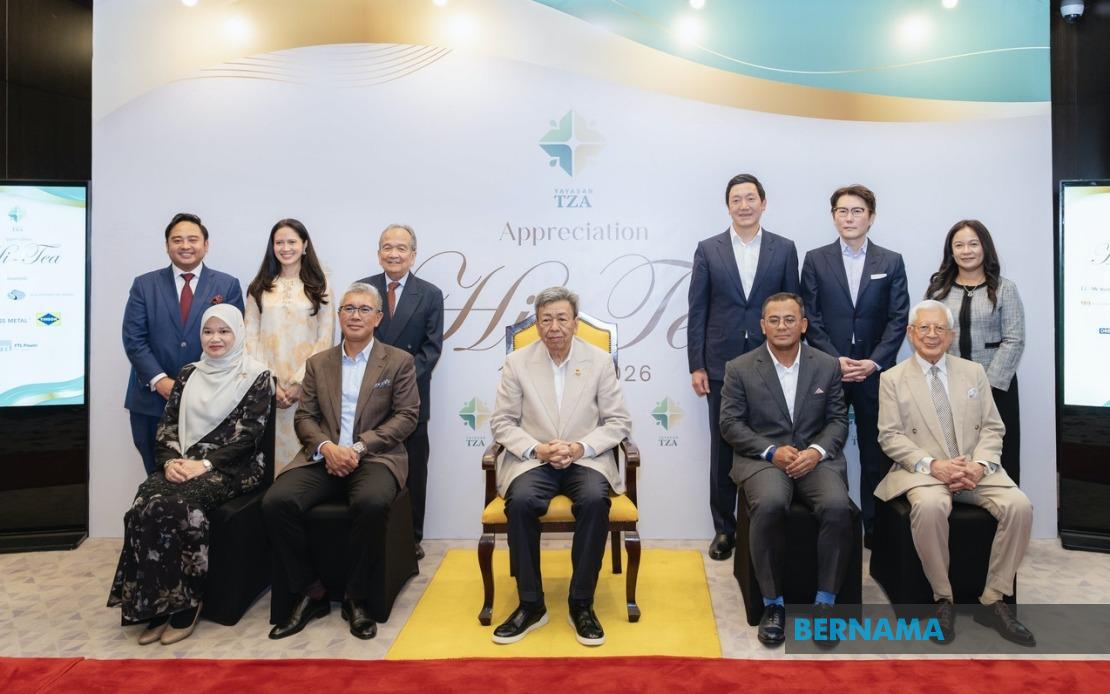
Sultan Sharafuddin Idris Shah, the Sultan of Selangor, graced the Yayasan TZA Appreciation Hi-Tea Ceremony in Kuala Lumpur on June 18, reinforcing the royal family's commitment to social welfare and community development programmes across the state. The attendance of the reigning monarch underscored the significance of the foundation's charitable work and its growing influence in addressing socioeconomic challenges faced by lower-income Malaysian households.
The ceremonial event brought together prominent government officials and business leaders, creating a platform to celebrate the foundation's achievements and map out its expansion plans. Selangor Menteri Besar Datuk Seri Amirudin Shari and Education Minister Fadhlina Sidek were among the dignitaries present, alongside YTZA chairman Tan Sri Arshad Raja Tun Uda and advisor Tengku Datuk Seri Zafrul Abdul Aziz. The convergence of state and federal leadership reflected the collaborative approach needed to tackle educational inequality in Malaysia.
Tengku Zafrul articulated the foundation's comprehensive philosophy during his remarks, emphasizing that YTZA operates beyond immediate relief work to foster genuine empowerment and resilience within vulnerable communities. The foundation's multifaceted approach encompasses educational scholarships, environmental sustainability projects, grassroots outreach initiatives, and seasonal assistance programmes designed to strengthen social cohesion. This holistic strategy recognizes that sustainable development requires addressing multiple dimensions of poverty simultaneously rather than applying band-aid solutions.
The centrepiece of YTZA's educational portfolio remains the ACE SPM programme, a targeted intervention tailored for students preparing for the Sijil Pelajaran Malaysia examination, Malaysia's crucial secondary school qualification. Concentrating efforts on B40 households—those earning below RM4,850 monthly—the programme tackles a critical juncture in the Malaysian education system where socioeconomic disparities most severely impact student outcomes. In 2025 alone, the initiative has supported 467 students across ten schools in Selangor, demonstrating tangible reach and measurable impact.
Beyond classroom-based tutoring, YTZA's digital learning channels have proven instrumental in expanding access to educational resources. The foundation's online platforms and technology-enabled learning tools reached more than 4,000 students during the same period, illustrating how strategic investment in digital infrastructure can democratize educational access across geographic and economic boundaries. For Malaysian students in remote or economically disadvantaged areas, such digital pathways represent transformative opportunities to bridge persistent achievement gaps.
The corporate sector's philanthropic participation became manifest during the ceremony through substantial financial commitments. Kuok Brothers Sdn Bhd pledged RM1 million toward the foundation's initiatives, while YTL Power International Berhad contributed RM300,000. These donations, presented through ceremonial mock cheques witnessed by Sultan Sharafuddin, highlight growing private sector recognition of corporate social responsibility in addressing Malaysia's development agenda. Business leaders increasingly understand that investing in human capital development and community welfare generates broader societal benefits and strengthens economic stability.
Tengku Zafrul's public acknowledgment of all stakeholders—corporate sponsors, individual donors, strategic partners, volunteers, and grassroots supporters—reflects the interconnected ecosystem necessary for large-scale social impact. No single institution can sustainably address poverty without coordinated effort across government, business, non-profit, and community sectors. This inclusive recognition reinforces that meaningful social change emerges from collective commitment rather than isolated charitable gestures.
Larian KITA@Klang, the foundation's newest community initiative, represents an innovative fusion of fitness, inclusivity, and cultural celebration. Scheduled for October 10 in conjunction with the Sultan of Selangor's Silver Jubilee commemoration, this community fun run marks the fourth edition in the Larian KITA series. Beyond promoting physical wellness and social cohesion, the run serves as a platform highlighting local culinary heritage and cultural attractions, thereby supporting small business operators and informal entrepreneurs within participating communities. Such initiatives demonstrate how development work can simultaneously address health, social connection, and economic opportunity.
The timing of the Silver Jubilee celebration presents symbolic significance within Selangor's political and social calendar. Commemorating 25 years of the Sultan's reign, the milestone provides occasion to reflect on institutional contributions to state development and mobilize collective enthusiasm for future progress. By aligning Larian KITA@Klang with this celebration, YTZA positions community engagement within a broader narrative of state pride and continuity, potentially amplifying participation and media attention.
For Malaysian policymakers and development professionals, YTZA's trajectory offers instructive lessons regarding effective poverty alleviation strategies. The foundation's emphasis on educational empowerment, strategic targeting of disadvantaged cohorts, diversified programme delivery channels, and collaborative stakeholder engagement reflect international best practices in sustainable development. As Malaysia pursues its vision of inclusive growth and shared prosperity, replicating such models across other states and sectors could meaningfully accelerate progress toward reducing inequality.
The attendance of senior government officials alongside corporate leaders and philanthropic organizations suggests emerging policy consensus regarding education's centrality in breaking cycles of poverty. Education investment delivers multiplier effects across generations, improving employment prospects, health outcomes, and civic participation simultaneously. Selangor's prominence as Malaysia's most economically developed state makes it both a testing ground and potential template for scaling effective educational interventions nationwide.