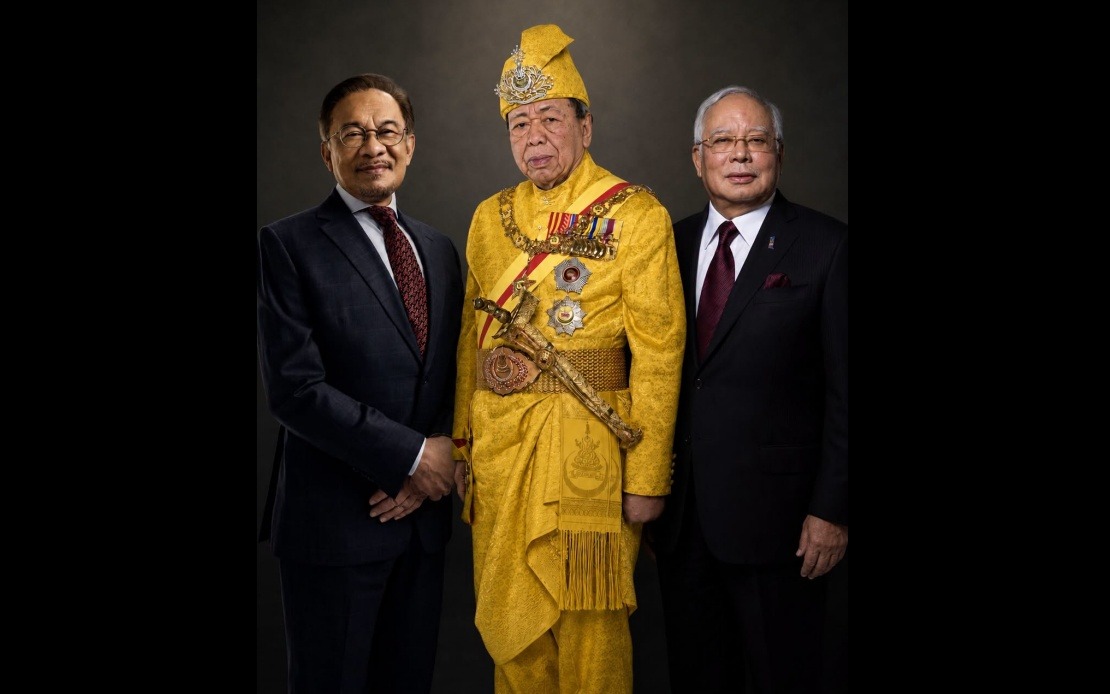
The Sultan of Selangor, Sultan Sharafuddin Idris Shah, has publicly acknowledged Prime Minister Datuk Seri Anwar Ibrahim's pivotal role in completing the Shah Alam Line LRT3, which commenced operations on Monday. In a formal statement released from Shah Alam, the Sultan expressed appreciation for Anwar's decision to press forward with the infrastructure project despite its complex history and multiple obstacles.
When Anwar assumed the dual roles of Prime Minister and Finance Minister in 2022, he made the restoration of five previously scrapped stations a priority within the development strategy. The Sultan specifically commended this decision, noting that it reflected a commitment to serve public needs rather than pursue grand symbolic gestures. Additionally, the Sultan acknowledged Anwar's directive to promote affordable housing development adjacent to LRT3 stations, a measure designed to enhance accessibility and convenience for commuters throughout the corridor.
The new light rail line represents a significant infrastructure achievement for Selangor, particularly benefiting residents of Shah Alam, Klang and the surrounding metropolitan region. The project's genesis was rooted in grassroots feedback, with Sultan Sharafuddin recalling how members of the public, particularly women managing households, had persistently raised concerns about traffic congestion and the difficulty their families faced in returning home at reasonable hours. These practical concerns from ordinary citizens formed the foundation for what would become a major transport initiative.
The Sultan also acknowledged the contributions of former Prime Minister Datuk Seri Najib Tun Razak, who responded to calls for improved connectivity between Klang, Shah Alam and Kuala Lumpur. At that time, only two bridges crossed the Klang River, a bottleneck that intensified congestion during peak hours. In response, Najib's administration dismantled the Batu Tiga and Sungai Rasau toll plazas in 2018 as an interim traffic management solution while longer-term plans were developed.
The project's timeline has been fraught with delays and complications that tested the resolve of policymakers across multiple electoral cycles. Following the 2018 change of government, the LRT3 suffered an 18-month postponement before further disruptions emerged. The COVID-19 pandemic introduced an additional 19-month hiatus that extended into 2021, during which project specifications were scaled back to manage costs and complexity. Train coach numbers were reduced, individual station sizes were contracted, and the five stations ultimately restored by Anwar's administration had been among those cancelled during this uncertain period.
Despite these setbacks and compromises, Sultan Sharafuddin emphasised that the LRT3 was conceived fundamentally as a public service rather than a monument to any particular administration's achievements or political legacy. The project's delayed path to completion underscores the intersection of transport planning with Malaysia's political transitions, budgetary pressures, and extraordinary circumstances like the pandemic that have reshaped infrastructure development priorities across the region.
The Sultan's statement includes a notably diplomatic observation that credit for the LRT3's completion ought not be monopolised by any individual or single political entity. Instead, he framed the project as evidence of institutional continuity spanning multiple governments, emphasising collaborative commitment to public welfare across administrations with differing political orientations. This framing reflects an understanding that major infrastructure transcends electoral cycles and requires sustained political will regardless of which coalition holds power.
The opening of the Shah Alam Line addresses transport connectivity between three significant economic zones: Kuala Lumpur's established business district, Petaling Jaya's commercial hub, and Shah Alam as an industrial and administrative centre. Klang, as a major port city and manufacturing centre, benefits from improved access to these regional nodes. The Sultan expressed confidence that the new line would catalyse economic development, enhance quality of life for residents, and strengthen commercial and commuter networks across these interconnected metropolitan areas.
Operational sustainability remains a concern highlighted by the Sultan, who specifically called upon Prasarana Malaysia Bhd to maintain rigorous maintenance standards. Ensuring consistent service quality and reliability will be essential for the LRT3 to fulfil its intended purpose of reducing traffic congestion and providing commuters with a credible alternative to private vehicles. The effectiveness of the new line in achieving these public transport objectives will largely depend on the reliability and frequency of services.
For Malaysia and Southeast Asia more broadly, the LRT3's completion signals that major infrastructure projects can navigate political transitions and external shocks, though often with modified specifications and extended timelines. The project's evolution from its original conception—with its reduction in scope and restoration under different leadership—reflects pragmatic adjustment to fiscal realities while maintaining commitment to core objectives of improved public mobility. This trajectory offers lessons for other regional economies pursuing ambitious transport networks amid budgetary constraints and political uncertainty.

