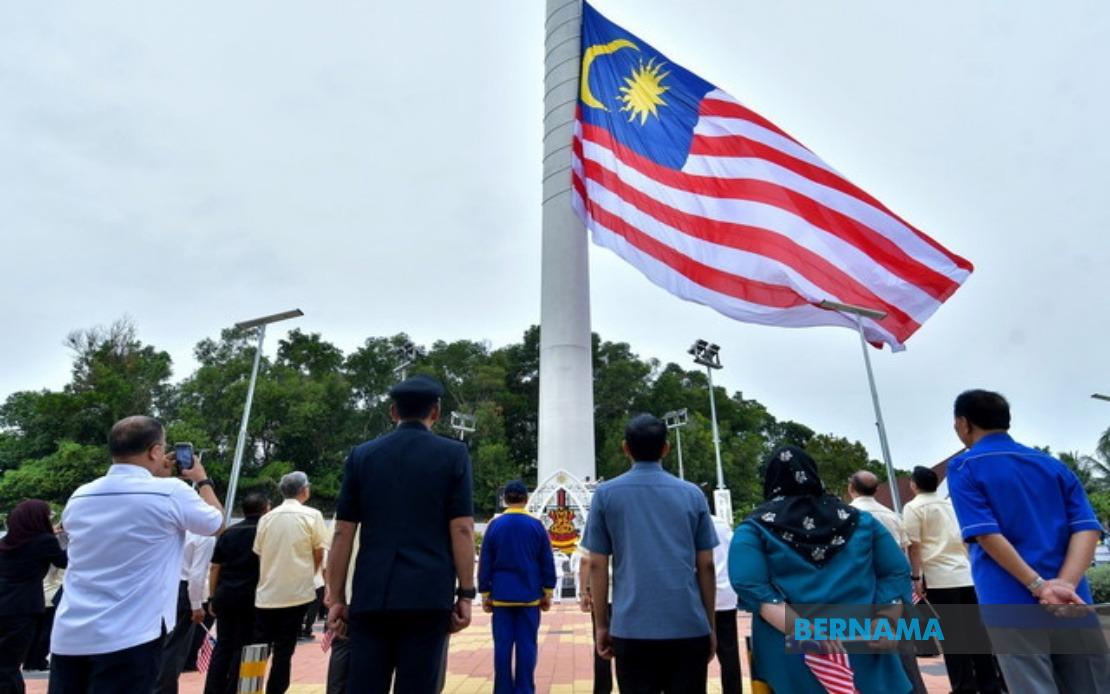
Speaking during a flag-hoisting ceremony at Dataran Selangor on August 26, Sultan Sharafuddin Idris Shah has delivered a pointed message about the deeper significance of Malaysia's national emblem during the run-up to Independence Day celebrations. The Selangor monarch reminded the country that the Jalur Gemilang functions as far more than festive decoration during National Month—rather, it embodies the essence of shared nationhood that unites Malaysians regardless of their varied backgrounds and convictions.
The Sultan emphasised that despite Malaysians' profound differences in ethnicity, faith, language, and political orientation, the flag serves as a tangible reminder of their common citizenship and mutual belonging to a single nation. In his statement, His Royal Highness stressed that the Jalur Gemilang remains the collective property of the entire Malaysian populace, and that citizens should take genuine pride in this symbol of national cohesion. This message carries particular resonance in Malaysia's contemporary political landscape, where divisive rhetoric occasionally threatens social harmony and intersectional understanding.
The royal remarks came following the Sultan's approval for the Jalur Gemilang to remain hoisted at the Selangor Flagpole throughout the extended celebration period spanning August 26 through September 17, incorporating both National Day and Malaysia Day commemorations. The flag-raising ceremony held that morning served as a deliberate demonstration of patriotic sentiment and a commitment to fostering unity across Malaysia's diverse population. Such ceremonial acts, while symbolically important, formed part of the broader context for the Sultan's substantive commentary on what national unity demands.
His Royal Highness drew attention to the responsibility of honouring those Malaysians who have actively contributed to social cohesion and worked conscientiously to narrow societal divisions throughout the nation's history. The Sultan suggested that genuine National Day observance requires citizens to actively remember and recognise these bridging efforts, moving beyond surface-level patriotic displays toward meaningful acknowledgment of unity-building achievements. This perspective positions Independence Day as an occasion for reflection rather than mere festive commemoration.
Significantly, Sultan Sharafuddin advocated for educational initiatives that instil in younger Malaysians a genuine respect for individuals from divergent religious, ethnic, and cultural communities. The monarch recognised that long-term social cohesion depends substantially on cultivating tolerance and mutual respect among the rising generation, positioning this as a foundational challenge for Malaysian society moving forward. By emphasising youth education, the Sultan identified intergenerational responsibility as central to sustaining national unity.
The Selangor Ruler levelled an implicit critique at Malaysia's political and governmental leadership, calling upon them to model the principles of moderation, forbearance, and compassion in their public conduct and utterances. He cautioned against the instrumental weaponisation of political, ethnic, or religious differences as divisive tools, suggesting that such tactics undermine the authentic patriotic spirit the flag represents. This admonition implies concern about contemporary political discourse and the potential for leaders to prioritise factional advantage over collective national interest.
Sultan Sharafuddin acknowledged the logistical ease of distributing thousands of Jalur Gemilang throughout Malaysia during National Month, yet emphasised that this material accomplishment pales before the more demanding aspiration of constructing a genuine nation-state where citizens from every ethnic background truly experience inclusion, respect, and authentic pride in Malaysian identity. This distinction between symbolic gestures and substantive nation-building represents the philosophical core of his message. The Sultan suggested that without corresponding investments in genuine social acceptance and dignity for all communities, flag-flying alone remains hollow ritual.
The monarch further emphasised that the Jalur Gemilang itself maintains no distinctions between Malays, Chinese, Indians, Kadazan-Dusuns, Ibans, or other ethnic communities, nor does it differentiate among Muslims, Buddhists, Christians, Hindus, or adherents of alternative faiths. By reiterating this fundamental principle, Sultan Sharafuddin reinforced the flag's theoretical universality and its implicit rejection of ethnic or religious hierarchy. This framing positions Malaysia's national symbol as inherently inclusive, challenging any narrative suggesting that certain communities possess greater claims to Malaysian identity.
Drawing these threads together, the Sultan appealed to all Malaysians to leverage Independence anniversary celebrations as strategic moments for strengthening the bonds of unity, mutual togetherness, and reciprocal respect across communities. His Royal Highness presented this as an opportunity to move beyond ceremonial patriotism toward concrete expressions of national solidarity. For Malaysian and regional observers, the Sultan's intervention suggests growing concern among institutional guardians of national identity regarding the adequacy of current unity efforts amid evolving social tensions.
In his closing remarks, Sultan Sharafuddin articulated a philosophical position distinguishing between independence as historical event versus independence as lived reality. He contended that true national independence finds authentic expression not merely through anniversary celebrations or flag displays, but through citizens' capacity to construct and sustain a functioning nation where peaceful coexistence, reciprocal regard, and genuine unity constitute lived experience rather than aspirational rhetoric. This formulation reframes Independence Day observance from backward-looking commemoration toward forward-looking commitment to inclusive nationhood. The message resonates particularly for Southeast Asian societies navigating the complexities of multiethnic, multireligious governance and seeking sustainable models for pluralistic coexistence.

