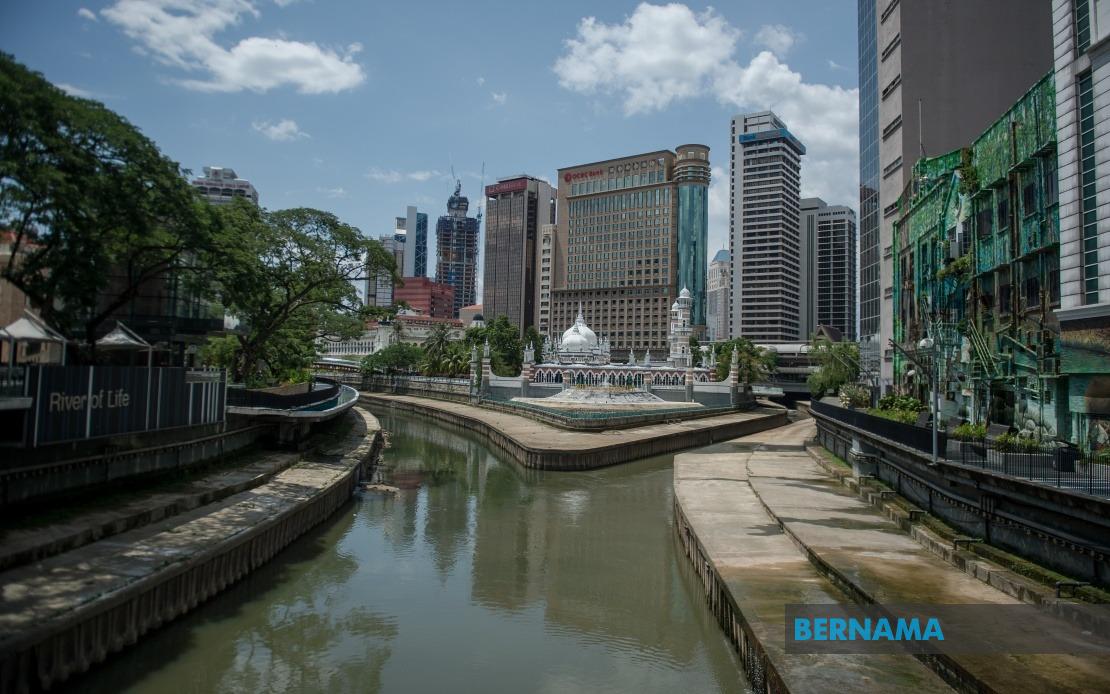
The Sungai Klang river system has undergone a substantial capacity expansion following intensive dredging and engineering works, with water-holding capability now standing at 22 per cent compared to the previous less-than-five-per-cent threshold. The achievement represents a meaningful step forward in managing flood risks that have historically plagued Selangor's urban and residential zones, offering residents and authorities greater assurance about water management during heavy rainfall periods.
Landasan Lumayan Sdn Bhd, the entity overseeing this critical infrastructure project, reported that the transformation stems from a comprehensive 56-kilometre river enhancement programme currently tracking at 68 per cent completion. Since 2017, the initiative has extracted approximately 1.2 million cubic metres of accumulated sediment and debris from the river channel, work that fundamentally reshapes how the waterway functions during peak flow conditions. Managing director Syaiful Azmen Nordin explained that the dredging operations, combined with targeted riverbank reinforcement in vulnerable locations like Taman Sri Muda, have substantially mitigated overflow risks that previously threatened surrounding communities.
The distinction between Sungai Klang's capacity limitations and other flooding mechanisms became evident when Syaiful Azmen clarified that recent inundation events affecting Selangor originated from internal drainage system failures rather than river overflow. This clarification proves important for understanding the multifaceted nature of urban flood management, where primary waterway capacity represents only one component of comprehensive water infrastructure. Addressing drainage network deficiencies requires separate, coordinated interventions across municipalities and utility providers, emphasizing that flood mitigation demands integrated approaches rather than single-focus solutions.
The timeline for project completion extends to the conclusion of next year, with the segment stretching from Shah Alam to Mid Valley designated for federal government execution. Upon full completion of the dredging programme, project architects expect Sungai Klang's capacity to reach 40 per cent, further enlarging the safety margin during monsoon seasons and extreme weather events. This phased approach, divided between state and federal responsibilities, reflects the administrative structure governing Malaysia's water infrastructure development and the necessity for coordinated governance across jurisdictional boundaries.
Parallel to the physical engineering works, an extensive river-cleaning initiative launched simultaneously in 2017 has removed more than 98,000 tonnes of accumulated waste, representing an investment of RM19.6 million directed toward enhancing water flow dynamics. The continuous maintenance programme demonstrates recognition that sediment alone does not account for channel obstruction; discarded materials from upstream communities significantly impede water movement. Public awareness campaigns accompanying these removal efforts have generated measurable behavioural change, with annual waste accumulation declining from 16,000 tonnes to between 5,000 and 6,000 tonnes annually, suggesting improved civic responsibility regarding river management.
Water quality improvements provide an additional dimension to the Sungai Klang rehabilitation effort, with classification advancing from Class 5 to Class 3 and 4 status. This reclassification indicates meaningful progress in ecological health and environmental conditions, though it reflects the comprehensive nature of river restoration work extending beyond capacity metrics alone. Enhanced water quality supports aquatic ecosystems, reduces treatment requirements for downstream users, and improves the overall environmental character of urban waterways that influence quality of life across surrounding communities.
For Malaysian readers and regional observers, the Sungai Klang project exemplifies how sustained infrastructure investment and methodical engineering approaches can reverse decades of degradation affecting major urban waterways. The involvement of both state-level and federal authorities underscores the importance of multilevel governance cooperation in addressing infrastructure challenges that cross administrative divisions. Similar river systems throughout Southeast Asia—including the Chao Phraya in Thailand and numerous Indonesian waterways—face comparable capacity and pollution pressures, making the Sungai Klang experience potentially instructive for regional urban water management strategies.
The economic implications warrant consideration, as reduced flood risks translate into diminished property damage, avoided business interruptions, and lower disaster recovery expenditures for affected states. Selangor's economic significance as Malaysia's primary industrial and commercial centre amplifies these benefits, protecting manufacturing facilities, logistics hubs, and residential investments that collectively represent substantial national economic assets. Insurance sectors and property developers working throughout Selangor increasingly factor flood risk assessments into underwriting and investment decisions, meaning that documented capacity improvements potentially influence financing conditions and property valuations across the state.
Sustained public participation remains essential for maintaining the dredging programme's achievements and preventing backsliding toward previous conditions. The demonstrated capacity of awareness campaigns to reduce waste accumulation suggests that continued community engagement through schools, neighbourhood associations, and environmental groups can entrench behavioural changes. However, upstream land-use practices, industrial activities, and construction-site management also require monitoring and regulation to prevent rapid re-sedimentation that could undermine engineering investments.

