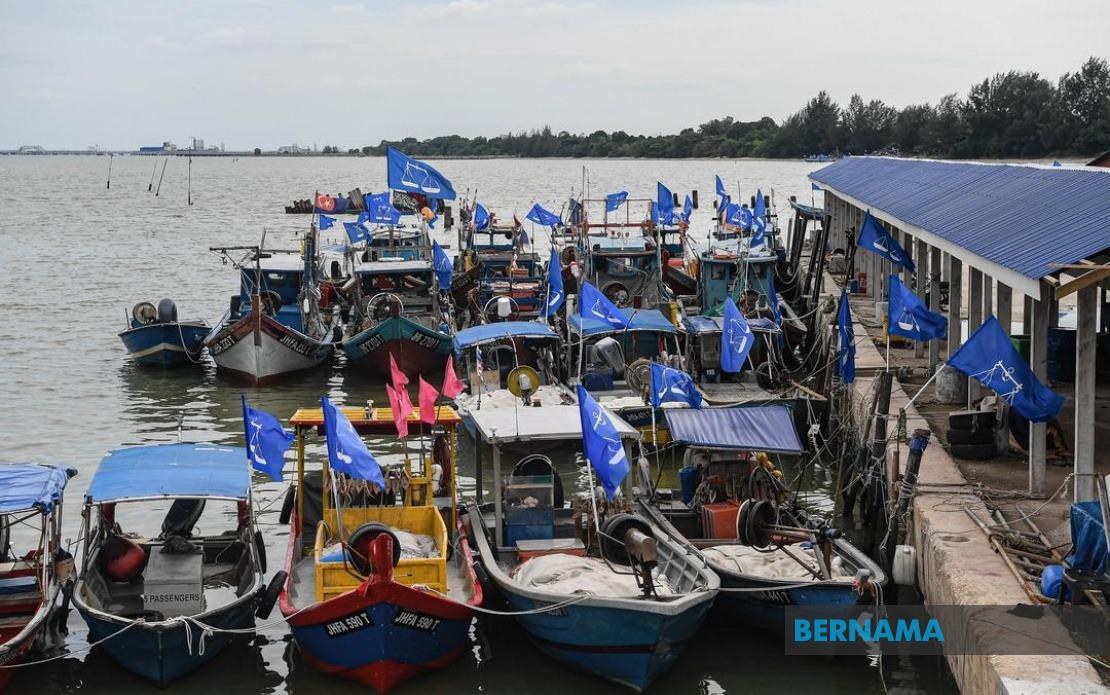
In the coastal township of Sungai Rengit, which anchors the Tanjung Surat state constituency in Kota Tinggi, a community of hawkers and fishermen have waited nearly a decade for permanent solutions to entrenched infrastructure problems. As the 16th Johor state election approached in July, both groups voiced urgent appeals to the incoming elected representative, hoping that political change would finally translate into tangible improvements to their working conditions and economic viability.
Sungai Rengit's strategic importance stems from its position as a service hub for the Pengerang Integrated Petroleum Complex, drawing both residential and industrial workers who patronise local food establishments. However, the temporary food court at Medan Selera Sungai Rengit has become a symbol of neglect. Originally intended to house traders displaced from development projects for only eighteen months, the arrangement has persisted far longer than promised, leaving business operators stuck in limbo between two inadequate locations. The stated alternative site, though newly constructed, proved commercially unviable due to limited parking, positioning on a one-way road, and distance from established customer traffic patterns.
Beverage trader Lai Swee Hong, who has operated for three decades, articulated the frustration that permeates the business community. Her stall, like others at the site, consists merely of a canopy roof and plywood walls—structures that offer minimal protection from weather or criminal elements. The traders have repeatedly requested that authorities upgrade the existing temporary location rather than enforce relocation to the new facility, arguing that the original site remains more strategically positioned for their customer base, which has developed purchasing habits around the established location.
The security dimension of the infrastructure crisis compounds traders' difficulties. Wini Fasiha Zawawi, a food operator in her mid-thirties, reported multiple theft incidents since the previous year, affecting even modest incomes of small business proprietors. Despite filing police reports and escalating complaints to local authorities, security measures have remained inadequate. The open design of the stalls—lacking proper doors and vulnerable to easy breach—creates conditions where thieves operate with relative impunity. Police patrols, while conducted, have failed to deter ongoing losses of equipment and goods. For traders operating on thin margins, even losses of a few hundred ringgit represent meaningful income reductions.
Beyond the trading community, Sungai Rengit's fishing population faces distinct but interconnected challenges. The sector confronts mounting operational costs at sea, pressures exacerbated by the broader cost-of-living crisis affecting Malaysian households. Senior fisherman Sin Hock Hwee, who has pursued the profession since youth, spoke to the critical role of government fuel subsidies in maintaining livelihood viability. The existing subsidy structure, while helpful, barely offsets the escalating expenses of maritime operations, and Sin advocated for continuation and enhancement of this support to prevent working fishermen from bearing undue burden.
Younger fishing professionals voice complementary concerns centred on port infrastructure and representational responsiveness. Hidayat Isa, in his mid-thirties, called for proactive upgrades to jetty facilities and greater receptiveness by elected representatives to emerging voices within the fishing community. The appeal reflects generational awareness that fishing livelihoods require ongoing infrastructure investment and that younger fishermen must perceive meaningful pathways for economic growth and voice within broader governance structures. Hidayat's proposal that Kampung Sungai Rengit be designated as an adopted village for the successful candidate suggests community expectations that political victory should translate into concrete developmental commitment.
The electoral context proved significant for these communities' aspirations. The Tanjung Surat constituency presented a competitive contest between Faizul Abdul Ghani of Pakatan Harapan and incumbent Aznan Tamin of Barisan Nasional. For traders and fishermen dependent on political goodwill for infrastructure development and subsidy continuation, the election outcome held material consequences. Both communities appeared to view the electoral process as an opportunity to reset expectations with the incoming representative, communicating their accumulated grievances and articulating specific demands for improved conditions.
The timing of their appeals reflects broader patterns in Malaysian state-level politics, where constituencies hosting working-class communities frequently witness last-minute pledges of infrastructure development during election campaigns. The protracted delays at Medan Selera Sungai Rengit suggest that such promises, once made, do not automatically translate into implementation. The traders' shift from initial expectations of eighteen-month temporariness to decade-long limbo indicates either administrative breakdown, shifting political priorities, or insufficient community leverage to compel governmental action.
From a regional perspective, Sungai Rengit's challenges mirror infrastructure governance issues across Southeast Asian industrial corridors where casual workers and small traders experience service deficits despite their contribution to economic activity. The Pengerang complex itself represents Malaysia's positioning within regional petrochemical supply chains, yet the communities servicing these industrial zones often lack commensurate infrastructure investment. This discrepancy highlights tensions between grand infrastructure projects and local service provision, a pattern evident across Johor's rapid industrialisation.
The security crisis at the food court also reflects broader questions about crime prevention in informal commercial zones throughout Malaysia. The combination of open-structure stalls, limited surveillance capacity, and insufficient police resources creates conditions where petty theft becomes endemic. For a trader losing kitchen equipment repeatedly, the problem transcends inconvenience and approaches viability threat. Addressing this dimension requires integrated approaches combining infrastructure hardening, enhanced surveillance, and community policing strategies—interventions that demand sustained political commitment beyond campaign periods.
For the fishing community, the sustainability question extends beyond immediate operational costs to long-term sector viability. As maritime resources face pressure from environmental change and international competition, government support mechanisms become increasingly central to fishermen's capacity to persist in the profession. The subsidy system, while important, operates as a palliative rather than structural solution. Comprehensive approaches to fishing community welfare should encompass skills development, market access improvements, and diversification opportunities—areas where elected representatives can exercise meaningful influence through engagement with state-level economic planning bodies.
The July 2023 election proved consequential for Sungai Rengit's residents, whether the outcome strengthened their leverage or altered the political calculations surrounding infrastructure investment. Communities occupying economically productive niches within larger systems frequently discover that their service provision remains invisible to higher-level planning structures until political moments create incentive for responsiveness. The traders' and fishermen's appeals represented efforts to move their longstanding grievances from the margins of political attention toward the centre of a newly elected representative's agenda. Whether such repositioning translates into sustained action remains a critical question for communities whose livelihoods depend on infrastructure systems still marked by decade-old deficiencies.

