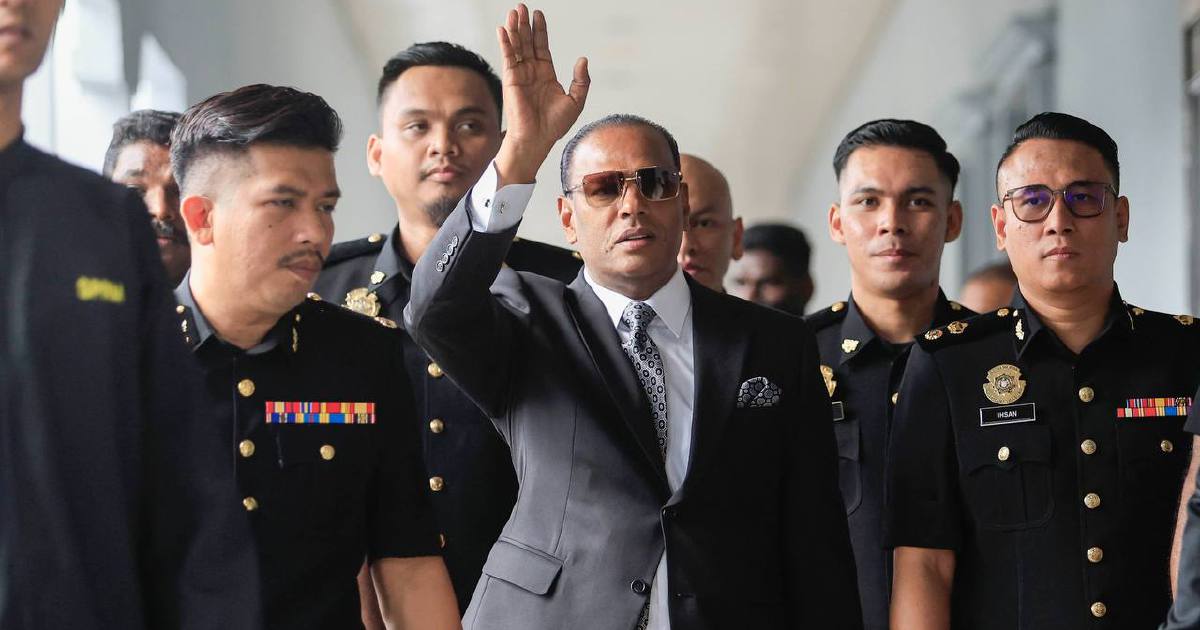
The arrival of former Human Resources Minister Datuk Seri M. Saravanan at the Kuala Lumpur court complex on Wednesday generated a visible show of political backing, with supporters assembling outside the courthouse to voice their allegiance. Chants of "Hidup Datuk Seri" repeatedly filled the air as the former minister made his way through the court premises, underlining the fractious political temperatures surrounding his case and the continued loyalty he commands among certain quarters.
Saravanan is navigating serious allegations of corruption stemming from his tenure overseeing Malaysia's foreign worker recruitment framework. The charges represent a significant development in the government's broader anti-corruption drive, though the appearance of organised support at the courthouse signals the polarised nature of his standing within political circles. His presence in court marks another phase in what has become a high-profile legal proceeding with considerable implications for the Human Resources Ministry's oversight mechanisms and the management of Malaysia's migrant labour policies.
The foreign worker recruitment system has long been a source of contention in Malaysian governance, with concerns spanning from procedural transparency to the proper allocation of permits and documentation. Saravanan's portfolio responsibilities directly encompassed these sensitive areas, making the corruption allegations particularly consequential for understanding how Malaysia's human resources administration functions. The case will likely illuminate the decision-making processes that guided foreign worker approvals during his ministerial period, a matter of concern to employers, workers, and policy observers alike.
Court proceedings in high-profile corruption cases involving government figures frequently attract media attention and public interest, yet the presence of vociferous supporters at the courthouse underscores how personalised Malaysian politics remains at the level of individual politicians. The "Hidup Datuk Seri" chanting reflects factional alignments within political formations and suggests that Saravanan retains backing from supporters who view the charges through a partisan lens rather than as matters purely of legal accountability.
For Malaysia's business community and foreign employers dependent on legitimate worker recruitment pathways, this case carries practical significance. Clarity regarding how foreign worker permits were approved during Saravanan's tenure could affect confidence in the current system's integrity and prompt calls for enhanced oversight mechanisms. Companies navigating Malaysia's employment frameworks remain attentive to how such cases resolve, as judicial outcomes may reshape understanding of compliance obligations and ministerial accountability standards.
The corruption allegations targeting a former Human Resources Minister also reflect Malaysia's ongoing efforts to strengthen institutional governance following previous scandals that exposed vulnerabilities in checks and balances. Whether courts ultimately confirm or dismiss charges against Saravanan, the proceedings themselves serve as a public record of how state institutions respond to allegations of official misconduct within a ministry handling sensitive worker management functions.
Foreign worker recruitment involves substantial financial flows and access to Malaysia's labour market, creating environments susceptible to irregular practices if oversight lapses. The allegations against Saravanan, whatever their ultimate judicial determination, have prompted fresh examination of safeguards governing permit issuance and related approvals. Employers, labour activists, and policy analysts continue observing how the case unfolds, as its resolution may inform future administrative structures and accountability frameworks.
The courthouse gathering also reflects Malaysia's fractionalised political landscape, where figures retain committed constituencies regardless of legal challenges they face. The vocal demonstrations of support for Saravanan suggest that portions of the electorate remain invested in his political future and interpret his legal difficulties through ideological rather than strictly judicial frameworks. This pattern has proven consistent across Malaysian politics, where personalities frequently transcend institutional processes in public perception and allegiance.
Regional observers monitoring Malaysian governance quality continue tracking corruption cases involving senior officials, as they provide windows into how Southeast Asian democracies handle accountability of state functionaries. Malaysia's approach to investigating and prosecuting former ministers carries implications for the region's broader institutional health and its standing among international anticorruption initiatives.
As Saravanan's case advances through the court system, the foreign worker recruitment framework remains in public focus. Stakeholders ranging from labour-sending nations to Malaysian employers await clarification on how the ministry operated during the period in question and what systemic changes, if any, will follow judicial resolution. The testimony and evidence presented during proceedings may reveal details about approval processes, documentation procedures, and decision-making hierarchies that shape understanding of Malaysia's migrant worker management for years ahead.
The intersection of high-profile legal proceedings, political factionalisation, and policy implications makes this case particularly significant for Malaysian governance observers. Beyond the individual charges against Saravanan, the case illuminates broader questions about institutional accountability, the politicisation of judicial processes, and the frameworks governing Malaysia's critical foreign worker systems.

