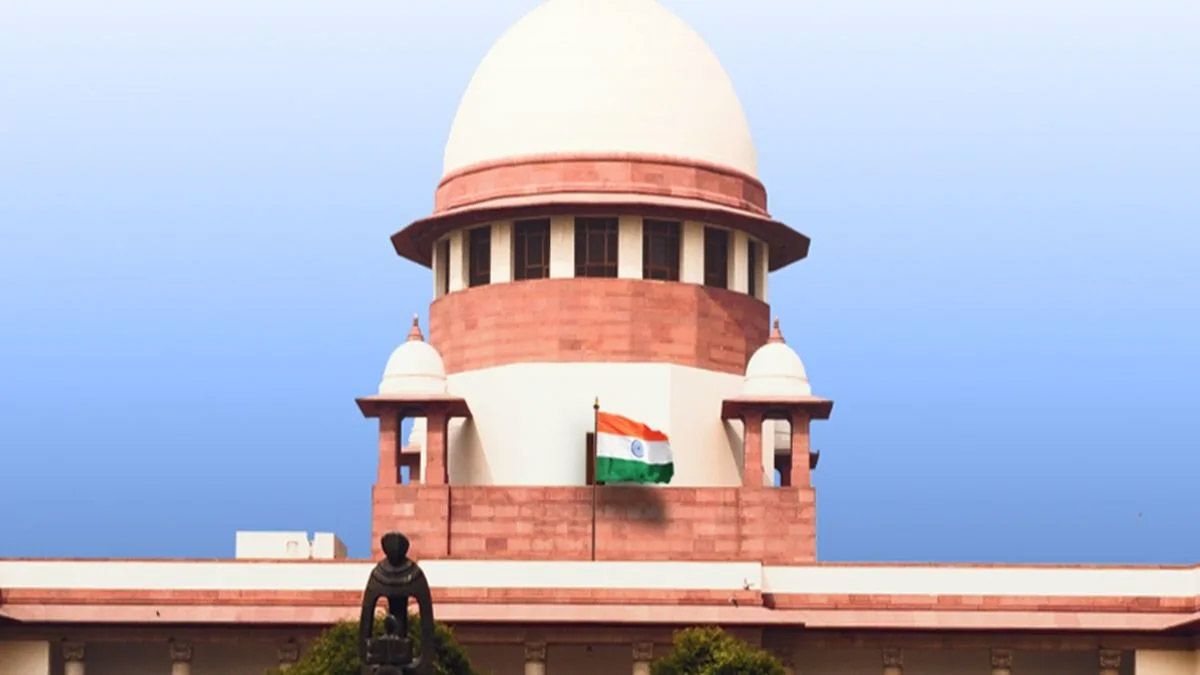
India's Supreme Court has intervened in an escalating dispute over cattle slaughter regulations in Tamil Nadu, granting a temporary stay on a sweeping Madras High Court order that sought to eliminate all cow and calf slaughter throughout the state. The apex court, comprising Justices Vikram Nath and Sandeep Mehta, issued notice on the Tamil Nadu government's appeal and suspended the operation of the High Court's May 27 judgment while signalling that the lower court's directive requires substantive revision. The move signals judicial concern that the Madras High Court may have exceeded the boundaries of the case that was originally presented to it, establishing the stage for a broader examination of how Indian courts balance constitutional principles with statutory animal welfare frameworks.
The Tamil Nadu government had challenged the High Court's order on the grounds that it fundamentally distorted the purpose of the original petition and imposed restrictions that extended far beyond what the case had contemplated. The state's appeal emphasised that the public interest litigation filed by K Surya Prasanth, General Secretary of Hindu Makkal Katchi, had sought merely to regulate where slaughter could occur—specifically preventing the activity in public spaces and temporary structures during Bakrid celebrations in Coimbatore. Instead, the High Court had transformed this limited request into a comprehensive prohibition affecting the entire state, rendering all cattle slaughter operations unlawful regardless of location, timing, or compliance with safety protocols.
Justice Nath's observation that the impugned order required "correction" underscores deeper systemic anxieties within India's judiciary about judicial overreach. The Supreme Court appears troubled not merely by the outcome but by the methodology through which the Madras High Court arrived at its conclusion. The state contended that existing Tamil Nadu legislation, specifically the Tamil Nadu Animal Preservation Act of 1958, establishes a regulatory rather than prohibitive approach to cattle slaughter. This statute permits slaughter under specified conditions and within designated facilities, reflecting a legislative judgment that complete prohibition represents neither the intent nor the practical necessity of animal protection law.
The legal architecture governing animal slaughter in India comprises multiple overlapping frameworks, each addressing different dimensions of the issue. The Prevention of Cruelty to Animals Act of 1960 and its 2001 Slaughter House Rules establish baseline welfare standards for facilities and procedures. The Tamil Nadu Urban Local Bodies Act of 1998 and its 2023 rules provide local administrative oversight. Food safety regulations impose additional hygiene and inspection requirements. Together, these constitute a comprehensive regulatory scheme designed to permit controlled slaughter within safety parameters rather than eliminate the practice entirely. The state argued that the High Court's order effectively nullified this entire legislative architecture, substituting judicial prohibition for legislative permission.
The Madras High Court's reasoning drew support from Article 48 of the Indian Constitution, which directs states to organise agriculture and animal husbandry on modern and scientific lines, including steps to prohibit the slaughter of cows, calves, and other working livestock. The court also referenced a 1976 Government Order specific to Tamil Nadu that banned the slaughter of cows and heifers within licensed slaughterhouses. The High Court treated this decades-old administrative directive as having acquired the force of binding statute and used it as the foundation for an absolute prohibition affecting all slaughter operations across the state. However, the Supreme Court's intervention suggests that even constitutionally permissible aspirations and historical administrative decisions cannot override the statutory scheme currently in force.
The underlying petition that triggered the High Court's order had emerged from specific allegations of irregular structures erected in Coimbatore ahead of Bakrid celebrations, a festival during which many Muslim families traditionally sacrifice livestock. The petitioner claimed that temporary sheds established without authorisation posed animal welfare and regulatory compliance risks. This localised grievance concerning enforcement and regulation morphed through the judicial process into a statewide existential prohibition. The gap between what was requested and what was granted illustrates the challenge courts face in addressing cattle-related matters, where passionate public sentiment and constitutional language about cow protection frequently collide with statutory frameworks and administrative capacity.
For Malaysian observers, the Tamil Nadu case illuminates how India's federal structure and plural legal system create friction when courts at different hierarchical levels interpret the scope of public interest litigation. Tamil Nadu's animal welfare regulations reflect a balance struck through democratic processes and legislative compromise. When courts fundamentally alter these equilibria through expansive interpretations of petitions, they risk destabilising established governance frameworks. Malaysia's own experience with judicial interpretation of constitutional provisions and federal-state division of legislative power suggests that preserving institutional boundaries, even when sympathetic to the underlying concern, represents an important governance principle.
The Supreme Court's interim stay means that regulated slaughter can continue in authorised facilities until the court conducts fuller hearings on the merits. This suspension preserves the existing regulatory status quo, under which Tamil Nadu permits cattle slaughter subject to welfare, hygiene, and procedural safeguards. The stay also protects individuals and businesses whose livelihoods depend on legal slaughter operations, including butchers, meat exporters, and tanneries that process hides. These stakeholders would face severe economic disruption if the Madras High Court's absolute prohibition remained in effect, potentially affecting employment for thousands of workers and suppliers across the meat and leather industries.
The case reflects broader tensions in Indian jurisprudence about the proper judicial role in animal protection. While courts possess clear authority to enforce animal welfare standards and ensure that government agencies comply with existing law, questions arise when courts attempt to rewrite regulatory schemes through expansive interpretation of petitions. The Prevention of Cruelty to Animals Act empowers authorities to seize animals subjected to unnecessary suffering and to prosecute those inflicting cruelty, but these remedies operate within a framework that permits regulated slaughter. The Supreme Court's decision to stay the High Court's order signals that constitutional aspirations toward cow protection, however noble, do not authorise courts to dismantle the statutory licensing and oversight systems that govern the industry.
The litigation also carries implications for India's relationship with trading partners and its role in global meat markets. Tamil Nadu ranks among India's significant meat and meat product exporters, supplying both domestic and international customers. An absolute prohibition could affect India's export capacity and potentially breach international trade obligations. The Supreme Court's intervention preserves India's capacity to maintain regulated, export-compliant slaughter facilities that generate government revenue and employ workers. For Southeast Asian nations engaged in regional trade with India, maintaining India's ability to supply meat products and leather goods under standard regulatory frameworks remains commercially relevant.
The Supreme Court's next step will involve substantive examination of whether the Madras High Court appropriately applied Article 48's aspirational language to override existing statutory permissions. This examination will likely establish important precedent about the relationship between constitutional ideals regarding cattle protection and the legislative scheme currently governing animal slaughter. The court may also examine whether the 1976 Government Order cited by the High Court remains valid law or whether subsequent legislative changes have superseded it. These determinations will influence how Indian courts approach future public interest litigation involving cattle slaughter and animal welfare, with significance extending throughout India's states.
The stay also reflects the Supreme Court's concern about protecting minority religious practices. Bakrid, celebrated by Muslim communities across India, involves ritualistic animal sacrifice that has deep theological significance. The Madras High Court's order prohibiting slaughter on Bakrid specifically appeared to impose restrictions affecting Muslim religious observance, raising constitutional concerns about discrimination and infringement of rights guaranteed under Articles 25 and 26 of the Constitution. The Supreme Court's decision to suspend the order implicitly acknowledges that any prohibition affecting specific religious festivals requires careful constitutional analysis and cannot rest solely on animal welfare concerns without addressing religious liberty dimensions.
As the litigation progresses through subsequent Supreme Court hearings, the court will confront fundamental questions about judicial power, statutory interpretation, and the constitutional vision of animal protection. The outcome will likely clarify whether Article 48 and state governments' protective aspirations for cattle can be enforced through courts against statutory schemes permitting regulated slaughter, or whether such aspirations must be implemented through conventional legislative and administrative processes. For Tamil Nadu, the resolution will determine whether the state's regulated system continues operating or whether courts can impose categorical prohibitions that override legislative judgments. The interim stay preserves the regulatory status quo while the Supreme Court works through these essential constitutional and administrative questions.

