The banking landscape across Southeast Asia is undergoing a fundamental transformation as financial institutions pivot towards sustainable financing at unprecedented scale. Driven by accelerating consumer demand for electric vehicles, renewable energy systems and climate-friendly housing, major regional lenders are now repositioning sustainable finance from niche offerings into core business operations. This shift reflects not merely environmental consciousness but a hard-nosed recognition that capital flows increasingly follow decarbonisation trends, with institutions that fail to adapt risking competitive disadvantage in an energy-transition-driven economy.
Electric vehicle adoption in the region demonstrates the magnitude of this shift. Malaysia's EV sales doubled in 2025 according to the International Energy Agency, while Indonesia nearly quadrupled year-on-year purchases, signalling that consumer appetite for lower-carbon transport options has moved decisively into the mainstream. These explosive growth rates translate directly into surging demand for financing mechanisms that can support vehicle purchases, charging infrastructure, and related ecosystem development. The sheer capital requirements involved in electrifying transport networks across hundreds of millions of people create unprecedented financing opportunities for banks willing to specialise in green lending.
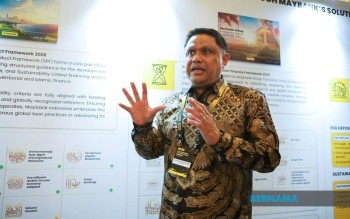
Maybank Group's ambitious sustainability trajectory illustrates how far regional financial institutions have travelled. The group has committed to mobilise RM300 billion in sustainable finance across ASEAN between 2026 and 2030, a staggering deployment of capital that underscores the scale of the transition underway. Remarkably, implementation of this commitment is already tracking ahead of schedule less than six months after launch, suggesting that demand for sustainable financing products far outpaces supply. Datuk Shahril Azuar Jimin, the group's chief sustainability officer, noted that earlier concerns about liquidity constraints have proven entirely misplaced—banks are not constrained by capital availability but rather by capacity to identify and structure deals swiftly enough.
The previous iteration of Maybank's sustainability commitments demonstrates how market dynamics have evolved. Between 2021 and 2025, the group mobilised RM176 billion in sustainable finance, more than doubling its initial RM80 billion target announced in 2021. This dramatic overshooting reflects an underestimation of both investor appetite and the scale of real-economy decarbonisation needs. Financial institutions operating in Malaysia and Indonesia are now confronting a reality where sustainable finance demand significantly exceeds their current deployment capacity, creating operational challenges that require substantial organisational restructuring and capacity building across relationship management teams.
Malaysia's regulatory environment has reinforced these market dynamics. The Energy Transition and Water Transformation Ministry expanded the Net Energy Metering (NEM) Rakyat programme quota by 100 megawatts in May 2025 after existing allocations sold out entirely, enabling thousands of additional households to install rooftop solar photovoltaic systems. This policy response to oversubscription underscores government recognition that residential renewable energy adoption has transitioned from niche trend to mainstream expectation. For financing institutions, such regulatory expansion creates immediate demand for green mortgage products and home improvement financing linked to solar installations, driving necessity to develop supporting infrastructure rapidly.
Maybank's sustainable finance offerings have expanded dramatically beyond traditional green project financing. The group's Sustainable Product Framework now encompasses transition finance for carbonintensive industries seeking to decarbonise, EV financing across both personal and commercial vehicles, green mortgages and home loans, social finance addressing poverty and inequality, and green bonds for institutional investors. This broadening of scope reflects maturation of sustainable finance from a specialised product category into an integrated dimension of comprehensive financial services. Rather than offering sustainability as an afterthought or premium product, major banks now embed climate and social considerations into mainstream relationship management.
This evolution demands profound organisational transformation within banking institutions. Relationship managers can no longer simply arrange financing transactions; they must now guide clients through complex sustainability considerations while explaining climate risks, social impacts, and long-term transition pathways. Shahril emphasised that early implementation revealed significant communication challenges as relationship managers lacked capacity to articulate sustainability implications or offer integrated solutions addressing both financial and environmental objectives. Maybank has responded with substantial investments in capacity-building programmes and sustainability certifications, recognising that expanding sustainable finance commitments depends entirely upon developing human capital capable of advising clients on decarbonisation strategy.
Indonesia presents a particularly striking case study in sustainable finance expansion. Maybank Indonesia mobilised approximately Rp17 trillion in sustainable financing under its previous five-year commitment, establishing the subsidiary as a regional leader in green finance deployment. Maria Triffany Fransiska, head of sustainability at Maybank Indonesia, indicated that implementation of the new commitment is progressing rapidly, with transportation emerging as the strongest sustainable financing segment as EV adoption accelerates. This sectoral concentration reflects the capital intensity of vehicle electrification and the speed with which consumer preferences are shifting towards electric options across the archipelago.
Beyond traditional lending, Maybank Indonesia is expanding into complementary sustainable banking products. The subsidiary has become the first within the Maybank Group to introduce environmental, social and governance (ESG) deposit products, allowing retail and institutional customers to direct capital towards sustainability-focused investment portfolios while earning competitive returns. Malaysia is expected to follow with similar offerings, suggesting that ESG products are transitioning from experimental offerings into standard financial services menus. Maybank Indonesia is simultaneously developing green bond initiatives, creating capital market infrastructure that enables institutional investors to finance sustainability projects at scale. These ecosystem expansions address a critical market gap in channelling institutional savings towards decarbonisation.
The expansion of sustainable finance across Southeast Asia carries profound implications for regional development trajectories. As capital increasingly flows into renewable energy, energy efficiency, and low-carbon transport, traditional high-carbon industries face mounting financing constraints, creating powerful incentives for energy transition investment. For Malaysia and Indonesia—both nations facing significant climate risks while remaining major energy producers—sustainable finance expansion creates the financial infrastructure necessary to reposition national development models away from fossil fuel dependence. Households installing rooftop solar systems, consumers purchasing electric vehicles, and businesses investing in transition strategies now benefit from dedicated financing mechanisms that make decarbonisation economically accessible to mainstream populations rather than restricting it to wealthy early adopters.
Yet significant challenges remain. While demand for sustainable finance demonstrably exceeds current supply, pricing and terms of green lending products require careful calibration to ensure sustainability accessibility across income levels. The emphasis on affordable housing and low-cost electric two-wheelers in Maybank Indonesia's portfolio suggests emerging recognition that sustainable finance must address not merely elite consumer preferences but everyday needs of lower-income communities. Achieving true mainstreaming of sustainable finance requires financial institutions to overcome remaining cost barriers that could otherwise limit environmental and social benefits to privileged populations. As competitive intensity increases across the region, banks demonstrating ability to deliver sustainable finance solutions across entire income spectrums will likely capture substantial market share in coming years.

