Four European countries—Sweden, Poland, Romania and Lithuania—have secured admission to the Treaty of Amity and Cooperation in Southeast Asia (TAC), underscoring widening global recognition of ASEAN's diplomatic frameworks and commitment to regional peace. The decision was announced in Manila on July 21 during the 59th ASEAN Foreign Ministers' Meeting, with formal signing ceremonies scheduled for Friday to coincide with the treaty's golden jubilee celebrations.
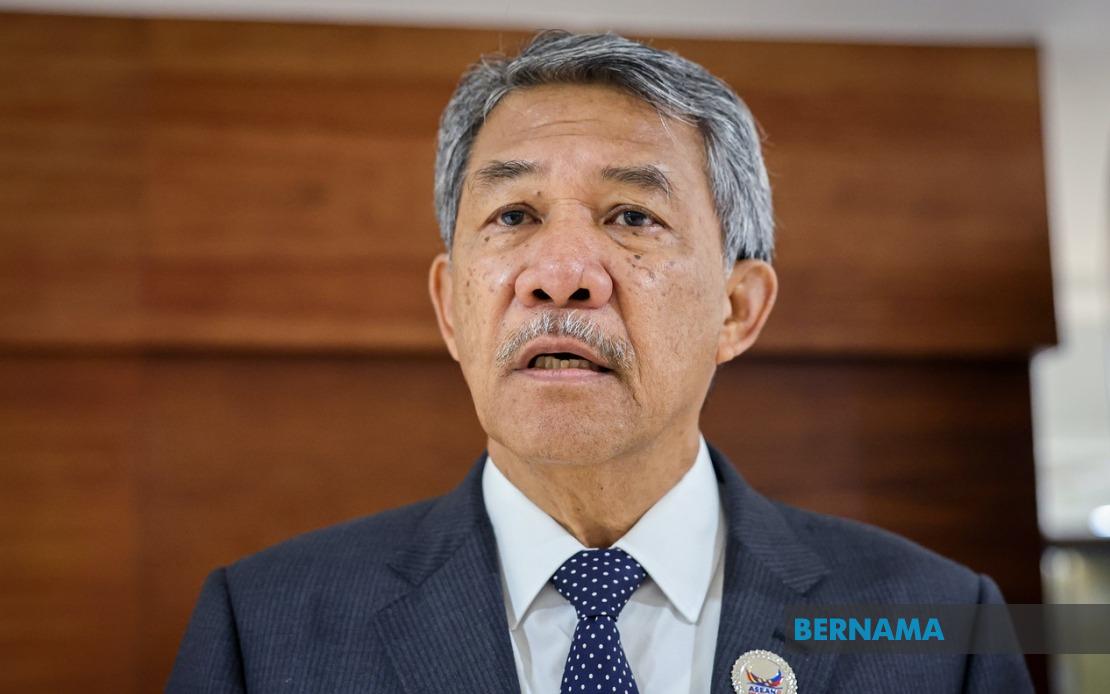
Malaysian Foreign Minister Datuk Seri Mohamad Hasan revealed that the four nations will execute their instruments of accession at a special ceremony marking five decades of the TAC. The approval came during plenary deliberations held at the Philippine International Convention Centre as part of the broader 59th AMM schedule. This latest cohort of signatories represents the most substantial intake of European members since the treaty mechanism began welcoming non-regional powers, signalling a notable shift in TAC's geographic footprint and diplomatic reach across the continent.
The significance of this expansion extends beyond ceremonial protocol. Foreign Minister Mohamad emphasised that the membership surge reflects international confidence in ASEAN as a stabilising force in Southeast Asia. Nations worldwide increasingly view alignment with ASEAN's foundational principles—peaceful coexistence, mutual respect, non-interference and cooperative engagement—as strategically valuable, particularly as global geopolitical tensions mount. The steady stream of accession applications currently being processed by the ASEAN Secretariat in Jakarta demonstrates sustained momentum toward multilateral commitment through the TAC framework.
Established in 1976, the TAC serves as a cornerstone document that codifies behavioural norms among signatory nations. Originally conceived as a mechanism to govern intra-ASEAN relations during a period of regional fragmentation and Cold War competition, it evolved into an instrument that could accommodate extra-regional powers willing to subscribe to ASEAN's diplomatic ethos. The treaty's endurance reflects its flexibility and relevance—rather than become obsolete as international relations transformed, TAC expanded its applicability while maintaining core principles that resonated across diverse political systems and strategic contexts.
The treaty's membership composition underscores its broadening appeal. All eleven ASEAN member states remain signatories, and the list of extra-regional High Contracting Parties now spans continents. Australia, New Zealand and Japan joined from the Asia-Pacific region; the United States, China and India from major power clusters; European participants including Germany and Türkiye; Middle Eastern signatories such as Saudi Arabia, Iran, Egypt and Morocco; and countries from Latin America including Brazil and Peru. As of 2025, the treaty encompasses 58 High Contracting Parties, making it a genuinely global governance mechanism rather than merely a Southeast Asian arrangement.
The admission of these four European nations carries particular significance for Malaysia and other ASEAN members seeking to strengthen ties with Europe. Sweden, Poland, Romania and Lithuania represent different segments of European geography and policy orientation. Sweden and Poland possess substantial defence and economic capabilities within Europe; Romania bridges Southeast European and NATO interests; Lithuania, as a Baltic state bordering Russia, brings unique perspective on regional security concerns. Collectively, their accession signals European recognition that ASEAN's conflict-prevention model and emphasis on dialogue offer valuable lessons as the continent navigates its own security challenges.
For Malaysia specifically, the expansion of TAC membership creates additional diplomatic channels and reinforces a rules-based international order that the country has consistently championed. Malaysian policymakers view ASEAN centrality as fundamental to regional stability, and broader international subscription to TAC principles strengthens that positioning. The treaty's emphasis on non-interference aligns with Malaysia's long-standing foreign policy doctrine, making these new members' commitment significant for future regional consultations and dispute resolution mechanisms where Malaysia may seek support or arbitration.
The timing of this announcement—during the Philippines' ASEAN Chairmanship year under the theme "Navigating Our Future, Together"—appears deliberately coordinated to emphasise collective solidarity. The 59th Foreign Ministers' Meeting, including the Post-Ministerial Conference framework that connects ASEAN with major dialogue partners, provided the appropriate venue to formalise these memberships. The convergence of TAC's 50th anniversary with four simultaneous new accessions creates a symbolic moment: the treaty that began as a mechanism for regional conflict-reduction now stands as a globally endorsed framework for peaceful interstate conduct.
The ASEAN Secretariat's current processing of additional applications suggests momentum will continue. Several other nations have reportedly expressed interest in acceding, though deliberations progress methodically. ASEAN's consensus-based decision-making means each member state must approve new members, ensuring TAC expansion reflects genuine collective will rather than hasty enlargement that could dilute the treaty's normative force. This careful stewardship has preserved TAC's credibility and utility across five decades.
For regional stability, the symbolism matters considerably. When major powers and European nations formally commit to principles of mutual respect and non-interference enshrined in TAC, they implicitly accept constraints on unilateral behaviour and acknowledge dispute settlement through dialogue. In an era of great power competition and regional tensions, such formal commitments—however declaratory they may appear to sceptics—create documentary evidence of stated intentions and provide platforms for peaceful resolution when conflicts emerge. That Sweden, Poland, Romania and Lithuania join simultaneously suggests coordinated diplomatic messaging about European support for international law and ASEAN-centred regional order.
The ceremony during TAC's anniversary will mark an inflection point in the treaty's evolution. From its origins as a Southeast Asian document, TAC has transformed into a truly international instrument that major economic powers, security providers and regional players endorse as legitimate governance framework. For Malaysia and ASEAN, this expansion validates decades of diplomatic investment in promoting the region's values and institutional frameworks as globally applicable standards worth adopting by countries far removed from Southeast Asia's immediate concerns.

