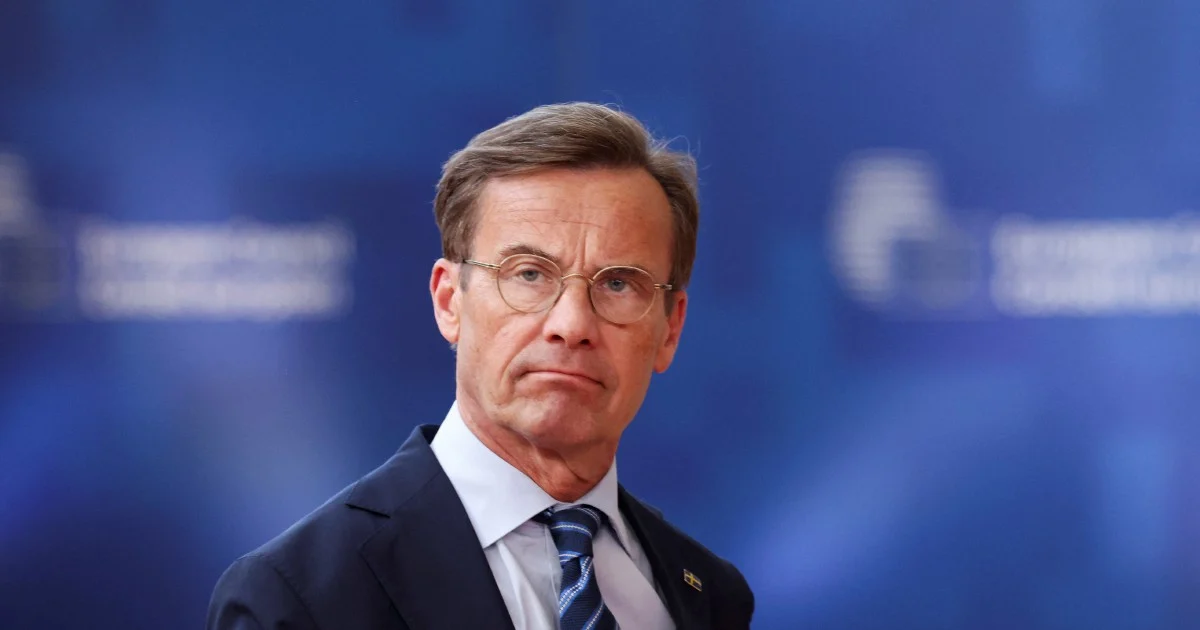
Swedish Prime Minister Ulf Kristersson enters the final stretch of his government's term beset by corruption allegations that threaten to reshape the domestic political landscape just as voters prepare for legislative elections in three months. The timing of these fresh accusations underscores a troubling pattern that has characterised his entire four-year premiership—a succession of scandals that, despite drawing media attention and public scrutiny, have failed to inflict lasting political damage on his coalition administration.
Kristersson's ability to deflect crises without suffering meaningful consequences has become a defining feature of Swedish politics under his leadership. Time and again, controversies that might have toppled other leaders have somehow dissipated, leaving his government intact and his coalition partners reluctant to abandon their governing arrangement. This resilience—or what critics might characterise as evasiveness—has puzzled observers across the political spectrum and raised uncomfortable questions about accountability standards in contemporary Swedish governance.
The emergence of corruption allegations at this juncture presents a more complicated challenge than previous setbacks. Unlike earlier controversies that largely concerned administrative missteps or policy disagreements, corruption claims strike at the heart of government legitimacy and public trust. Voters approaching an election increasingly focus on such fundamental questions of integrity, making the timing particularly awkward for a government already navigating a crowded political arena where rivals have positioned themselves as alternatives to what they characterise as complacency in leadership.
Sweden's political culture, traditionally characterised by consensus-building and institutional restraint, may be experiencing its own reckoning as partisan tensions sharpen. The country's coalition model typically demands compromise and mutual tolerance among governing partners, yet prolonged scandals test these conventions. Kristersson's coalition has maintained its structural integrity despite repeated provocations, suggesting either extraordinary political discipline or a recognition among partners that collective collapse would prove more costly than shared survival.
The broader European context provides perspective on Sweden's situation. Across the continent, concerns about governance and corruption have gained electoral prominence as voters demand demonstrable evidence of ethical leadership. Hungary's Viktor Orbán and Italy's Matteo Salvini have both weathered corruption-adjacent controversies, yet none with quite the frequency that has marked Kristersson's tenure. This pattern raises analytical questions about whether Sweden's institutional arrangements have weakened incentives for accountability, or whether Swedish voters themselves have adopted a more pragmatic, scandal-fatigued approach to their political choice-making.
For Malaysia and Southeast Asia, the Swedish case offers instructive lessons about institutional resilience under pressure. Democratic systems operating under coalition governments face inherent vulnerabilities when scandal management becomes routine. The mechanisms that allow leaders to survive multiple crises—whether sympathetic media environments, fragmented opposition, or simply voter fatigue—deserve closer examination in contexts where democratic accountability remains contested or developing.
The approaching election will test whether Kristersson's pattern of scandal-deflection remains effective. New corruption allegations carry different weight than previous controversies; they imply not merely questionable judgment but potentially criminal conduct. Voters asked to renew their confidence in a government facing such allegations must weigh whether scandal fatigue outweighs their concerns about integrity, or whether the seriousness of corruption charges finally breaches the threshold of public tolerance that previous controversies failed to cross.
Kristersson's coalition partners face their own calculations. Supporting a leader and government mired in corruption allegations risks guilt by association and electoral punishment for their own parties. The decision to maintain the coalition through the election, disband it beforehand, or position individual parties as critical voices will significantly influence how Swedish voters assess the government's credibility on the eve of voting.
International observers note that Sweden's reputation for transparent, accountable governance faces its own test. The Nordic model has long attracted admiration globally for combining economic dynamism with institutional integrity. If Kristersson's government emerges from elections with minimal damage despite corruption allegations, it would signal either that the model proves more resilient than sceptics acknowledge, or that even Swedish institutions have lost their capacity to impose meaningful consequences for serious governance failures.
For regional policymakers and observers in Southeast Asia monitoring democratic stability, the Swedish precedent suggests sobering implications. If a well-established democracy with strong institutions and high governance standards can accommodate repeated scandals without enforcing meaningful accountability, what does this suggest about the vulnerability of younger or less institutionally robust democracies to normalisation of misconduct? Kristersson's survival of scandal after scandal, rather than representing exceptional circumstances, may instead reflect broader global trends toward declining political consequences for governance failures.
The months ahead will determine whether the Swedish electorate finally reaches its tolerance threshold for scandal or whether Kristersson's government emerges vindicated despite—or perhaps because of—voters' demonstrated indifference to allegations that under different political conditions might have proven disqualifying. Either outcome carries implications extending well beyond Stockholm.