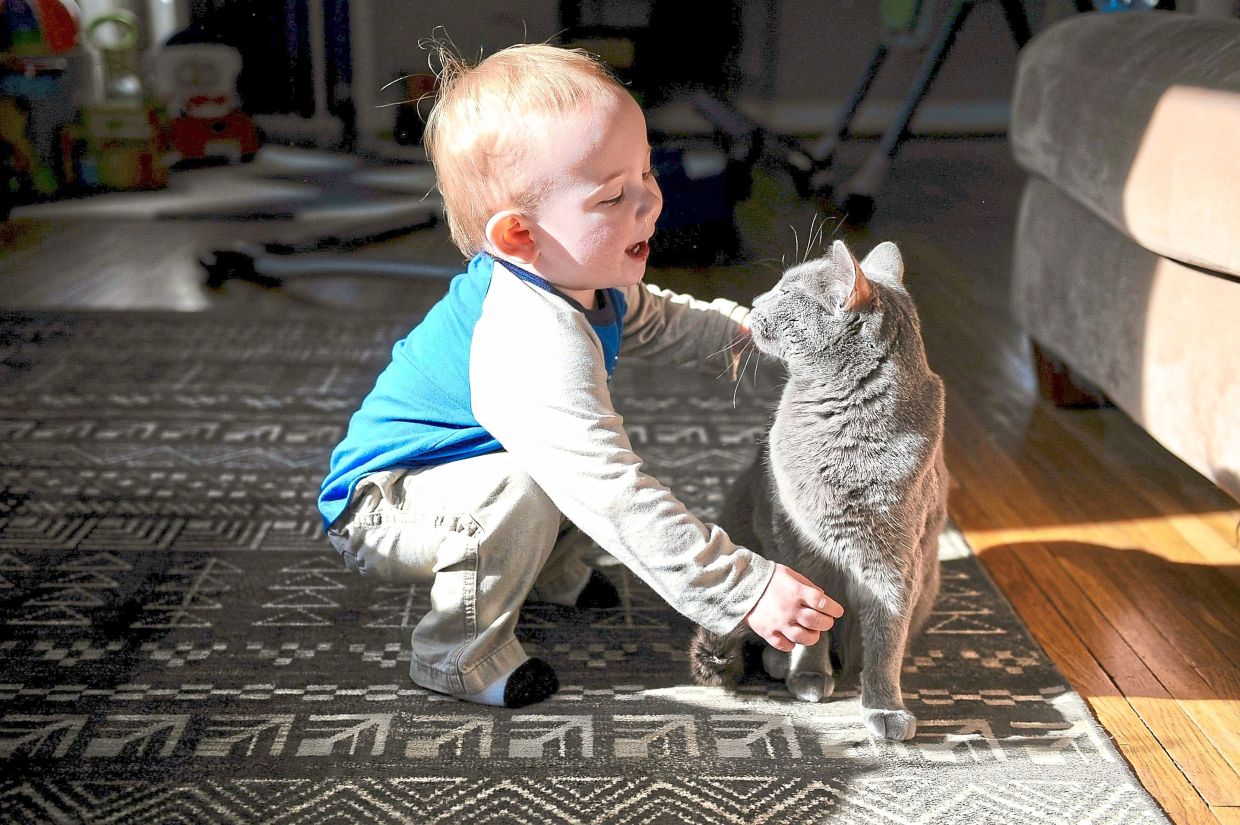
Cats have long occupied an uncomfortable position in discussions about childhood asthma management, routinely blamed for triggering attacks and exacerbating symptoms. Yet a major Swedish investigation now challenges this widespread belief, providing robust evidence that children with asthma living alongside cats experience no worse health outcomes than their cat-free peers. The finding comes from researchers at Karolinska Institutet in Stockholm, who analysed two years of detailed health records from more than 30,000 Swedish children, making this one of the most comprehensive examinations of the relationship between feline companionship and respiratory disease in young people.
Asthma remains the most prevalent chronic condition affecting children globally, and the burden is substantial. The Global Asthma Network estimates that 9.1% of children and 11% of adolescents worldwide live with asthma, though prevalence fluctuates dramatically across different countries and regions. Beyond the direct health impact, asthma drives significant hospitalisation rates and restricts children's participation in normal activities. Environmental factors contribute substantially to asthma risk—air pollution exposure, parental smoking, obesity, childhood infections, and pre-existing atopic conditions like eczema or hay fever all increase susceptibility. Against this backdrop, the hypothesis that cat ownership worsens outcomes seems plausible, yet the scientific evidence has remained surprisingly contradictory and inconclusive.
Dr Resthie R Putri, the study's corresponding author, emphasised the consistency of their findings across multiple measures of asthma severity. "Children living with a cat had similar asthma severity, exacerbation, asthma control and lung function to children living without cats in the short term," Putri explained. Notably, the research revealed no meaningful differences based on how many cats lived in the home, nor did the age or sex of the cats influence outcomes. This granular analysis strengthens the conclusion that feline presence itself—in whatever quantity or form—does not meaningfully alter the asthma trajectory for affected children.
The study's methodological rigour provides confidence in these conclusions. Researchers began tracking a cohort of 30,277 children aged four to seventeen in 2023, all of whom had received diagnoses of asthma or airway allergies and were born between 2006 and 2020. Over a 24-month observation period extending into 2024, investigators compiled comprehensive health data drawn from Sweden's integrated health information systems: the National Patient Register capturing diagnosis and emergency department visits, the Prescribed Drug Register documenting medication use patterns, and the National Airway Register tracking asthma control assessments and lung function measurements. Cat ownership was established through Sweden's mandatory National Cat Register, introduced in 2023 for all cats born after 2008, providing objective documentation rather than relying on parental recall.
The quantitative results offered no support for the cat-asthma hypothesis. Among children taking moderate-to-severe asthma medications—a proxy for disease burden—9.6% of those exposed to cats compared with 10.1% of unexposed children fell into this category, a non-significant difference. Asthma exacerbations, defined as acute attacks or flare-ups requiring medical attention, occurred at similar frequencies: 3.3% in the cat-exposed group and 3.5% in the unexposed group. For the 1,428 children with available lung function data, those with cats showed no differences in spirometry measures compared with their peers without feline housemates. These consistent findings across different asthma metrics suggest that any protective or harmful effects of cat exposure, if they exist at all, are too small to detect in clinical practice.
Explaining this counterintuitive result requires considering how children's exposure to cat allergens actually occurs in contemporary society. Putri highlighted a plausible mechanism: "Cat allergen exposure is very common, even outside the home. Children who do not have cats at home may still be exposed in shared environments such as schools or public transportation." This observation has important implications for understanding why home-based cat ownership failed to produce the expected differential outcomes. If asthma-prone children are regularly encountering feline allergens regardless of household cat ownership, then preventing home cat exposure offers minimal additional protection. The exposure is essentially unavoidable in modern shared living spaces, making pet ownership decisions less critical from a medical standpoint.
Yet researchers acknowledged meaningful limitations warranting caution in interpreting results. The study lacked information about which specific allergens individual children were sensitised to—some asthmatic children may develop reactions to cat proteins while others do not, and this heterogeneity could mask true associations in subgroups. Moreover, Sweden's newly established National Cat Register may contain inaccuracies, with some children genuinely living with unregistered cats potentially misclassified as unexposed. These measurement issues could obscure genuine relationships between cat ownership and asthma outcomes, particularly among children with specific feline allergen sensitivities.
For Malaysian families wrestling with decisions about pet ownership when a child has asthma, the Swedish evidence suggests that cat companionship should not be automatically ruled out on medical grounds alone. The prohibition of cats from asthmatic households represents a substantial quality-of-life reduction that may lack scientific justification. Instead, individual assessment of the specific child's sensitisation profile makes more sense than categorical exclusions. This aligns with evolving immunological understanding suggesting that controlled allergen exposure during childhood may promote tolerance development, contrary to the older avoidance-based paradigm that once dominated asthma management.
The research also reflects broader shifts in how asthma triggers are understood. Rather than viewing single environmental factors in isolation, contemporary medicine recognises asthma as multifactorial, with genetic predisposition, immune development, and numerous environmental exposures interacting in complex ways. From this perspective, eliminating one common allergen source—particularly when that exposure occurs throughout the community anyway—represents a blunt instrument unlikely to produce meaningful clinical benefits. Parents and physicians would likely achieve greater asthma control by focusing on documented risk factors like air pollution reduction, smoking cessation in households, and maintenance of healthy weight, alongside ensuring consistent use of prescribed controller medications.
The Swedish study joins a growing body of research suggesting that conventional wisdom about pet allergens merits re-examination. Previous literature has often been small in scale and drawn from selected populations not necessarily representative of the broader asthmatic population, explaining why contradictions persisted. The current investigation, encompassing over 30,000 children with systematic follow-up and objective health records, provides the most compelling evidence to date that household cat ownership poses no demonstrable risk to asthmatic children. While individual sensitivities certainly exist and some children may have more severe reactions than others, the population-level data provides reassurance that parents need not surrender their cats or forego cat adoption simply because their child has asthma.
Moving forward, more targeted investigation could illuminate whether specific subpopulations—perhaps children with particularly high cat allergen sensitisation—might benefit from avoidance strategies, while most asthmatic children could safely coexist with feline companions. Such research might employ immunological testing to identify truly at-risk individuals, refining clinical guidance beyond categorical recommendations. For now, the Swedish findings challenge clinicians to reconsider automatic cat-avoidance counselling and instead engage families in individualised decision-making that weighs genuine sensitisation risks against the documented mental health and social benefits of pet ownership.

