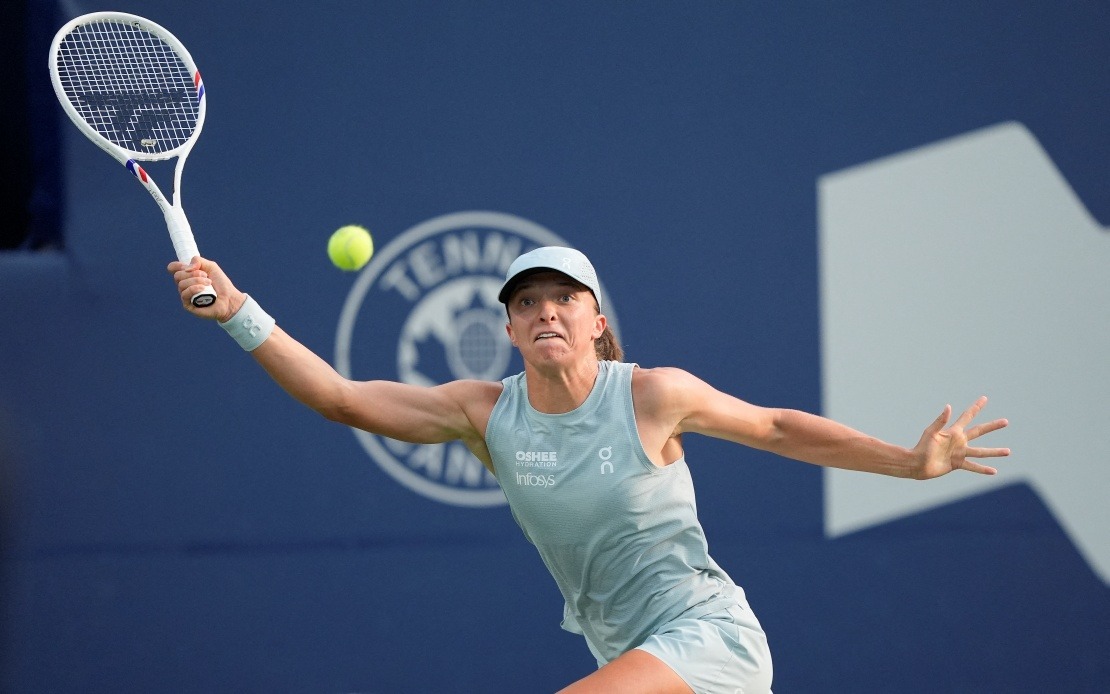
Iga Swiatek has halted a frustrating title drought that stretched nearly a full year, securing the National Bank Open championship in Toronto with a clinical 6-2, 6-3 victory over world number two Elena Rybakina. The seventh-seeded Polish player delivered a masterclass in control and efficiency, converting her second championship point to claim her first crown since last September and stake a decisive claim as one of the sport's premier competitors heading into the final stretch of the season.
The match unfolded almost from the opening moments as a one-sided contest, with Swiatek establishing early momentum through a combination of precise shot-making and her opponent's mounting frustration. Rybakina, despite her lofty ranking, found herself immediately under pressure when she committed consecutive double faults at a critical juncture in the first set, handing Swiatek a crucial break point that the Polish player seized without hesitation. This early miscue by the Kazakhstani player proved emblematic of her broader struggles throughout the afternoon.
Swiatek capitalised relentlessly on the opening she had created, building upon the break with increasingly confident strokeplay. Rather than tightening up as often happens when players hold a significant advantage, the seventh seed continued playing with the same aggressive intent and technical precision that had carried her through the tournament's earlier rounds. She orchestrated the first set with remarkable composure, racing to take it 6-2 and establishing clear psychological momentum heading into the second set.
The second set proved equally challenging for Rybakina, who struggled to establish any consistency in her groundstrokes. Two unforced errors involving missed backhands in succession handed Swiatek another break of serve, placing the Polish player firmly in command with victory within touching distance. Despite these mounting difficulties, Rybakina demonstrated some of the resilience that characterises her game by successfully defending against one match point, momentarily suggesting she might mount a recovery.
That glimmer of hope proved fleeting. Swiatek swept aside any lingering doubts by converting her second championship point, concluding a performance that showcased her technical excellence and mental fortitude. The victory represents far more than merely ending a title drought; it signals that Swiatek remains among tennis's elite performers, capable of dismantling top-ranked opponents through sheer quality and tactical intelligence.
At the awards ceremony, Swiatek delivered remarks that extended beyond the conventional congratulations exchanged in professional tennis. She dedicated her victory to everyone confronting unjust criticism and negativity, acknowledging broader struggles that extend beyond the confines of competitive sport. Her message encouraged persistence and self-belief, urging people to maintain focus on personal development rather than becoming overwhelmed by external negativity.
The champion's comments resonate particularly within the context of professional athletics, where athletes frequently face intense scrutiny and judgment from both media and the public. Swiatek's willingness to address these challenges directly, particularly in a moment of triumph, underscores a growing tendency among contemporary athletes to use their platforms for broader social commentary. Her emphasis on self-focus and continuous growth reflects the psychological resilience required not only to win tennis tournaments but to navigate the complexities of high-level sport in the modern era.
For Southeast Asian tennis enthusiasts monitoring the sport's trajectory, Swiatek's performance carries instructive lessons. Her methodical dismantling of Rybakina demonstrates that consistency and technical proficiency remain paramount at the highest levels of the sport, even as power and athleticism continue to increase across the professional circuit. The manner in which she converted early advantages into set and match victories illustrates the importance of capitalising on opponents' errors while maintaining poise under pressure.
Swiatek's return to the winner's circle also carries significance for the women's tennis landscape as major tournaments approach their climactic phases. Her drought-breaking success in Toronto suggests she has regained the confidence and momentum necessary to challenge for titles in the major championships that typically define seasons. The elimination of ranking points and the unpredictable nature of tournament draws mean that form becomes an increasingly important indicator of capability, and Swiatek's performance in Canada suggests she has retained the competitive edge that previously established her among the sport's most formidable players.
Looking forward, this victory should provide Swiatek with considerable momentum as the season progresses toward its conclusion. Breaking a lengthy title drought often proves psychologically liberating for athletes, removing the weight of expectation that accumulates during extended periods without championship success. With this Toronto triumph firmly secured, Swiatek now approaches remaining competitions from a position of renewed confidence and demonstrated form.

