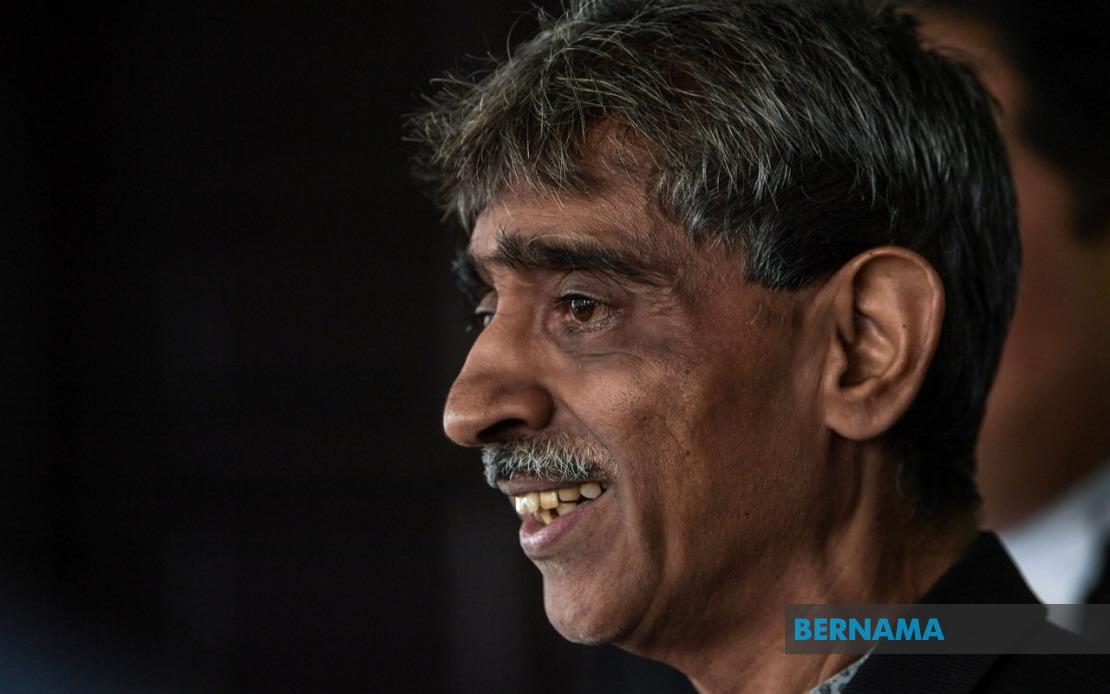
Authorities must move swiftly to prosecute individuals implicated in the Tabung Haji scandal once investigations yield sufficient evidence, according to lawyer Mohamed Haniff Khatri Abdulla, who participated in the Royal Commission of Inquiry proceedings. His intervention underscores growing expectations among depositors and the public that the RCI's findings will translate into concrete legal consequences rather than administrative recommendations that fade from public memory. The lawyer's remarks carry weight given Malaysia's history with high-profile inquiries that sometimes struggle to achieve tangible outcomes, raising questions about whether the Tabung Haji investigation will break that pattern or repeat it.
Mohamed Haniff Khatri stressed that prosecutorial action must remain impartial, unbeholden to the rank or prominence of the accused. This emphasis on equal application of the law appears aimed at countering potential criticism that the government might selectively pursue cases based on political considerations rather than evidence. For Malaysian depositors who entrusted their savings with Tabung Haji, such reassurance matters enormously—the institution's credibility hinges not merely on internal reforms but on visible accountability for past misconduct. The lawyer argued that decisive legal action represents the most direct route to rebuilding institutional trust, a goal that transcends partisan politics and serves the broader national interest.
Crucially, Mohamed Haniff Khatri distinguished between individual prosecutions and the broader investigative process, cautioning that authorities must avoid creating a false impression of finality. Each prosecution, he explained, represents only one concluded chapter within a much larger investigation spanning multiple agencies and complex financial dealings. This nuance addresses a legitimate concern: that premature announcements of arrests or charges could mislead the public into believing the entire Tabung Haji affair has been resolved when in reality, deeper layers of inquiry remain unexamined. The distinction carries particular relevance in Malaysia's political environment, where opponents might otherwise seize upon selective prosecutions to question the government's motives.
The lawyer recommended that government agencies issue carefully sequenced public statements detailing investigation progress, ensuring citizens understand that prosecutions flow from completed investigative phases rather than arbitrary government action. This staged communication strategy acknowledges that public perception management is as important as the prosecutions themselves, especially given Malaysia's recent political turbulence and lingering public cynicism about institutional independence. By transparently linking each prosecution to specific, completed investigative work, authorities can insulate their actions against accusations of political weaponization—a concern that has plagued Malaysia's law enforcement agencies in recent years.
Mohamed Haniff Khatri projected that investigations could extend another three to six months beyond his August remarks, reflecting the sheer complexity of examining Tabung Haji's governance, investment decisions, and potential regulatory breaches. Nearly 200 individuals have already been summoned for questioning by the Royal Malaysia Police and the Malaysian Anti-Corruption Commission, a scale suggesting systemic issues rather than isolated wrongdoing. This extended timeline reflects the reality that financial crimes, particularly those embedded within institutional structures, require meticulous documentation and corroboration before prosecution becomes viable. Public patience will be tested, but premature prosecutions lacking robust evidentiary foundations risk acquittal and further erosion of confidence.
To expedite proceedings without compromising quality, the lawyer proposed establishing a specialized unit within the Attorney General's Chambers comprising three Deputy Public Prosecutors with expertise in anti-corruption and conventional criminal law. This coordinated approach would address a procedural challenge: PDRM and MACC operate under different investigative frameworks, potentially creating inefficiencies when their work must be synthesized for prosecution purposes. A dedicated unit would serve as a central hub for evaluating all investigation papers, ensuring consistency, identifying gaps, and flagging matters ready for prosecution. Such institutional innovation reflects international best practices in handling complex, multi-agency investigations and could become a template for future Malaysian inquiries.
Former Court of Appeal judge Datuk Yaacob Md Sam reinforced this perspective, emphasizing that Royal Commission findings, while authoritative in their conclusions, cannot themselves constitute grounds for prosecution. The Commissions of Inquiry Act 1950 explicitly prevents RCI reports from serving as admissible evidence in criminal or civil proceedings. This legal constraint means that even where the RCI identifies wrongdoing, enforcement agencies must independently reconstruct evidence capable of withstanding courtroom scrutiny. For depositors awaiting accountability, this distinction might seem frustrating—why conduct an RCI if it cannot directly drive prosecutions?—yet it reflects fundamental separation-of-powers principles protecting against inquiry bodies functioning as quasi-prosecutorial entities.
Yaacob's expertise, derived from his involvement in multiple RCIs including the Sultan Abdul Halim Ferry Terminal inquiry in Butterworth, lends authority to his insistence that enforcement agencies must thoroughly re-examine all evidence. This re-examination serves essential purposes: it ensures evidence meets admissibility standards, identifies corroborating testimony, and builds chains of custody meeting evidentiary burdens for conviction. An RCI report identifies potential criminal conduct and recommends investigation; only independent police and anti-corruption inquiries can establish the probable cause necessary for prosecution. Malaysian courts have long held this distinction, and any attempt to bypass it would invite successful legal challenges and dismissals.
The Tabung Haji scandal represents one of Malaysia's most significant financial institution failures, with depositors' losses mounting into hundreds of millions of ringgit through alleged mismanagement and investment losses. The scale of public concern means that neither swift, ill-founded prosecutions nor indefinite investigative delays serve justice. The balance advocated by both Mohamed Haniff Khatri and Datuk Yaacob Md Sam—thorough investigation coupled with transparent, staged prosecutions—offers the most defensible pathway forward. For Southeast Asian readers observing Malaysian institutional responses to financial misconduct, the Tabung Haji investigation will signal whether Malaysia's legal system can effectively hold powerful figures accountable or whether it remains vulnerable to institutional capture and selective enforcement.
The establishment of a specialized prosecutorial unit, as Mohamed Haniff Khatri suggested, warrants serious consideration by Attorney General's Chambers. Malaysia faces increasing scrutiny regarding the independence and effectiveness of its law enforcement institutions, particularly following previous concerns about selective prosecution and political interference. A dedicated, transparent unit handling all Tabung Haji RCI-related investigation papers would demonstrate institutional commitment to impartial justice while maintaining operational efficiency. Such mechanisms also provide accountability: a clearly designated unit allows the public and media to track progress, identify bottlenecks, and scrutinize whether prosecutorial decisions reflect evidence quality or political considerations.
Ultimately, the Tabung Haji matter transcends individual prosecutions to encompass fundamental questions about institutional accountability in Malaysia. Can government bodies police themselves? Will high-ranking officials face the same legal standards as ordinary citizens? These questions resonate across Southeast Asia, where concerns about governance and institutional integrity shape public trust in government. The commitment to swift yet evidence-based prosecution, coupled with transparent communication strategies and institutional innovations like specialized prosecutorial units, offers a template for Malaysia to demonstrate that even well-established institutions can be held accountable through proper legal channels.

