The Federal Territories Syariah Court marked a significant institutional milestone on July 27 with the official launch of its Sulh Centre, a comprehensive dispute resolution facility aimed at transforming how Islamic civil matters are processed within the Malaysian judiciary. The initiative introduces a Sulh Fast-Track service that fundamentally restructures case handling timelines, with successful settlements occurring in timeframes ranging from one hour to less than a full business day depending on case complexity.
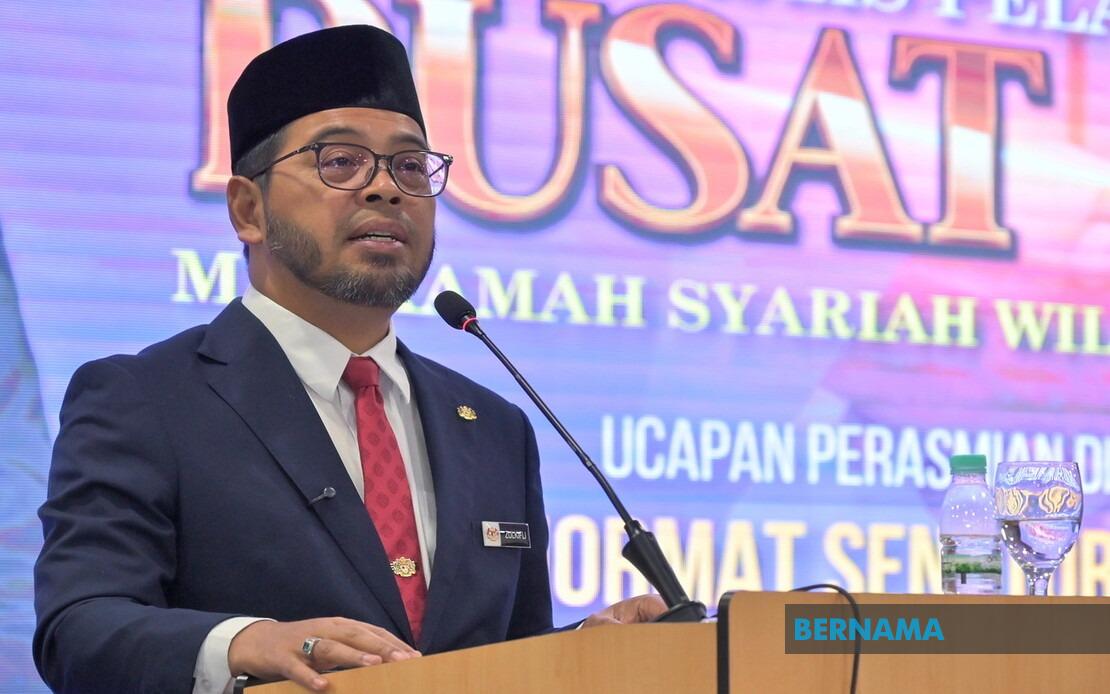
Dr Zulkifli Hasan, who holds the portfolio of Religious Affairs Minister in the Prime Minister's Department, framed the development as part of the government's broader agenda to strengthen institutional capacity within Syariah Court operations. Speaking to reporters at the launch ceremony, he emphasised that the fast-track mechanism represents a strategic response to growing demands for efficient dispute resolution within the Islamic legal framework. The minister highlighted that certain straightforward matters can now reach settlement within a single hour, while more involved cases conclude before business hours end, contrasting sharply with traditional civil litigation timelines that often stretch across months or years.
The Sulh Centre incorporates infrastructure designed for modern public engagement, including a dedicated podcast studio intended to raise awareness of Syariah Court services among the broader Malaysian population. This multimedia approach signals recognition that dispute resolution efficiency extends beyond procedural speed to encompass accessibility and public understanding of available mechanisms. The facility's establishment builds upon foundational work, as the underlying Sulh Section first commenced operations in 2001 as a specialist division within the court structure.
The government has expanded the Sulh Centre's operational mandate substantially beyond its predecessor iteration. The new framework encompasses five interconnected service domains: sulh councils handling direct negotiation between disputing parties, arbitration services (hakam) utilising appointed decision-makers, reconciliation processes (islah) focusing on relationship restoration, advisory services and mediation for preventive dispute management, alongside analytics and strategic planning functions. This diversified approach extends coverage across the full spectrum of civil (mal) matters under Syariah jurisdiction, reflecting recognition that different dispute types benefit from tailored resolution methodologies.
Performance metrics underscore the practical success of sulh-based approaches in the Malaysian context. Aggregated data from 2022 and 2023 demonstrates that 88 percent of cases funnelled through sulh processes achieved resolution through mutual agreement between parties. This upward trajectory continued into 2024, when success rates improved to 90 percent, suggesting that both procedural refinements and enhanced officer training progressively strengthen the mechanism's effectiveness. These statistics carry particular significance for a judicial system operating under resource constraints and facing backlogs across multiple jurisdictions.
The court formally appointed 43 arbitrators at the launch ceremony, comprising both existing court officers and external qualified individuals recruited specifically to strengthen arbitration capacity. This staffing expansion directly supports the expanded mandate outlined in the Sulh Centre's operational framework. The recruitment of external arbitrators signals confidence that civil society contains sufficient expertise to complement judicial officers, while also potentially reducing the training burden on existing court staff absorbed into new roles.
Currently, the Malaysian government is undertaking comprehensive review of mechanisms to further optimise the fast-track system's operational sustainability. These investigations encompass multiple dimensions: strengthening the statutory and regulatory framework within which fast-track services operate, enhancing the technical competency of human resources through advanced training programmes, and expanding the training infrastructure available to sulh officers. The government's willingness to undertake this continuous improvement cycle suggests recognition that initial launch represents an operational foundation rather than a final institutional form.
For Malaysian litigants, particularly those navigating Islamic civil matters involving financial disputes, matrimonial arrangements, or inheritance questions, the Sulh Centre introduces a substantially different calculus around dispute resolution strategy. The combination of speed, cost-effectiveness implied by shorter proceedings, and high settlement success rates creates strong incentives to exhaust sulh options before pursuing adversarial litigation. This reorientation potentially distributes case volumes more efficiently across Syariah Court structures, freeing judicial capacity for matters genuinely requiring formal adjudication.
From a systemic perspective, the Sulh Centre advancement reflects broader Southeast Asian judicial trends toward alternative dispute resolution mechanisms as core institutional competencies rather than peripheral options. Malaysia's institutional investment demonstrates policy-level confidence that sulh principles, rooted in Islamic jurisprudential tradition, offer pragmatic solutions for contemporary dispute landscapes. The 90 percent success rate particularly validates the compatibility of Islamic dispute resolution philosophy with modern procedural expectations for efficiency and fairness.
The initiative carries implications extending beyond immediate court efficiency improvements. By reducing processing timelines and expanding access to reconciliation-focused mechanisms, the Sulh Centre potentially decreases social friction that prolonged litigation can generate within Malaysian communities. This particular value proves especially significant in small communities or family-centred disputes where relationship preservation carries weight alongside financial or legal vindication. The podcast studio component further suggests recognition that public confidence in Syariah courts depends partly on transparent communication about available services and their actual operational benefits.
Looking forward, the Federal Territories Syariah Court's sulh expansion provides a operational model potentially replicable across other state-level Islamic judicial structures. Whether other states adopt comparable infrastructure and staffing approaches remains to be observed, but the Federal Territories institution's performance metrics create persuasive precedent. For Malaysian legal practitioners and court administrators monitoring institutional evolution, the Sulh Centre represents a substantial recalibration of how Syariah courts conceptualise their institutional mission beyond traditional adjudication toward proactive dispute resolution and community legal services.

