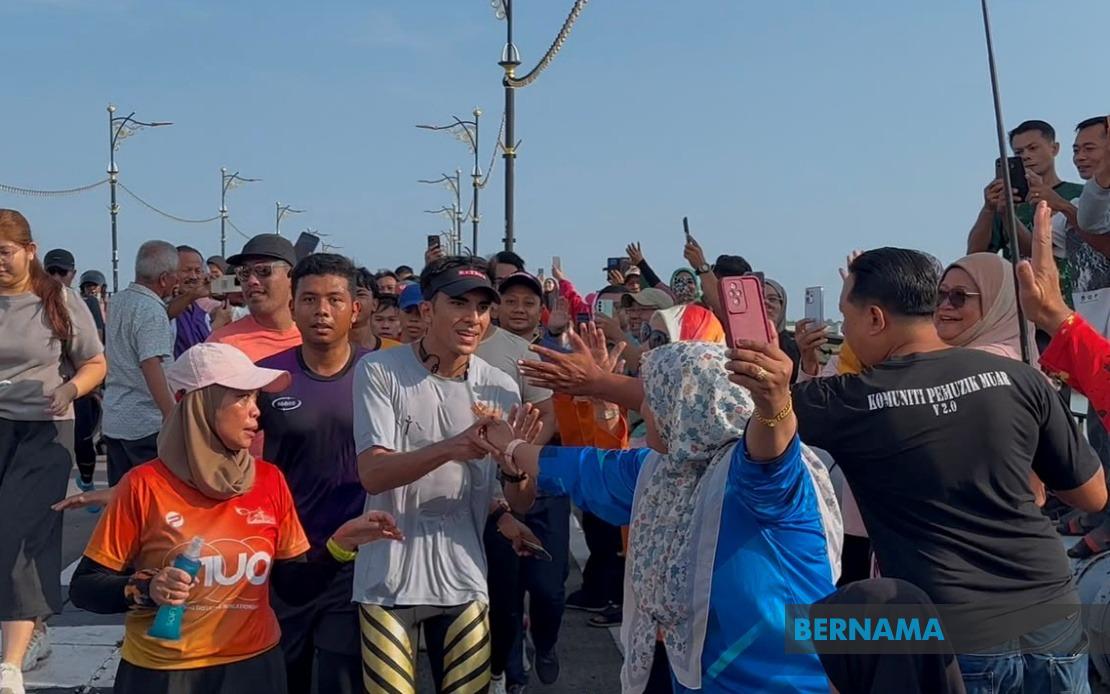
Muar Member of Parliament Syed Saddiq Syed Abd Rahman crossed the finish line at Laman Maharani on July 19, completing a physically demanding four-day marathon that has captured public imagination across Johor and beyond. The 170-kilometre "Larian Kesyukuran" or Gratitude Run, which commenced from the Palace of Justice in Putrajaya on July 16, concluded with approximately 2,000 well-wishers gathered at the finishing point to welcome the legislator home. The scale of turnout underscores growing interest in charitable initiatives spearheaded by elected representatives, particularly those willing to undertake personal physical challenges to mobilise community resources.
Syed Saddiq arrived at the finish line at 9.15 am after completing the final 17-kilometre stretch that morning, departing from Simpang Sungai Rambai in Melaka and traversing the Sultan Ismail Bridge alongside volunteers from the Muo Runner group. The inclusive format of the run, allowing local running groups and community members to participate in portions of the journey, transformed what could have been a purely individual achievement into a shared civic experience. This collaborative approach appears to have resonated with Malaysians seeking meaningful ways to contribute to their communities beyond passive donation mechanisms.
The fundraising results substantially surpassed organisers' expectations, with the initiative accumulating RM650,959.20—more than three times the original RM200,000 target. The scale of oversubscription reflects not merely financial generosity but deeper public sentiment regarding how elected officials should engage with their constituencies. Syed Saddiq committed that every ringgit collected would be directed toward welfare programmes serving residents of Muar parliamentary constituency, establishing clear accountability that distinguishes this from more ambiguous charity campaigns. The funds will support multiple initiatives including food basket distribution programmes and provision of tablet devices for economically disadvantaged students, addressing both immediate sustenance needs and educational access.
The elected representative expressed evident emotion when discussing public support mobilised during the run, noting particularly the contributions from ordinary Malaysians including a child who donated fifty sen. Such anecdotal details carry significance in Malaysian political culture, where visible demonstration of concern for underprivileged segments of society carries considerable symbolic weight. The emotional resonance of the campaign extended beyond Muar's administrative boundaries, with residents from surrounding constituencies including Batu Pahat travelling considerable distances to participate or offer support at the finishing point.
Among those making the journey was 64-year-old Aminah Abd Rahman and her 26-year-old daughter Syarifah Fatimah Syed Ali, who travelled from Batu Pahat specifically to contribute and provide moral support. Their decision to monitor the run's progress through social media daily before deciding to attend underscores how digital platforms now facilitate grassroots political engagement among Malaysian voters. Aminah's observation that not all elected representatives demonstrate willingness to undertake such demanding personal initiatives reflects broader public perception regarding varying levels of commitment shown by different politicians toward constituency welfare.
The four-day timeframe of the run created natural momentum and media cycle advantages, with daily progress updates generating sustained public interest that might not have materialised through traditional fundraising galas or telethon formats. By distributing the physical challenge across consecutive days and multiple geographic locations, Syed Saddiq ensured the campaign penetrated consciousness across Johor's transport corridors and commercial centres. This methodical geographic approach differs from concentrated one-location fundraising events, potentially exposing the initiative to wider demographic cross-sections.
From a political economy perspective, the campaign demonstrates how individual elected representatives increasingly employ personal athletic endeavours as platforms for constituency-focused initiatives. The approach carries advantages including tangible demonstration of physical endurance correlating metaphorically with commitment to constituent welfare, media-friendly narratives centring on human achievement rather than partisan political messaging, and fundraising efficiency wherein organisational costs remain minimal compared to traditional benefit events. The relatively low operational overhead of marathon-format charity runs enables politicians to retain maximal fund distribution toward actual welfare programmes.
The welfare distribution mechanisms targeted—food assistance and educational technology provision—address observable poverty gaps within Muar constituency reflecting broader Malaysian income inequality patterns. Tablet distribution programmes particularly acknowledge digital divide challenges affecting students from lower-income households, aligning with evolving understanding that educational equity increasingly depends upon technological access alongside traditional classroom provision. This nuanced targeting suggests sophisticated needs assessment underlying the welfare distribution strategy.
The public reception at Laman Maharani indicates growing Malaysian openness toward politicians who visibly sacrifice personal comfort in pursuit of community benefit. The 2,000-strong welcoming crowd represents substantial civic engagement, particularly noteworthy given the early morning gathering required and absence of any compulsory attendance mechanisms. This voluntary assembly suggests the campaign resonated authentically with constituents rather than representing merely staged political theatre.
Looking forward, the Gratitude Run model may establish precedent encouraging other elected representatives across Malaysia to conceptualise charitable campaigns beyond conventional frameworks. The campaign's success—both financial and in terms of public engagement—provides template evidence that constituency-level politicians can mobilise significant resources through initiatives combining personal commitment with inclusive community participation mechanisms. As Malaysian voters increasingly demand visible demonstration of constituent-focused effort from their elected representatives, individual stamina-based fundraising campaigns may become increasingly prevalent within the political landscape.
The RM650,959.20 raised represents meaningful injection of resources into Muar constituency welfare programming, yet the campaign's significance extends beyond monetary quantification. The initiative restored public focus onto direct MP-constituent relationships, demonstrating that individual elected representatives retain capacity to mobilise community action independent of party machinery or state-level resources. In contemporary Malaysian political environment increasingly characterised by partisan polarisation and diminished trust in institutional structures, the Gratitude Run exemplified how local-level politicians can rebuild connection with constituents through transparent, personally demanding charitable engagement.

